This winter, the Gyeonggi Earth Science Education Research Association (Gyeonggi Secondary Earth Science Education Research Association) ran a self-directed training program in Yeoncheon that combined a geological field trip and astronomical observation.
Last year, when they held the self-directed stargazing training at Jaein Falls, my second child suddenly came down with a fever and I couldn’t go, which I really regretted, so this time I was determined to participate.
The participation fee was 30,000 won.
On top of that, I heard it was possible to get school funding for the expenses used for the self-directed training.
So I signed up right away.
1. After running the booth, off to Yeoncheon
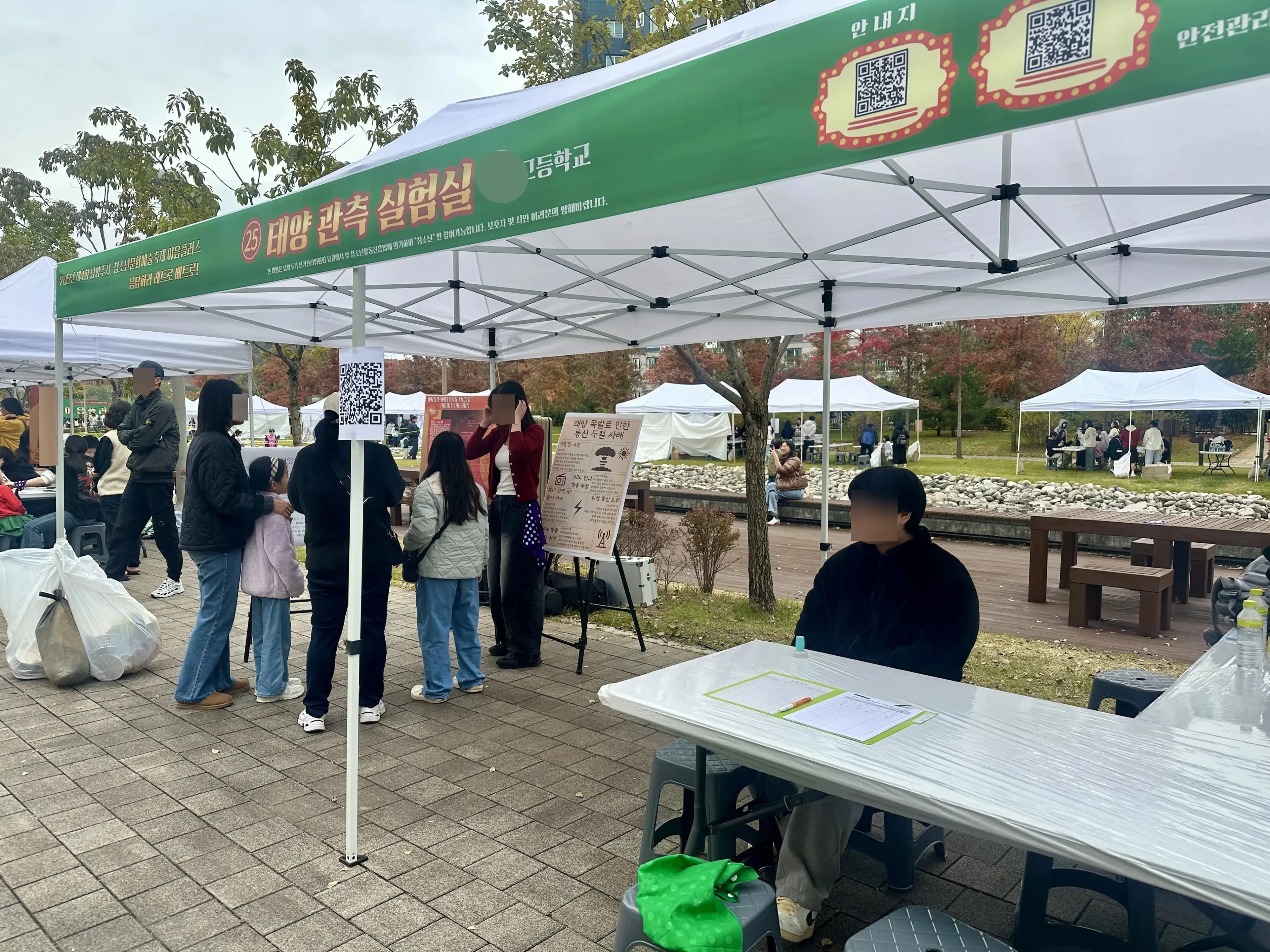
On the first day, I arrived quite late because I had to run an astronomy club booth at the “Ieum Plus” event held in Namyangju.
The schedule included Eundae-ri in Yeoncheon, the Baeguirijeong Formation in Gommul-ri, and Jaein Falls, but I couldn’t actually do the fieldwork, which was a big disappointment.
Our lodging was at the Godaesan Natural Recreation Forest in Yeoncheon.
Even though I live in Seoul, it was actually my first time coming this far north.
2. Astronomical observation training
Unfortunately, the sky was full of clouds that day, so we only went over explanations about the telescopes.
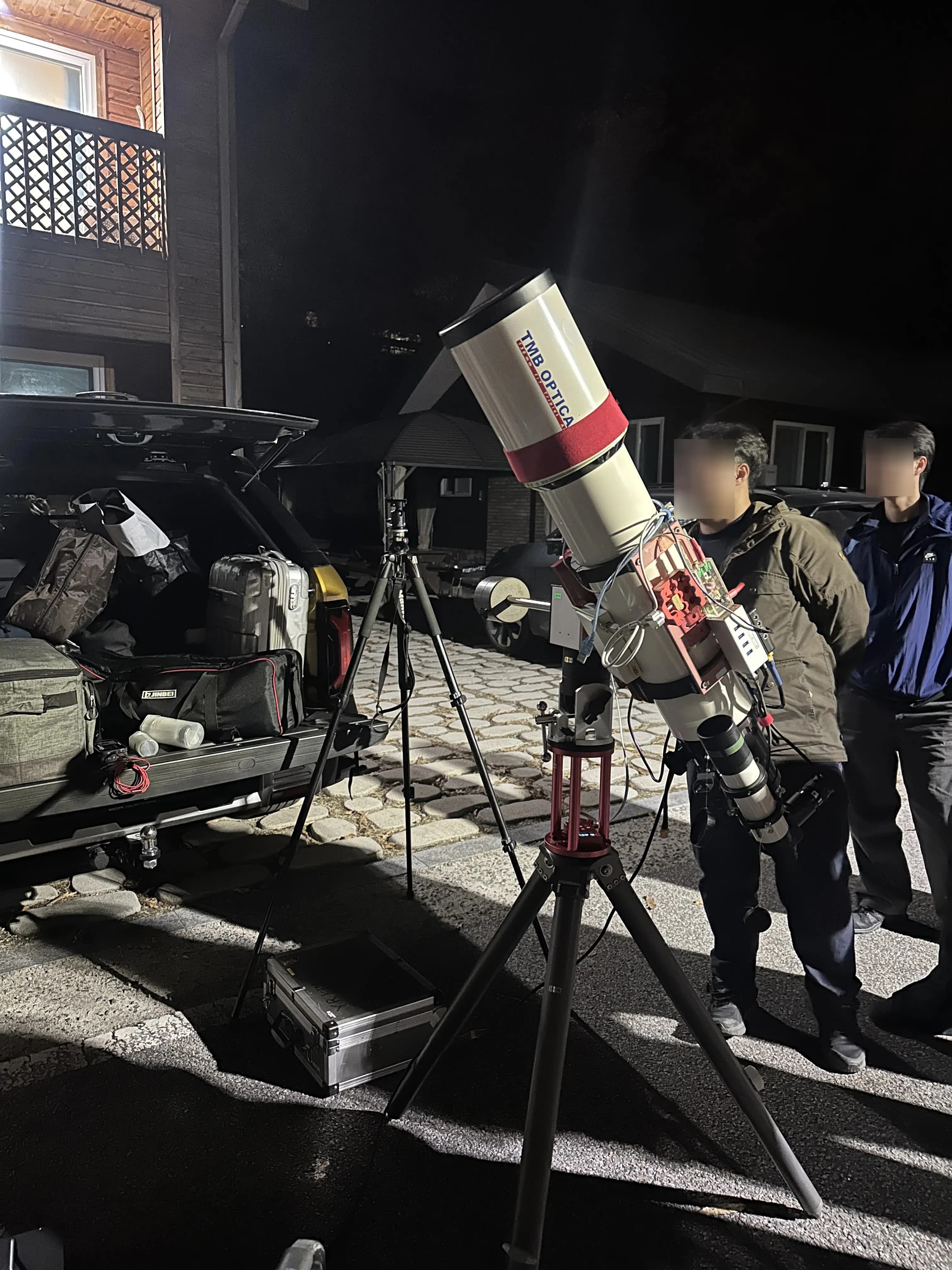
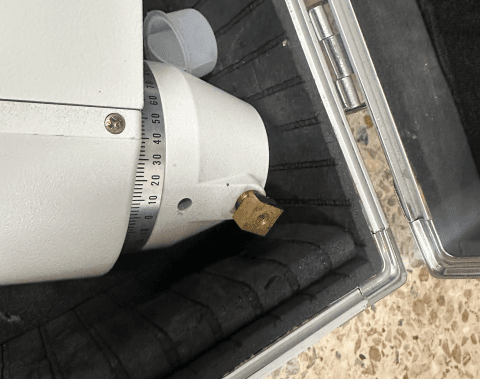
The telescopes the instructors brought were really expensive.
One teacher said he personally imported a telescope called TMB, which is no longer sold.
We heard about things like why you use a good focuser, tilting between the telescope and camera, and various other topics.
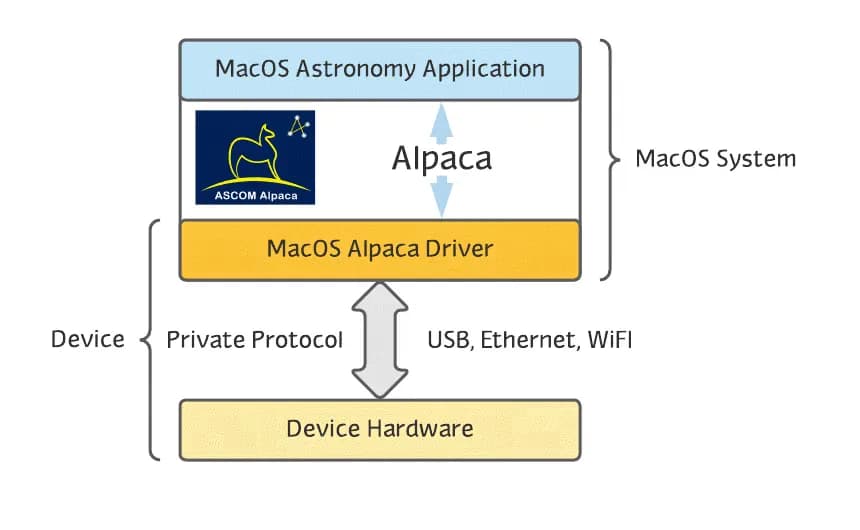
Among those, what I found especially interesting was that the accessories mounted on telescopes can now apparently be used via Wi‑Fi.
They said that once equipment using the ASCOM/Alpaca protocol becomes widespread, we’ll be able to get rid of all those dangling cables attached to the telescope.
The official N.I.N.A documentation also had information about supporting ASCOM Alpaca.
But I’m sure it’ll be expensive, right?
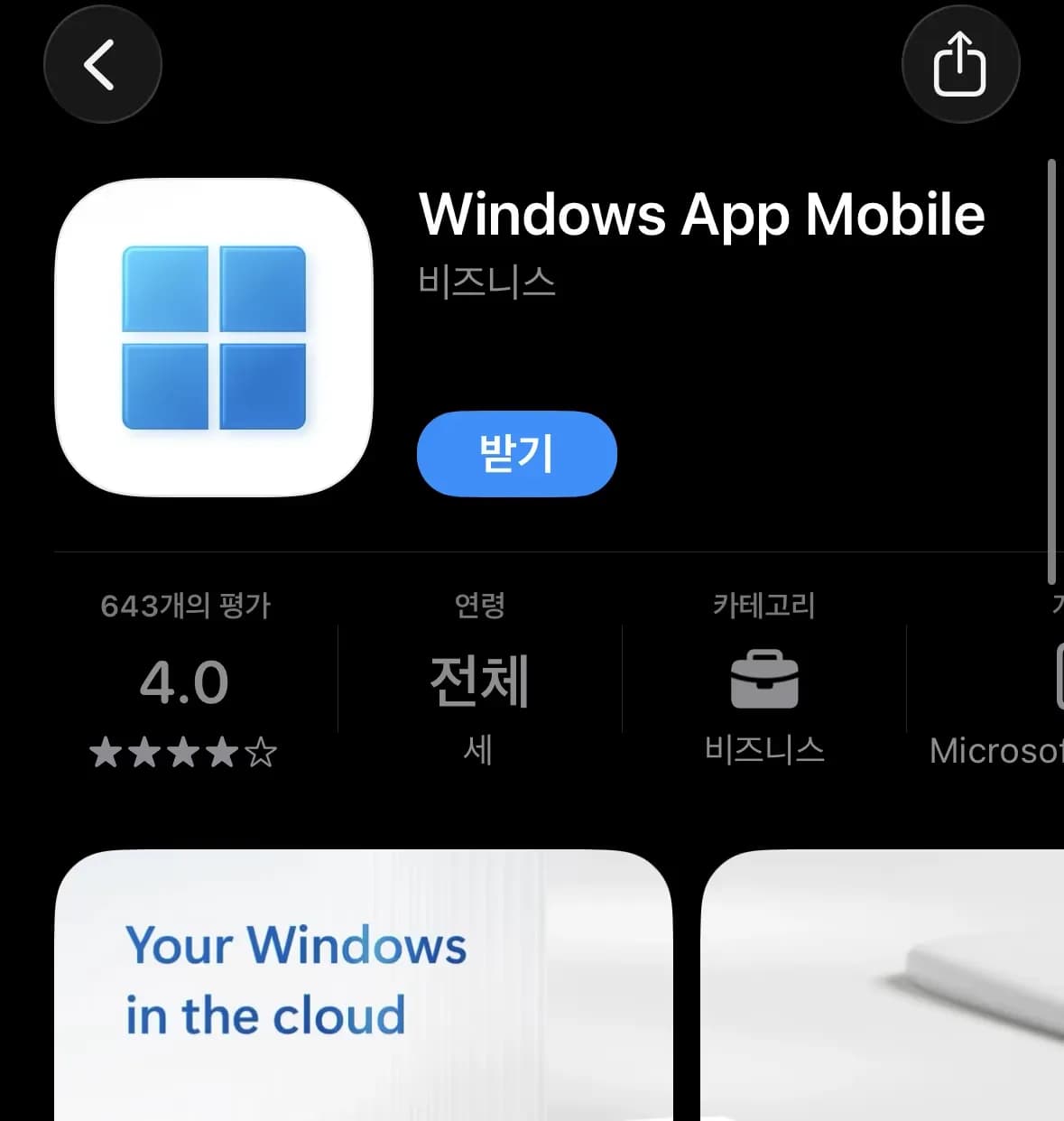
One teacher had installed a mini PC on his telescope and was using it by assigning a fixed IP through a Wi‑Fi router.
I always used Chrome Remote Desktop, but he said with this app you can connect using the internal IP.
After finishing the training, we were chatting with the teachers when the weather forecast changed and said the sky would clear between 12 and 1 a.m.
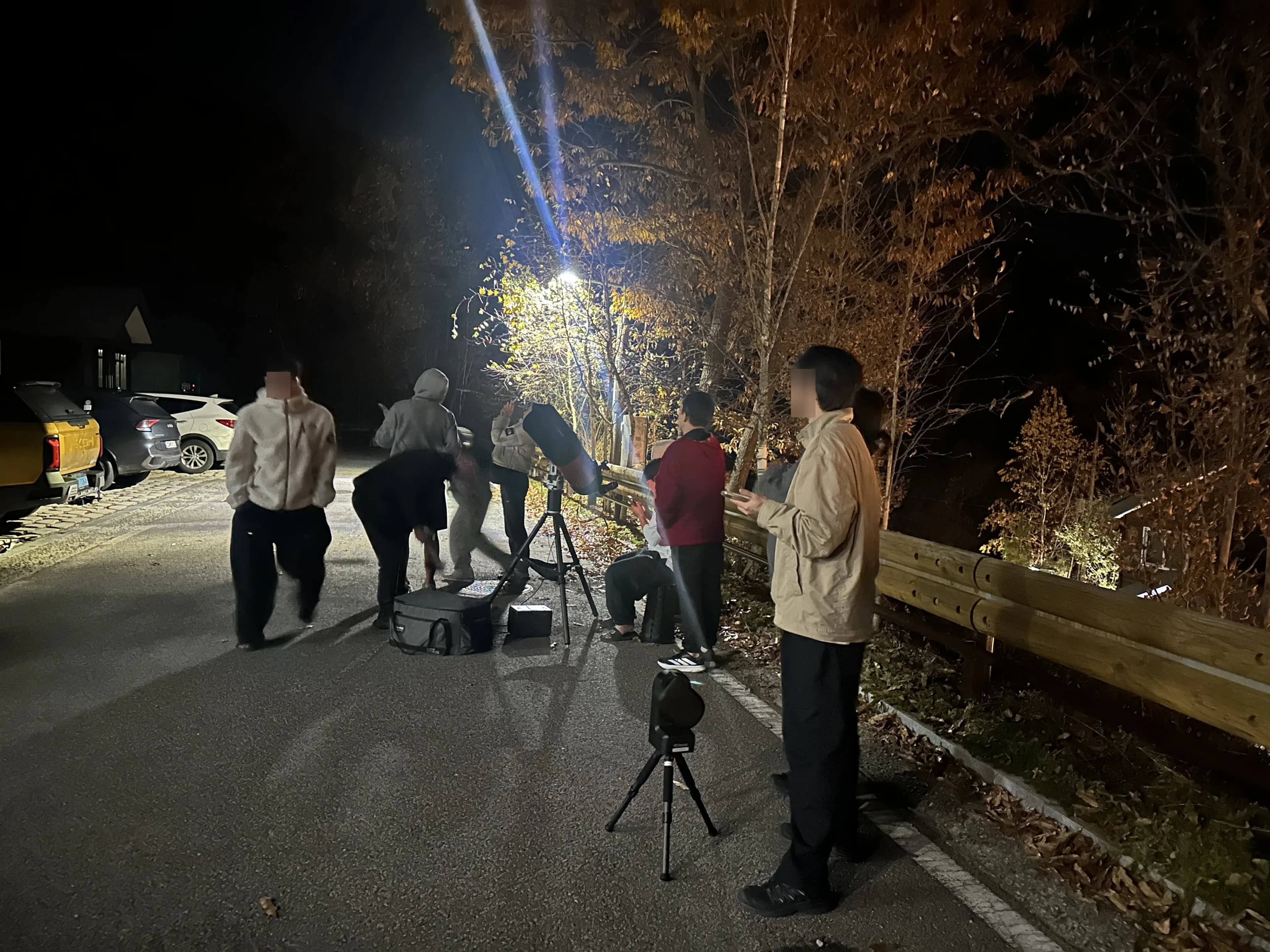
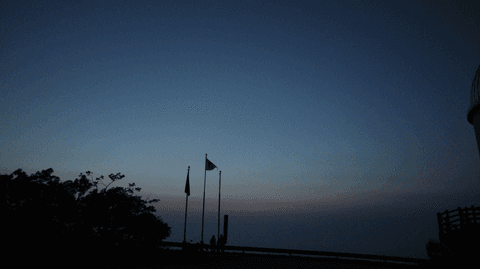
When one teacher said, “The sky has opened up,” we all went outside together to observe the night sky.
Late on an autumn night, the Great Autumn Square was extremely high in the sky, and we could also see Orion.
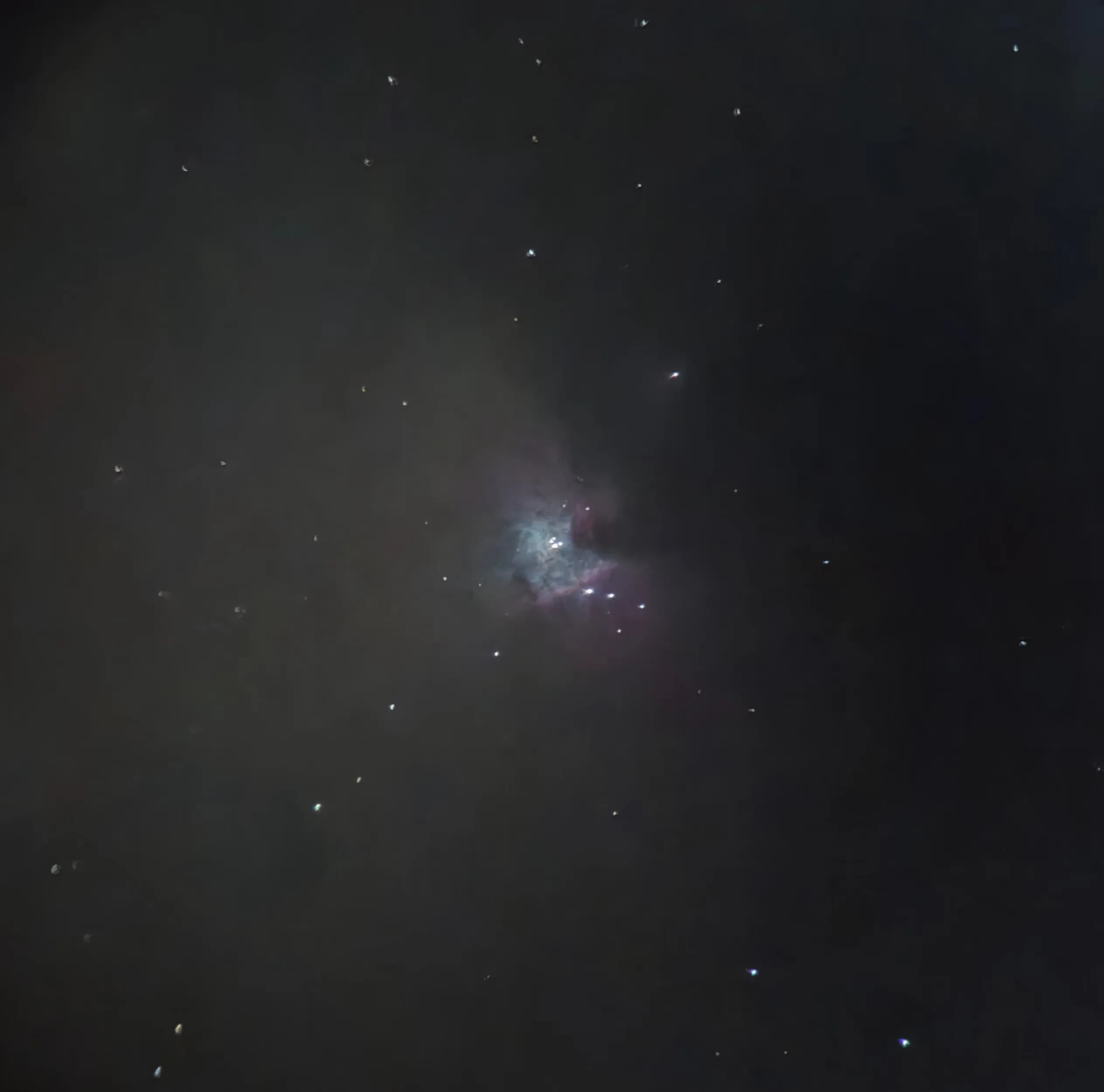
One teacher took a long-exposure shot of the Orion Nebula using a smartphone holder attached to the eyepiece.
He fiddled with his phone in the room for a while and then sent us the photo below via KakaoTalk.
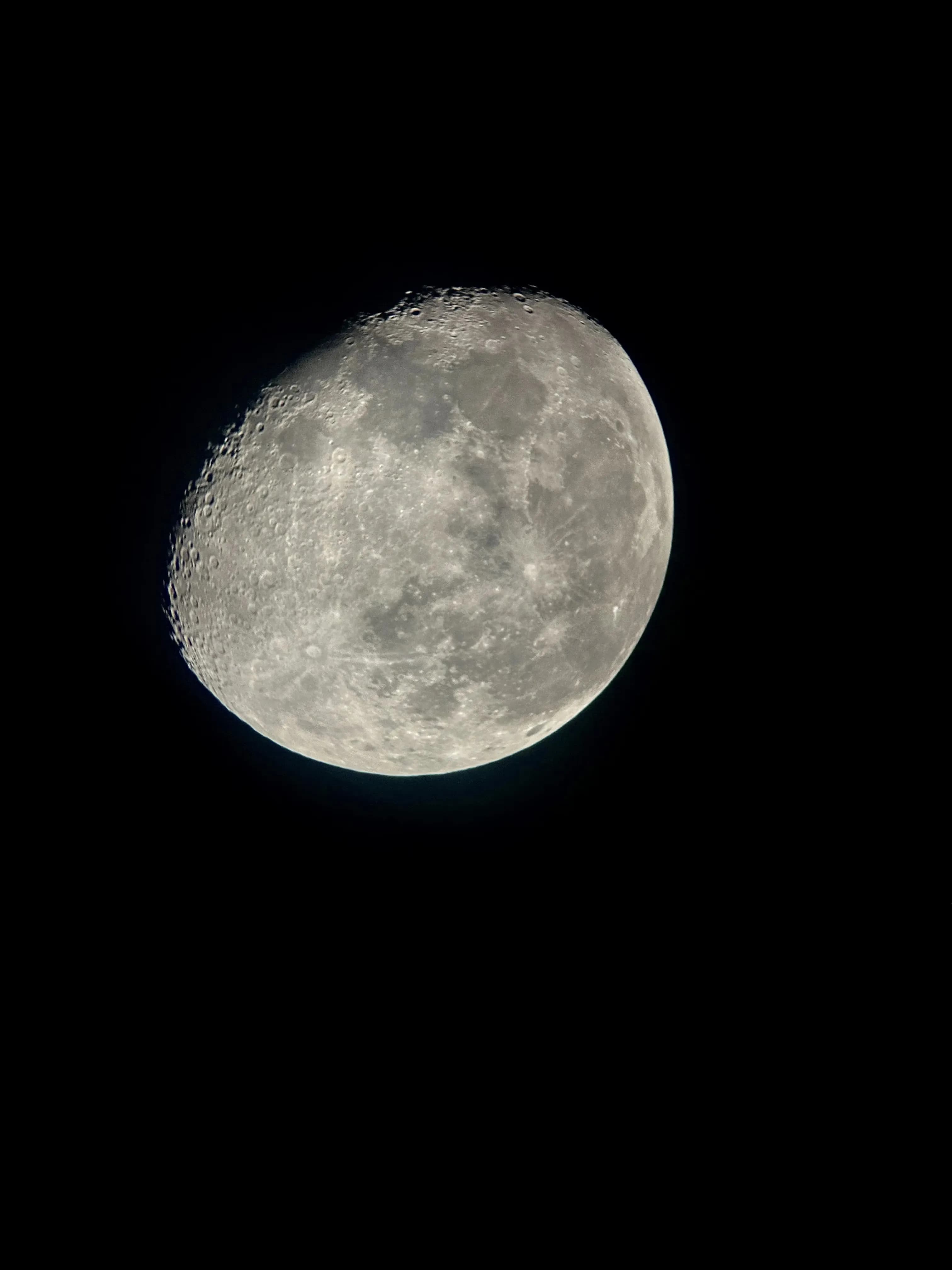
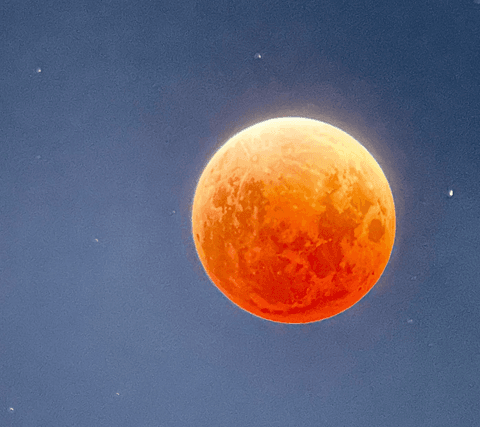
I just tried taking a picture of the Moon.
The Moon looks beautiful no matter when you photograph it.
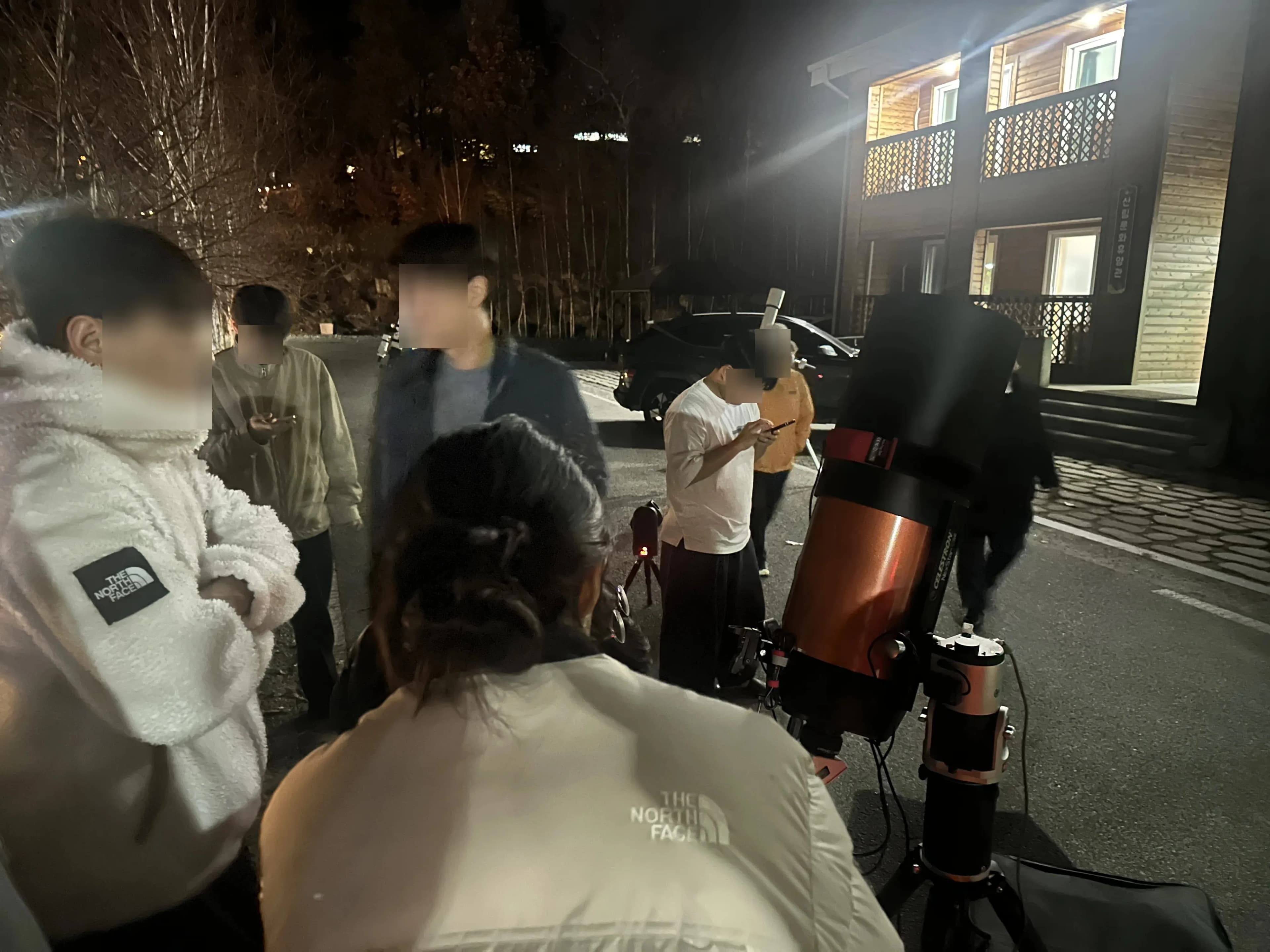
We also observed planets like Saturn and Jupiter.
Around 2:30 a.m., clouds rolled in again and we wrapped up our stargazing.
3. Jeongok Prehistory Museum
The next day, we visited the Jeongok Prehistory Museum.
Because the museum director and Teacher Kwon know each other, we were also able to look around the Jeongok-ri site stratigraphy exhibition hall.
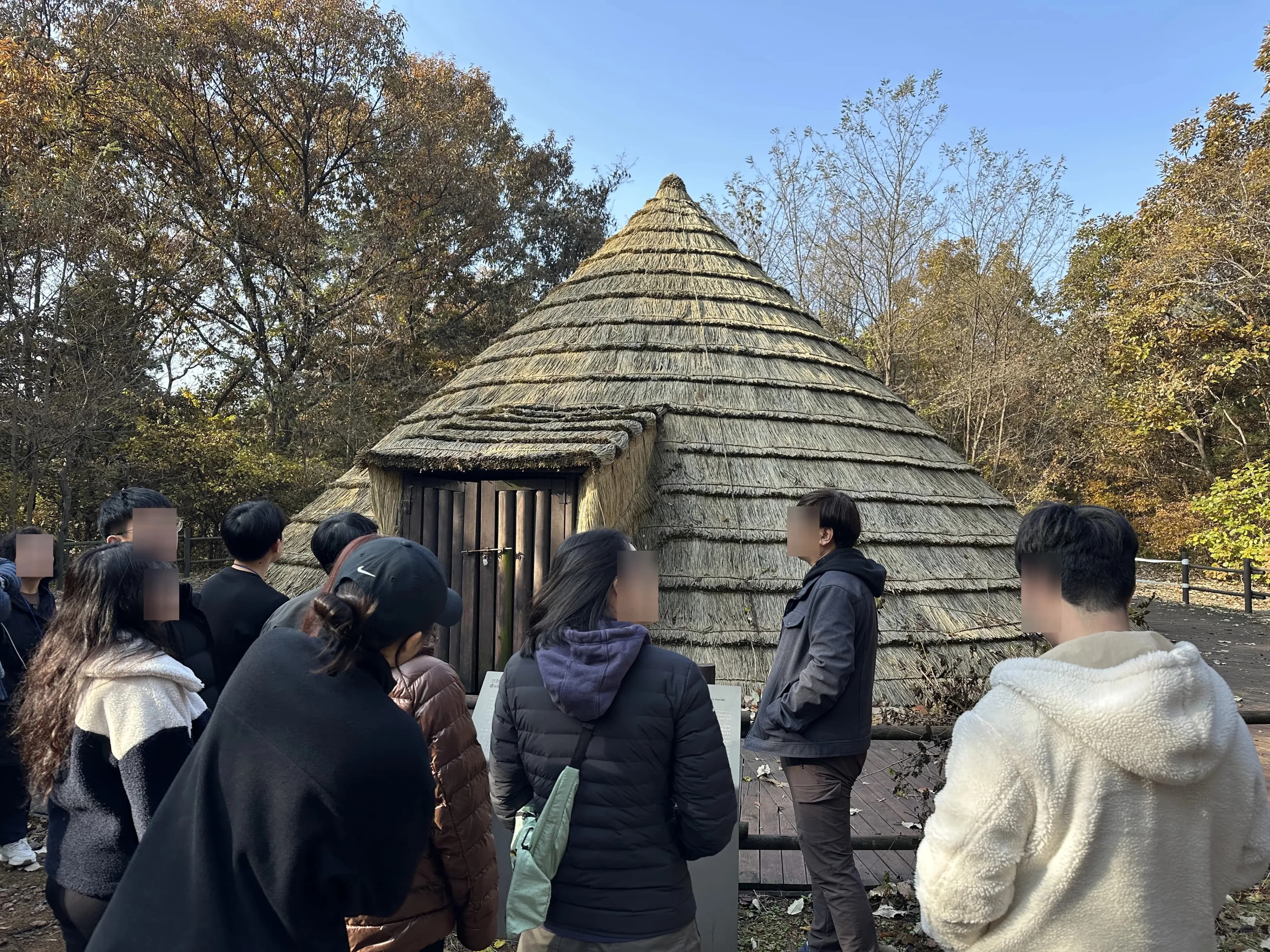
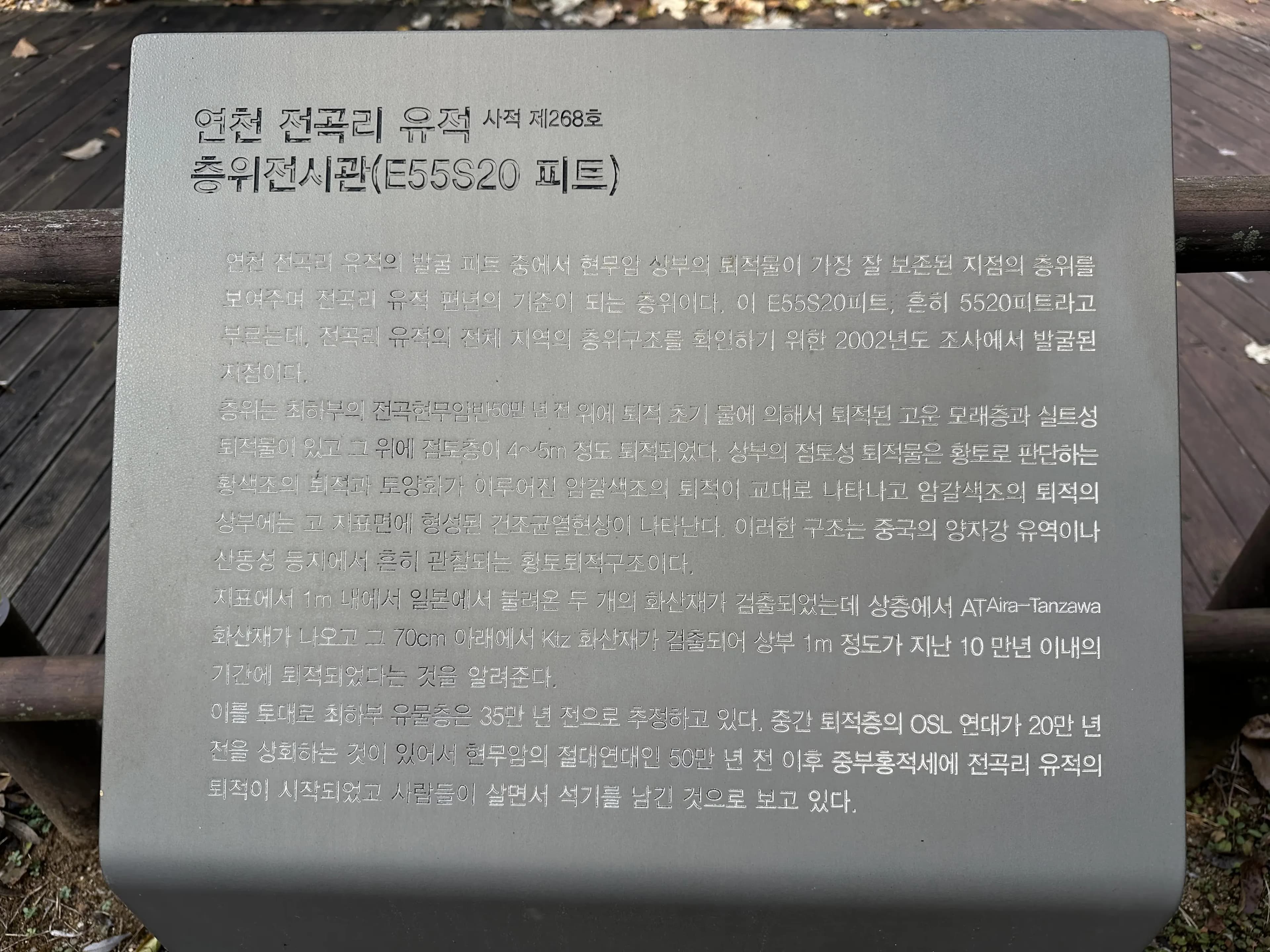
The museum director said he had excavated many areas in Yeoncheon.
He explained that in archaeology they excavate a location that can serve as a reference section for a region, and there they carry out various activities such as analyzing the structure of the strata and performing isotope analysis.
The stratigraphy exhibition hall is one of those places.
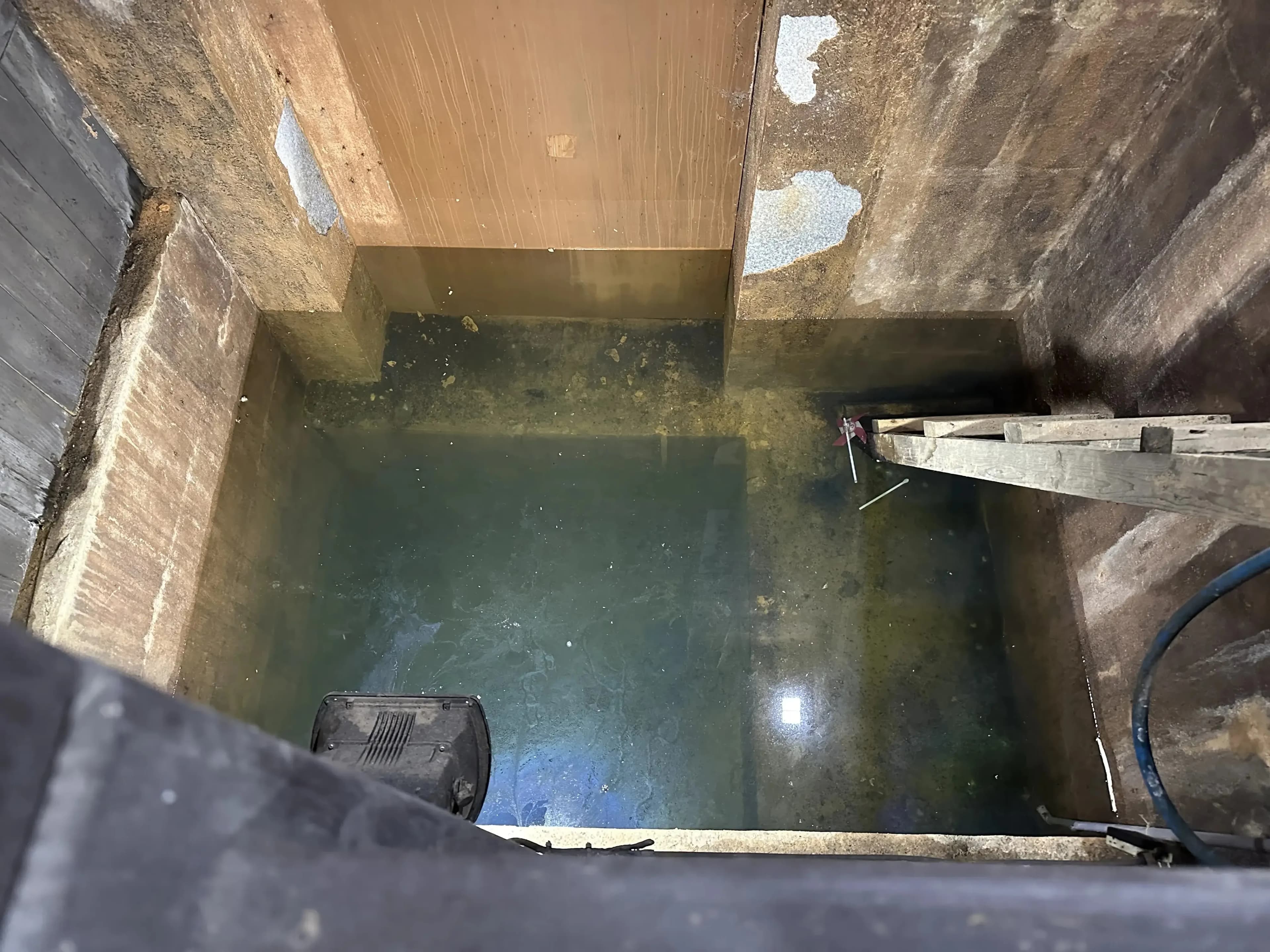
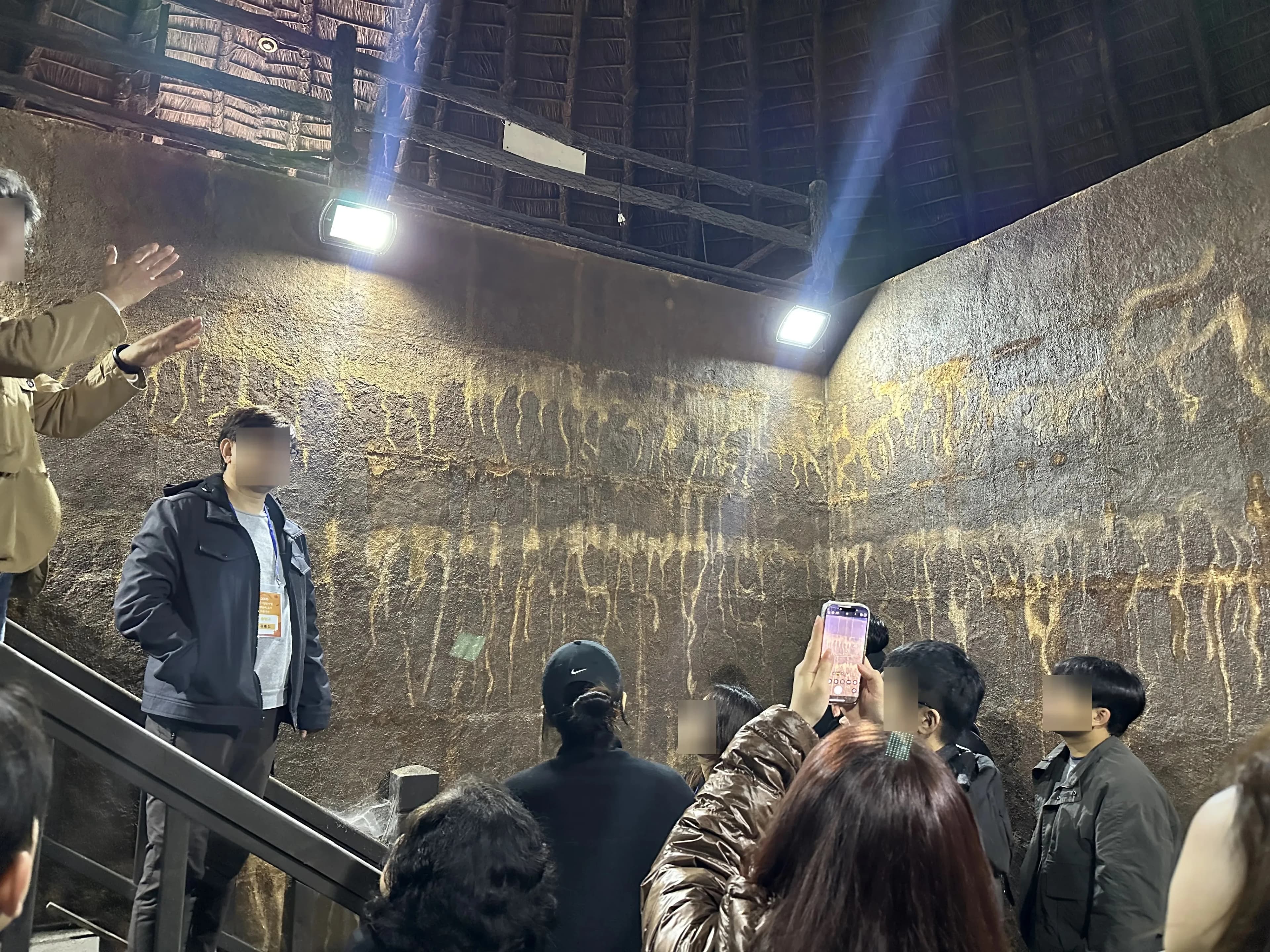
In the photo below, the “wall” you see has actually been covered over due to the risk of collapse, and they painted an exact replica of the stratigraphic appearance on top of it.
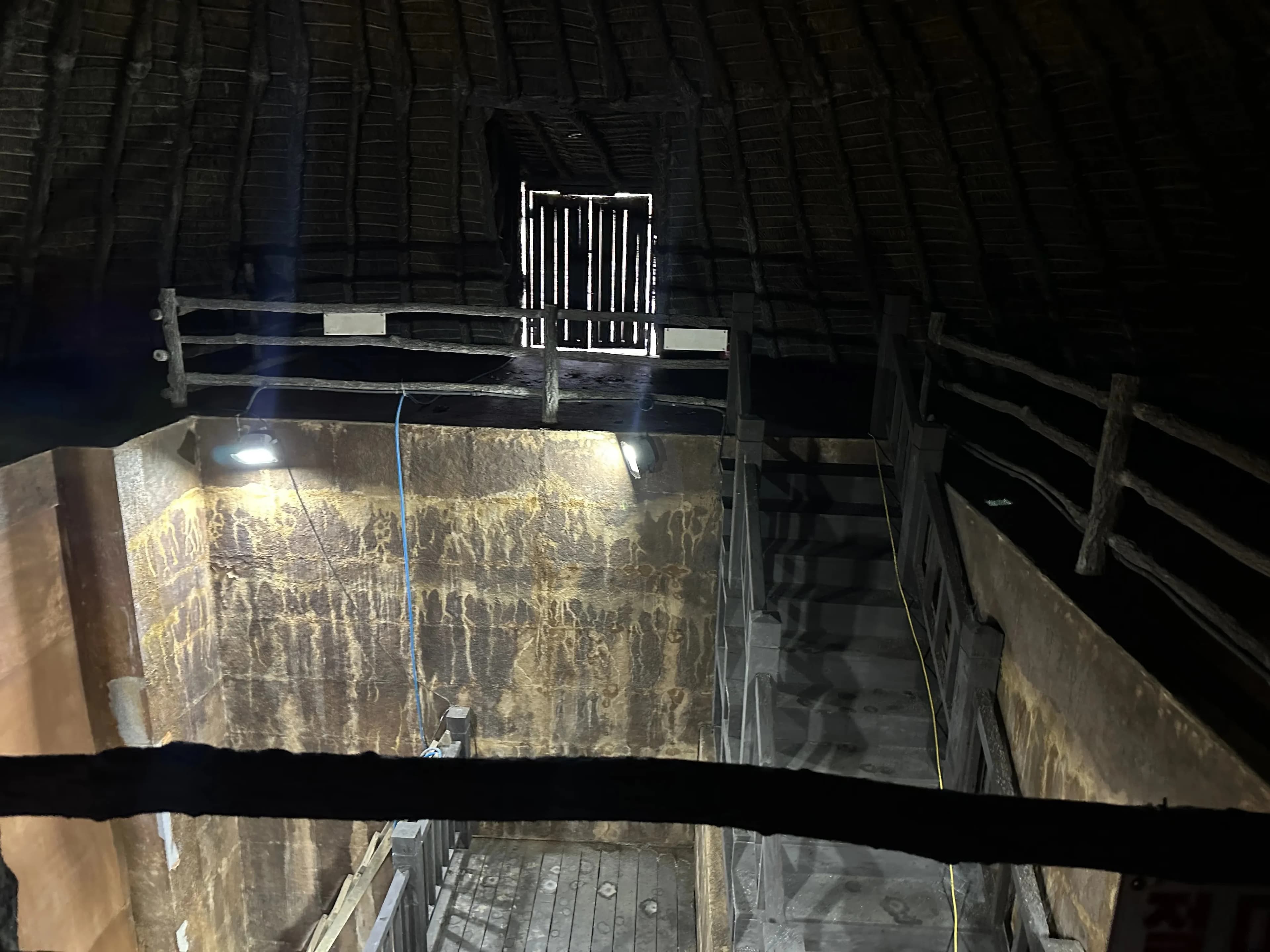
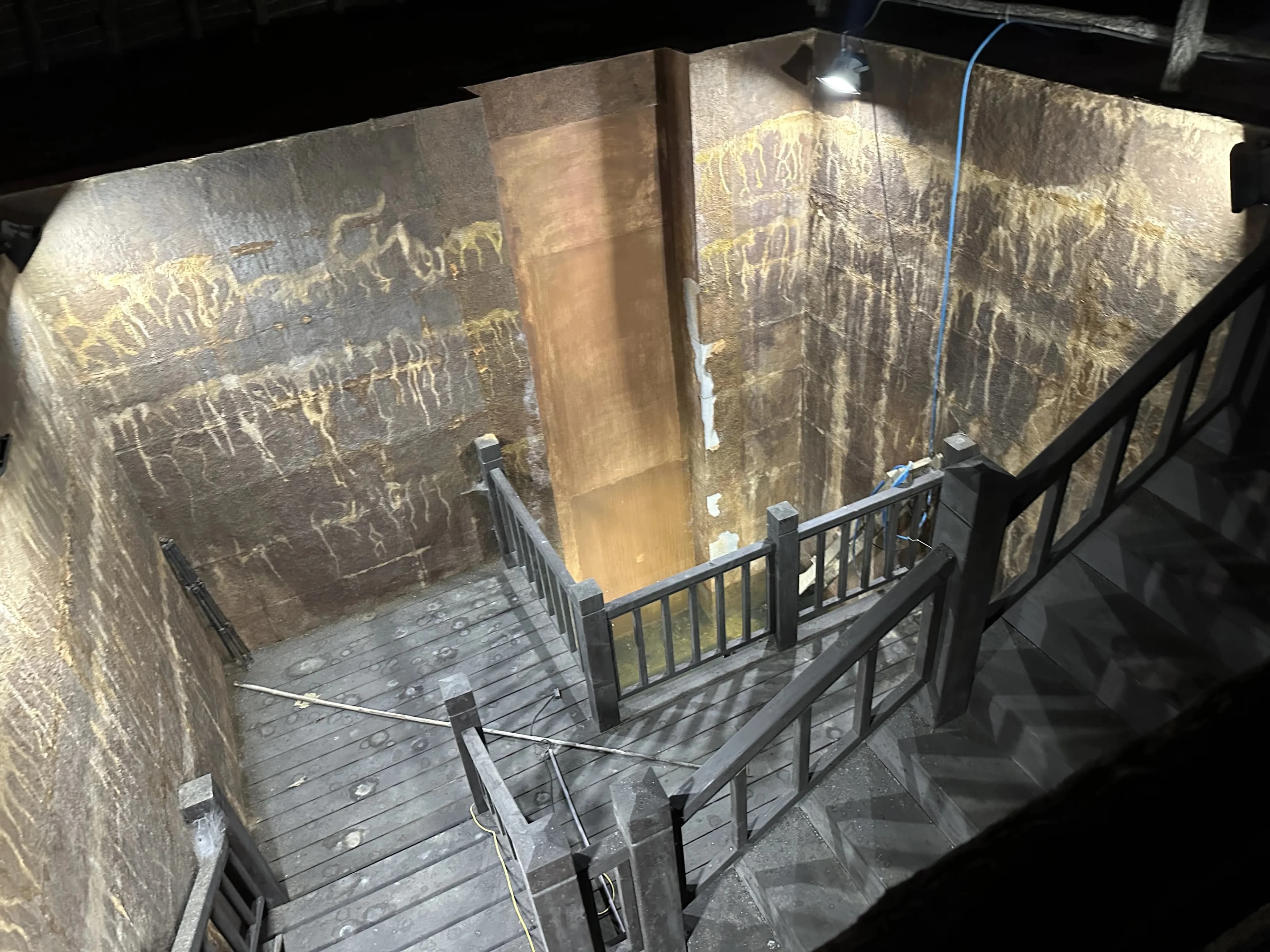
The director said that every step down the stairs represents going down 10,000 years.
And what you see below the groundwater at the very bottom is the basalt layer that formed the columnar joints along the Hantangang River.
At the very bottom there is a basalt layer, and above that are gray fluvial sediments and then reddish aeolian sediments, in that depositional order.
The patterns visible on the wall are desiccation cracks.
Apparently there were roughly two major episodes of desiccation cracking.
When I thought of desiccation cracks, I only pictured small ones, but the actual depth and size were surprisingly large and fascinating.
We went up to the museum rooftop to take in the view.
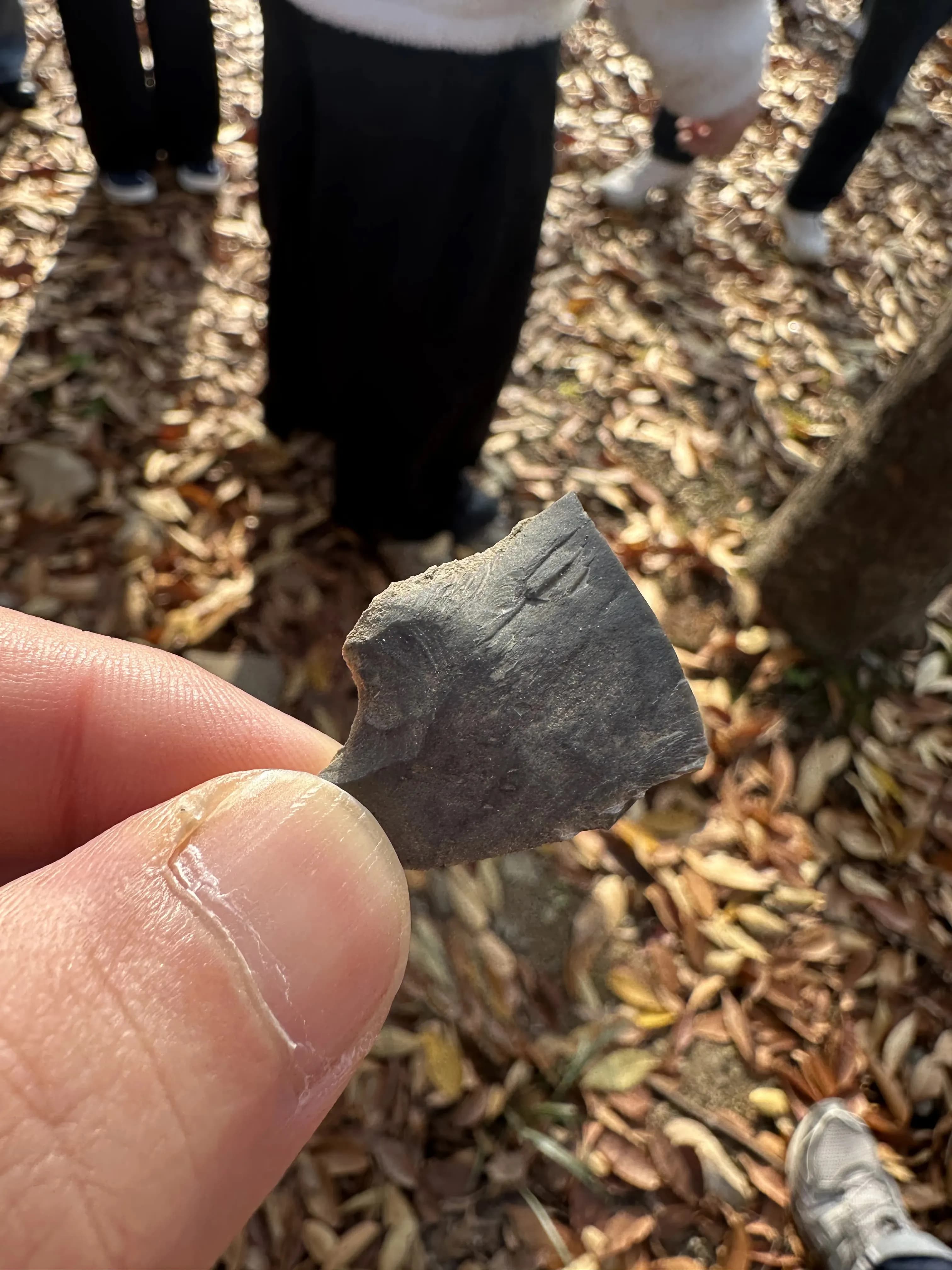
On the way up, he said there were traces left from an old hand‑axe (stone tool) making activity, so we looked around.
There were obsidian and quartzite fragments scattered here and there.
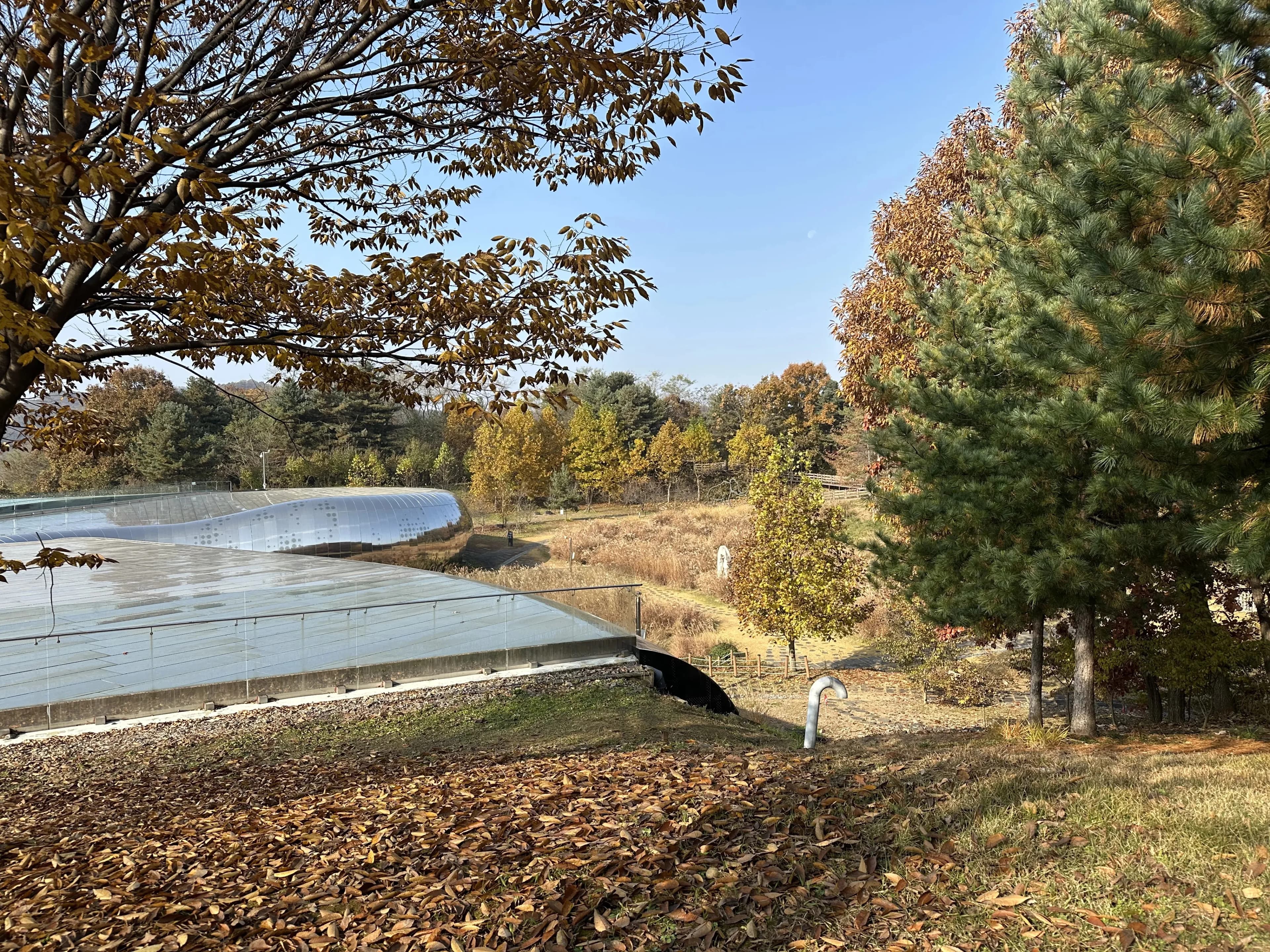
The museum viewed from the rooftop was really beautiful.
He said it looks even more beautiful at sunset.
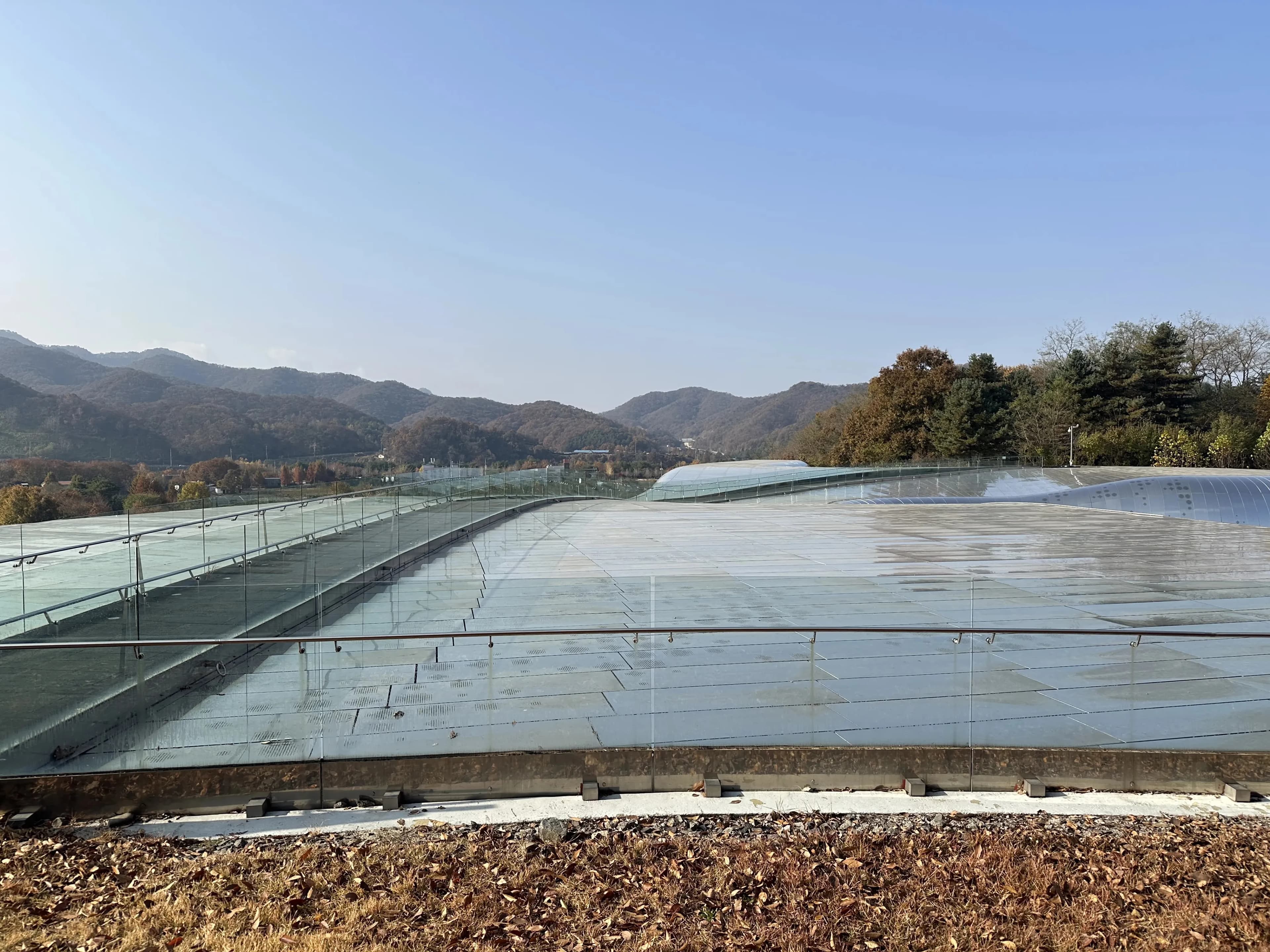
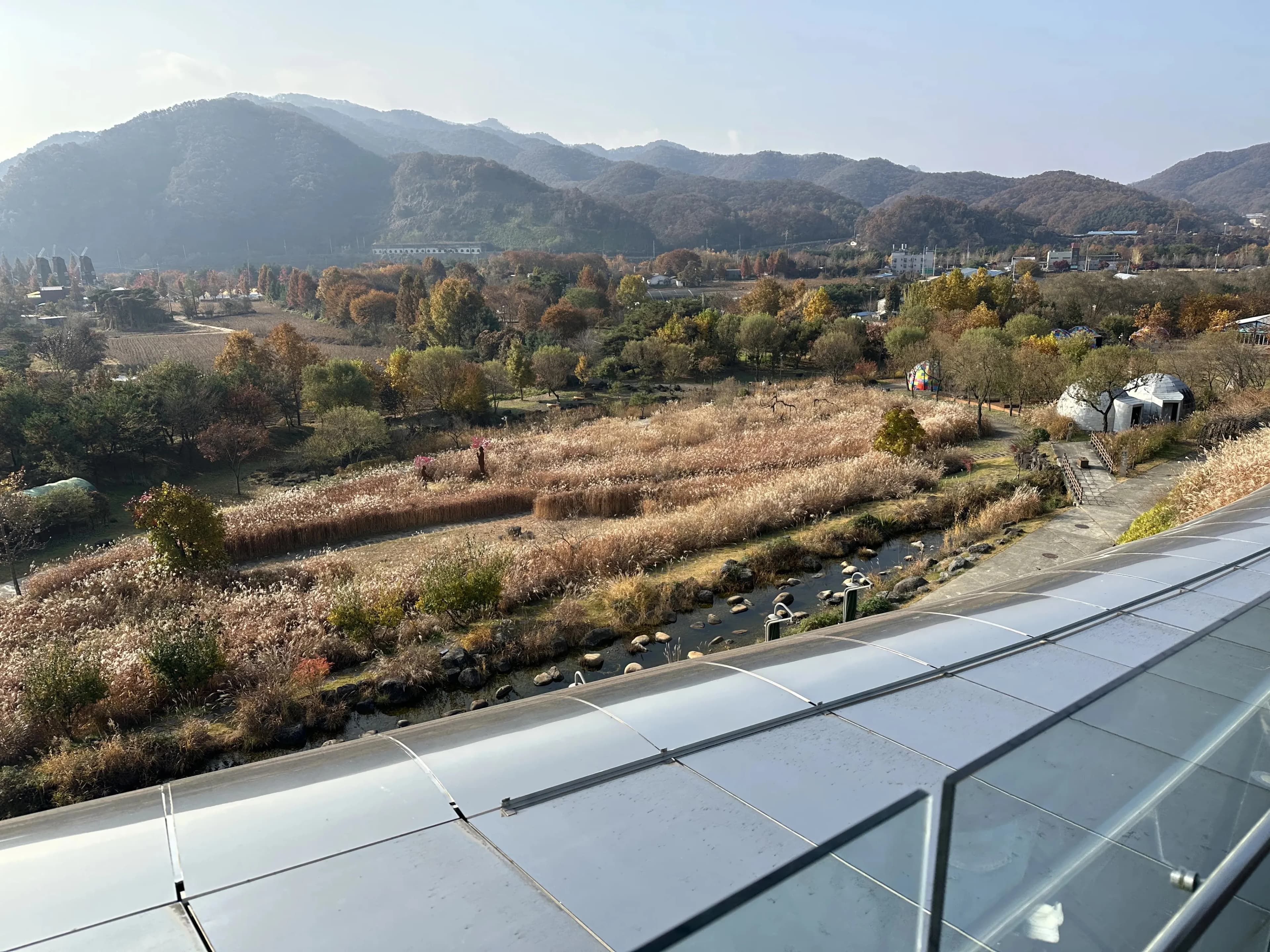
The museum entrance was also unique.
Before going inside, the director said he would give a demonstration of making stone tools, so I briefly looked around the garden in the time we had left.
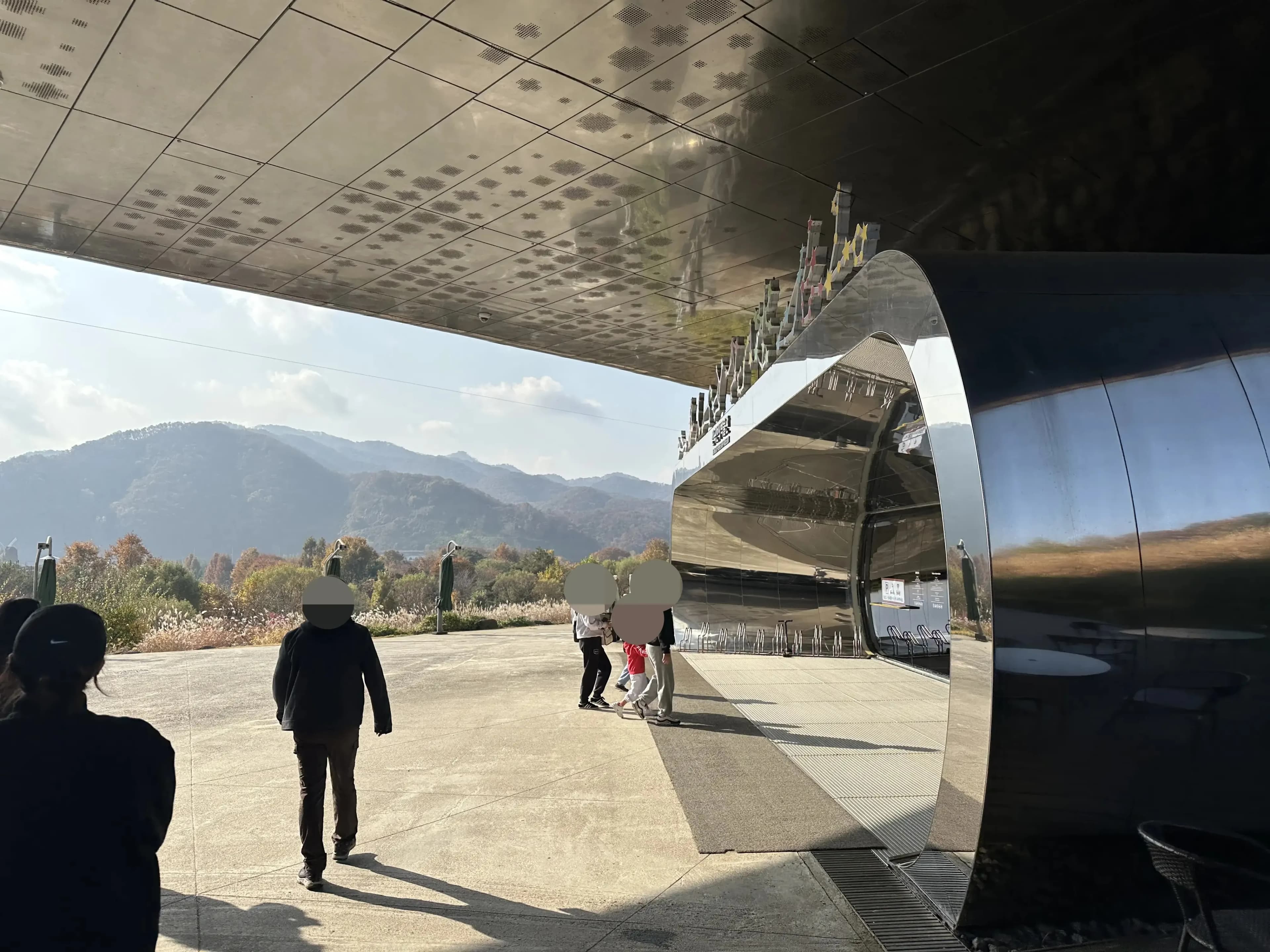
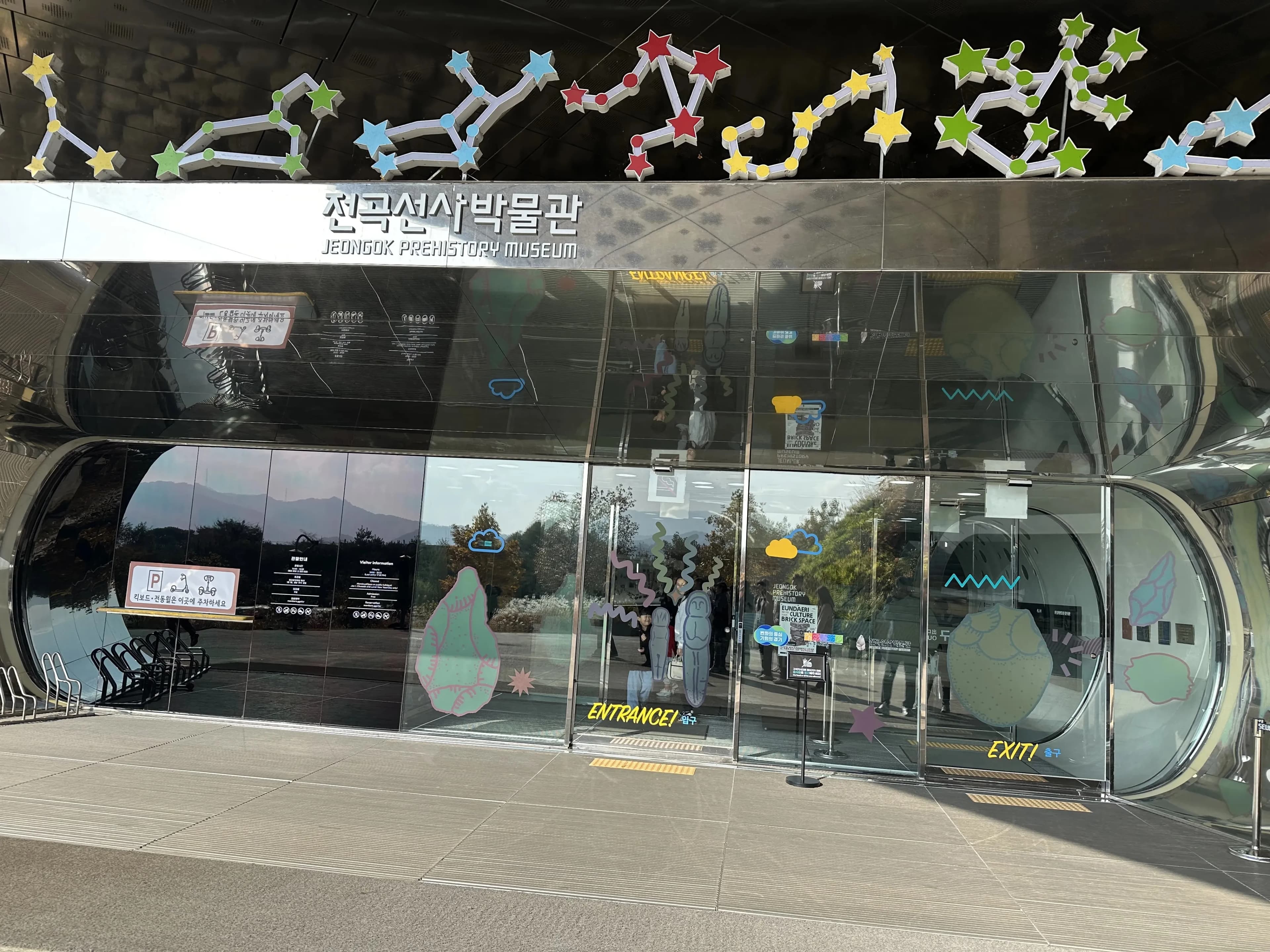
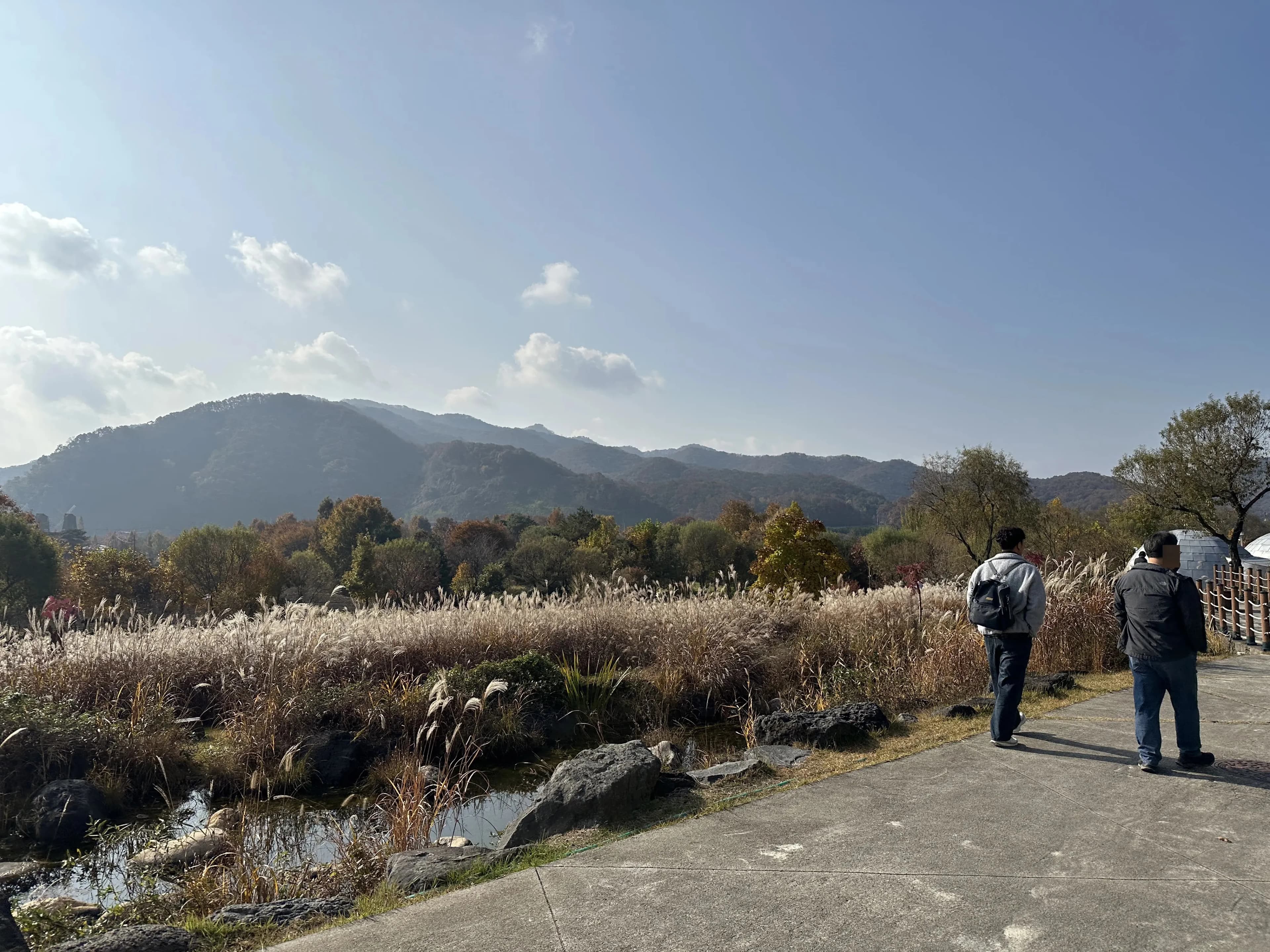
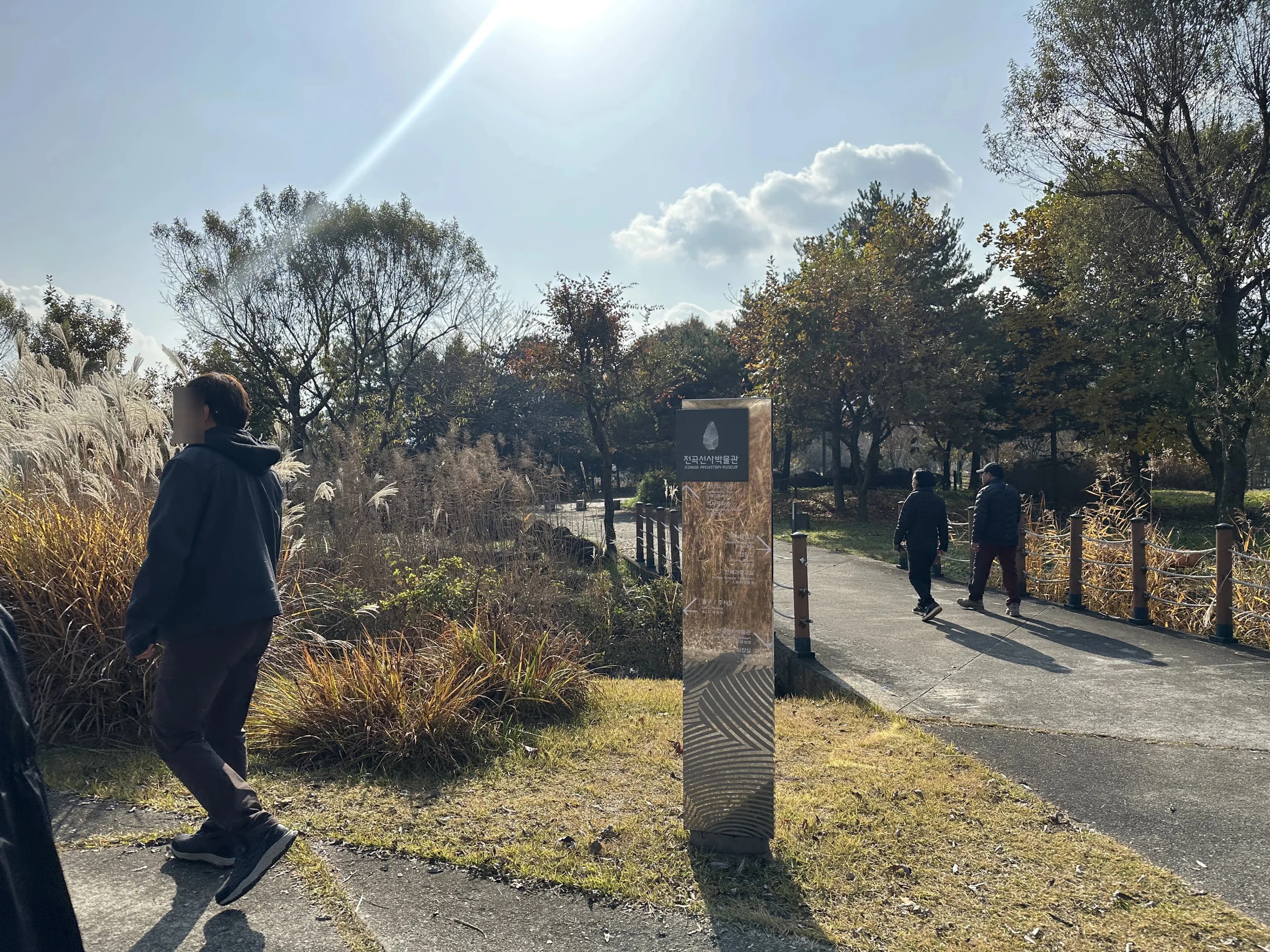
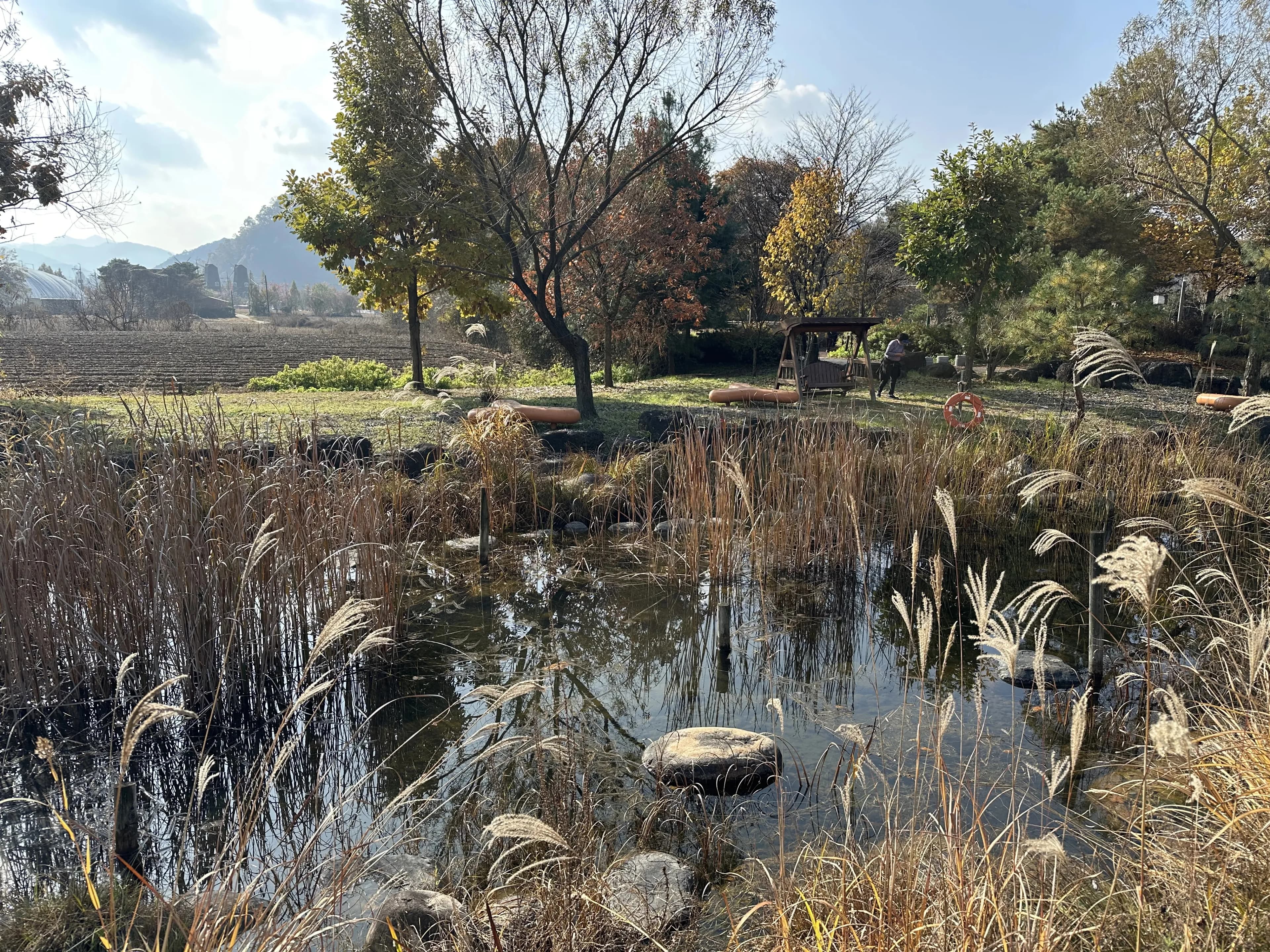
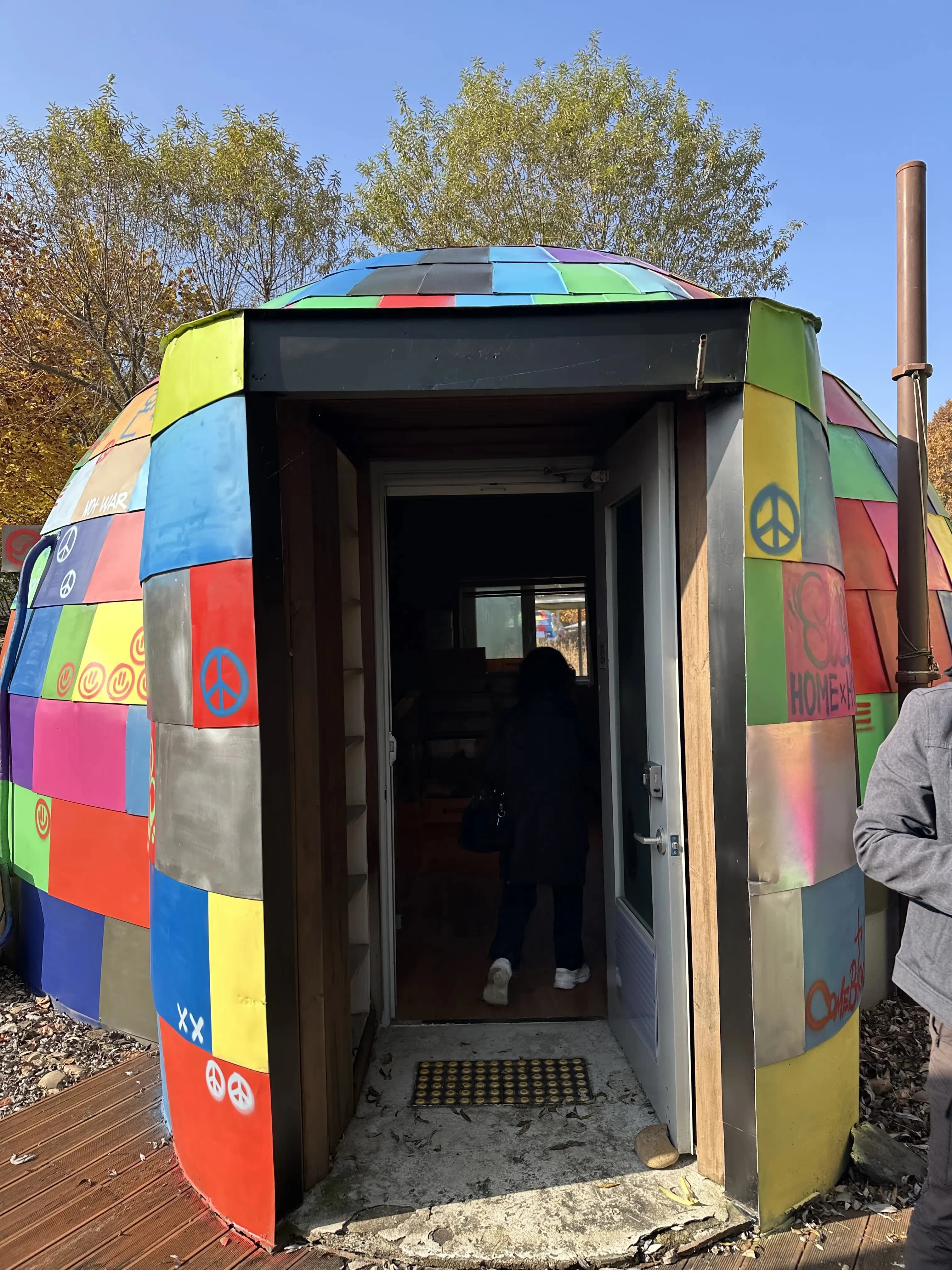
The stone tool demonstration took place in a small building just past the museum.
The space was round, so the director’s voice from the front sounded as if he were speaking right next to you.
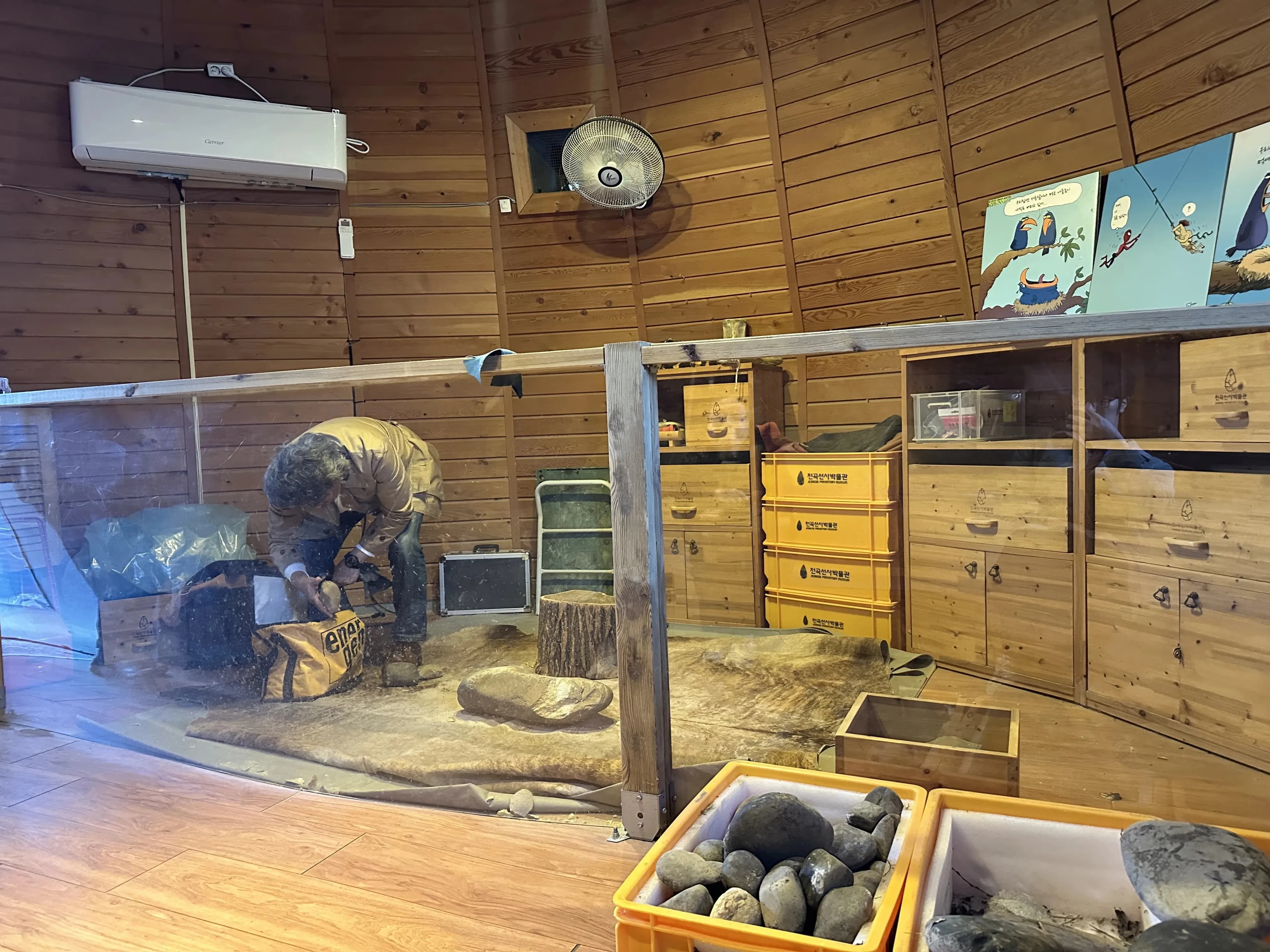
The director selected a few rocks and gave a demonstration of how to make stone tools.
Because rock fragments can fly, he put on protective gear, and when he struck the stone hard, a flake broke off.

If you strike the rock not straight down but at a slight diagonal, the rock breaks off into a sharp piece.
Because tools are made by flaking off pieces of rock like this, they are called flaked stone tools.
On these flakes, you can see a “smashing point,” the mark where one rock struck another.
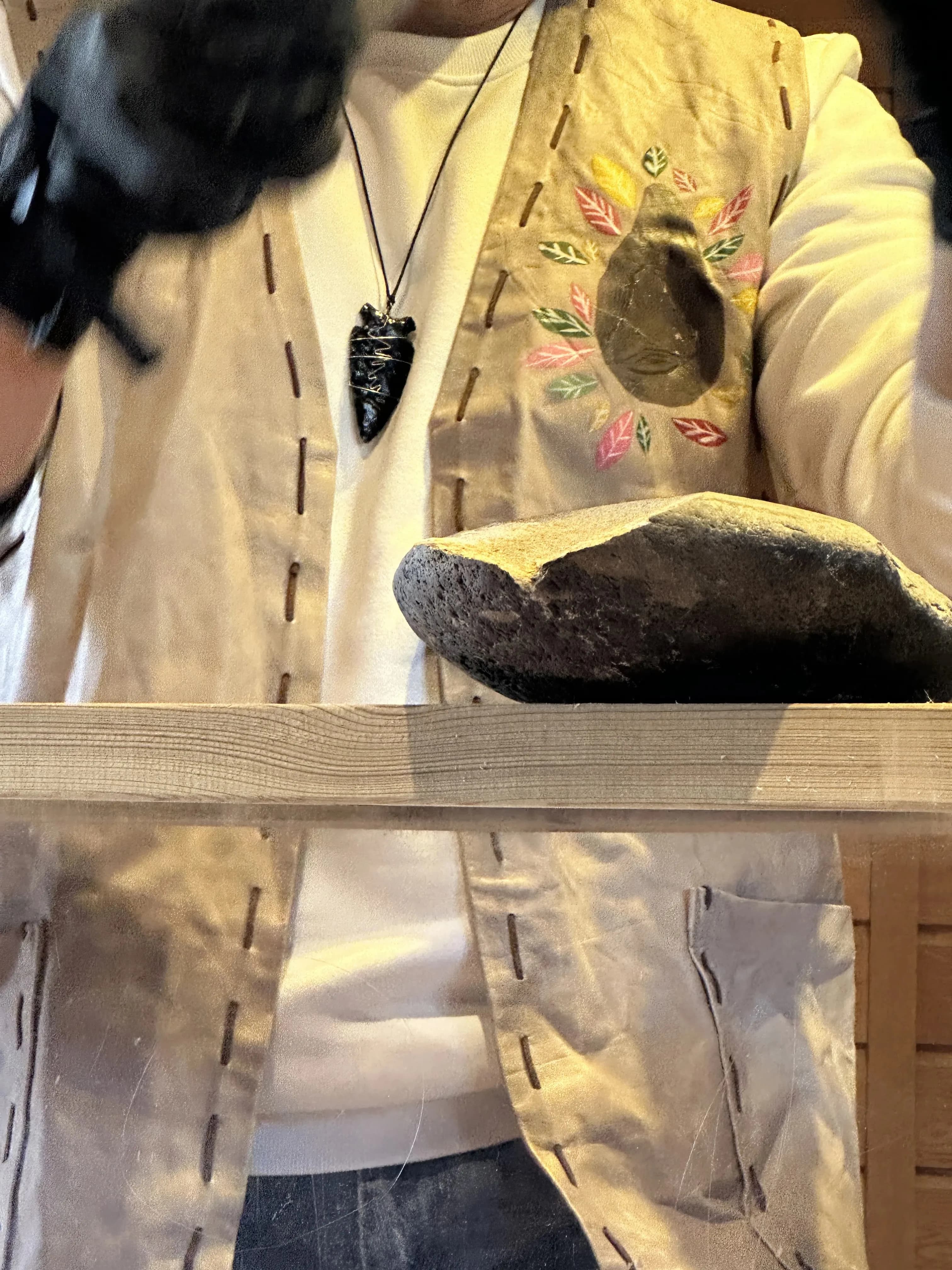
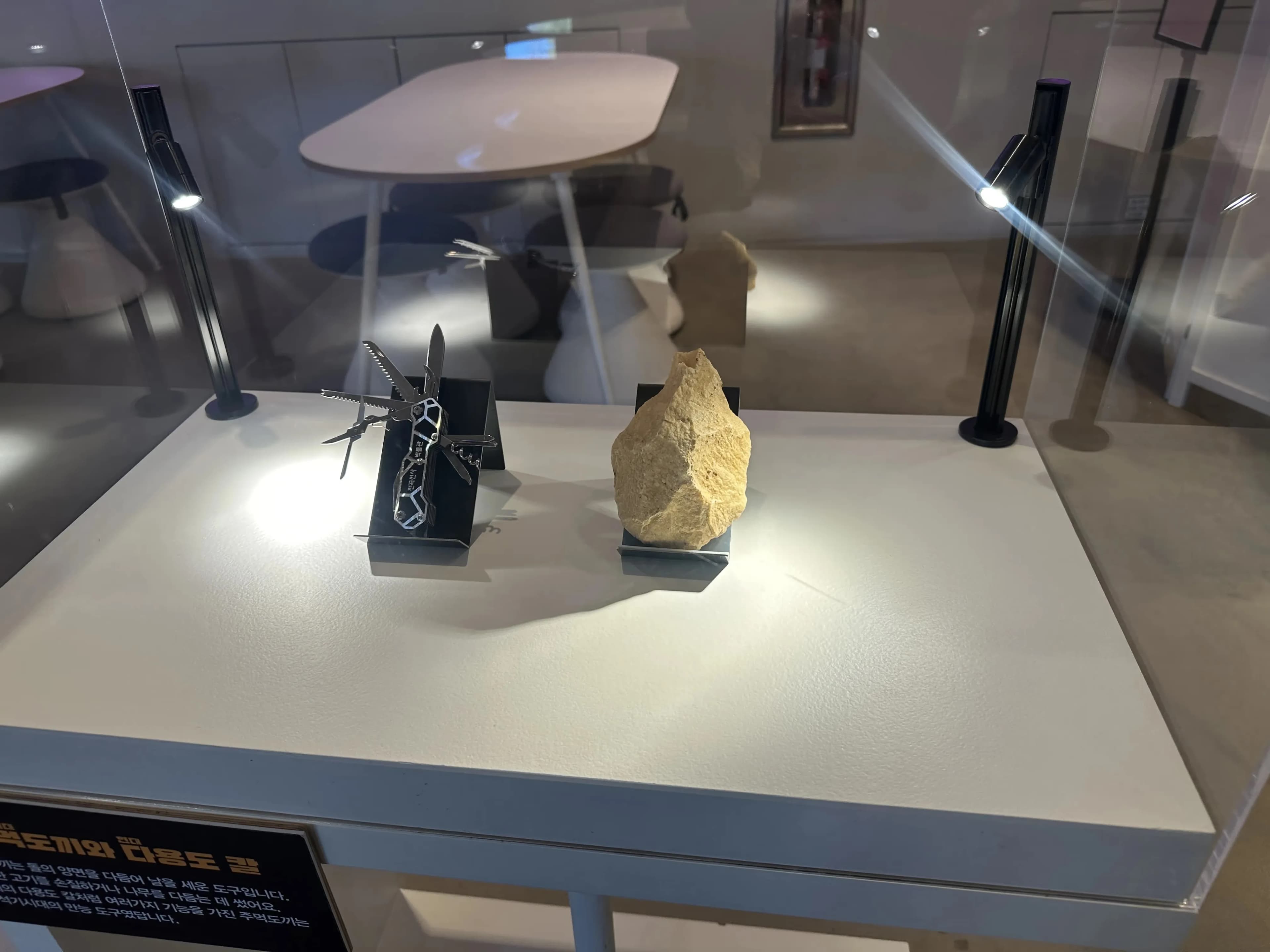
If you keep flaking the rock this way and then shape the edges by striking both sides, you get a hand axe.
He said that although a simple flaked stone tool would have been functionally sufficient, the fact that people deliberately balanced and refined both edges into a symmetrical tool shows that even back then they had ideas about art and symmetry.
To make a hand axe, you have to think about exactly how to strike the stone, where to chip it, and what form it should take.
So at the time, it was like a concentrated bundle of technology, comparable to a smartphone today.
After hearing the director’s explanation, hand axes looked a bit different to me.
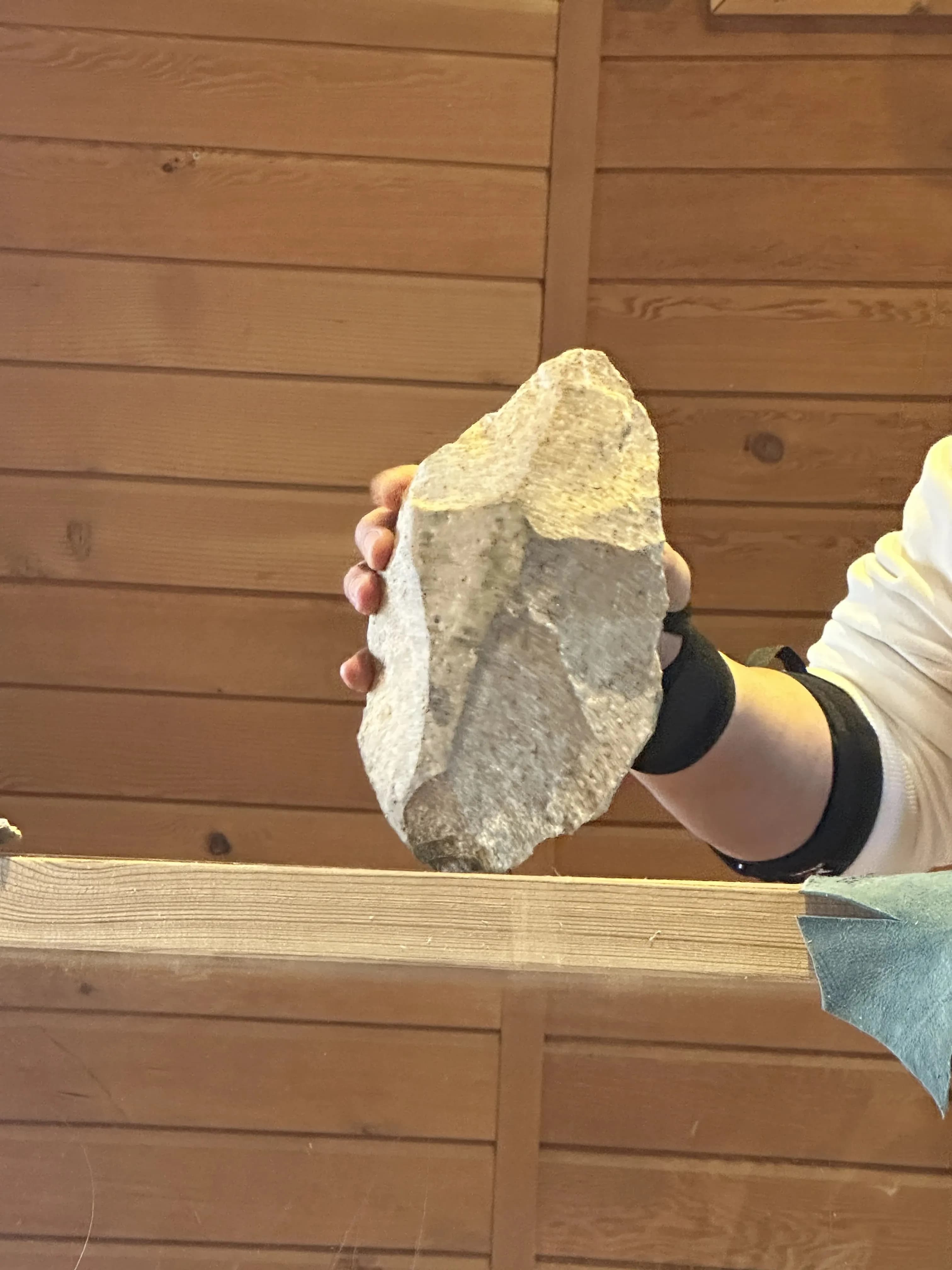
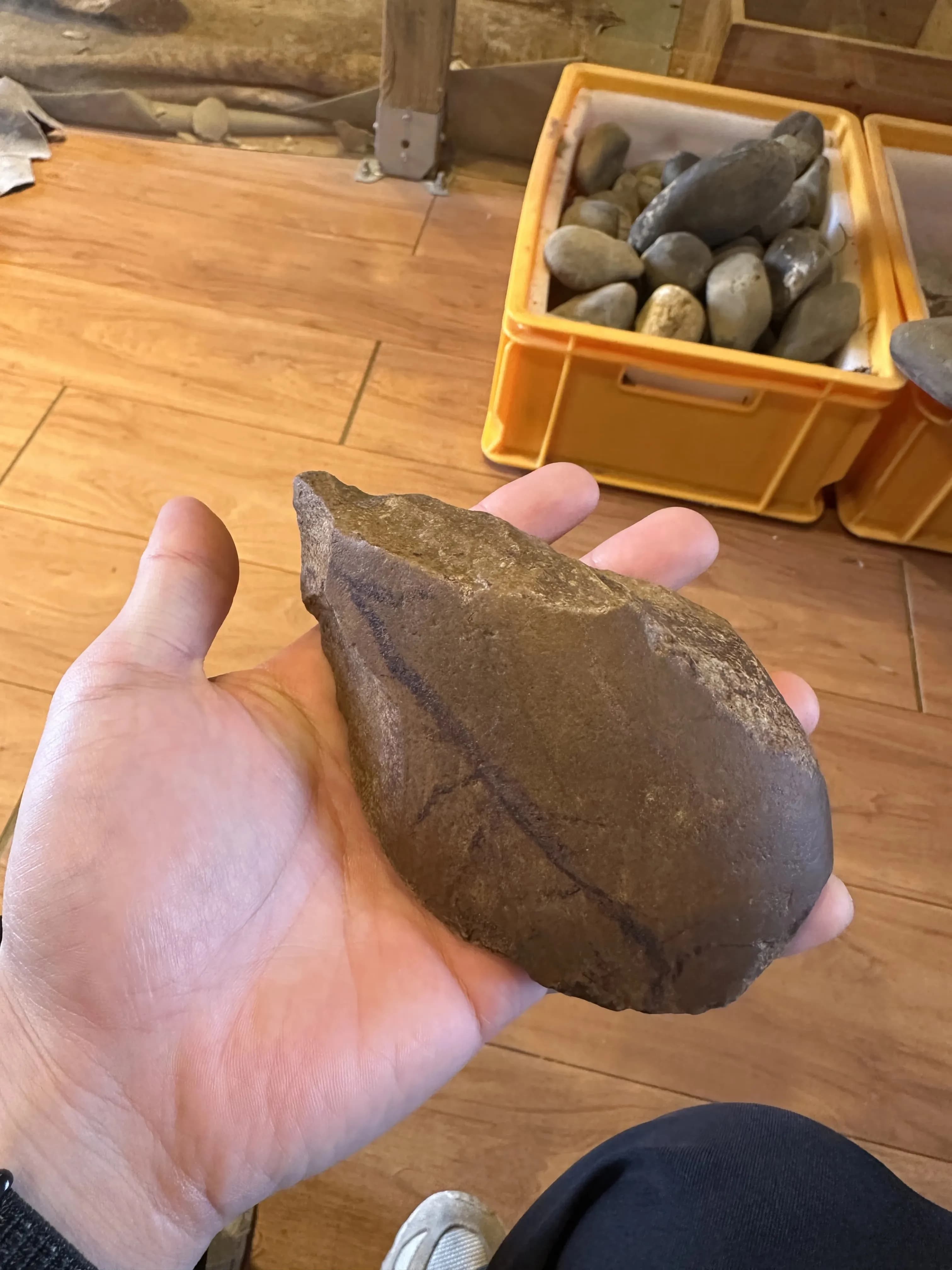
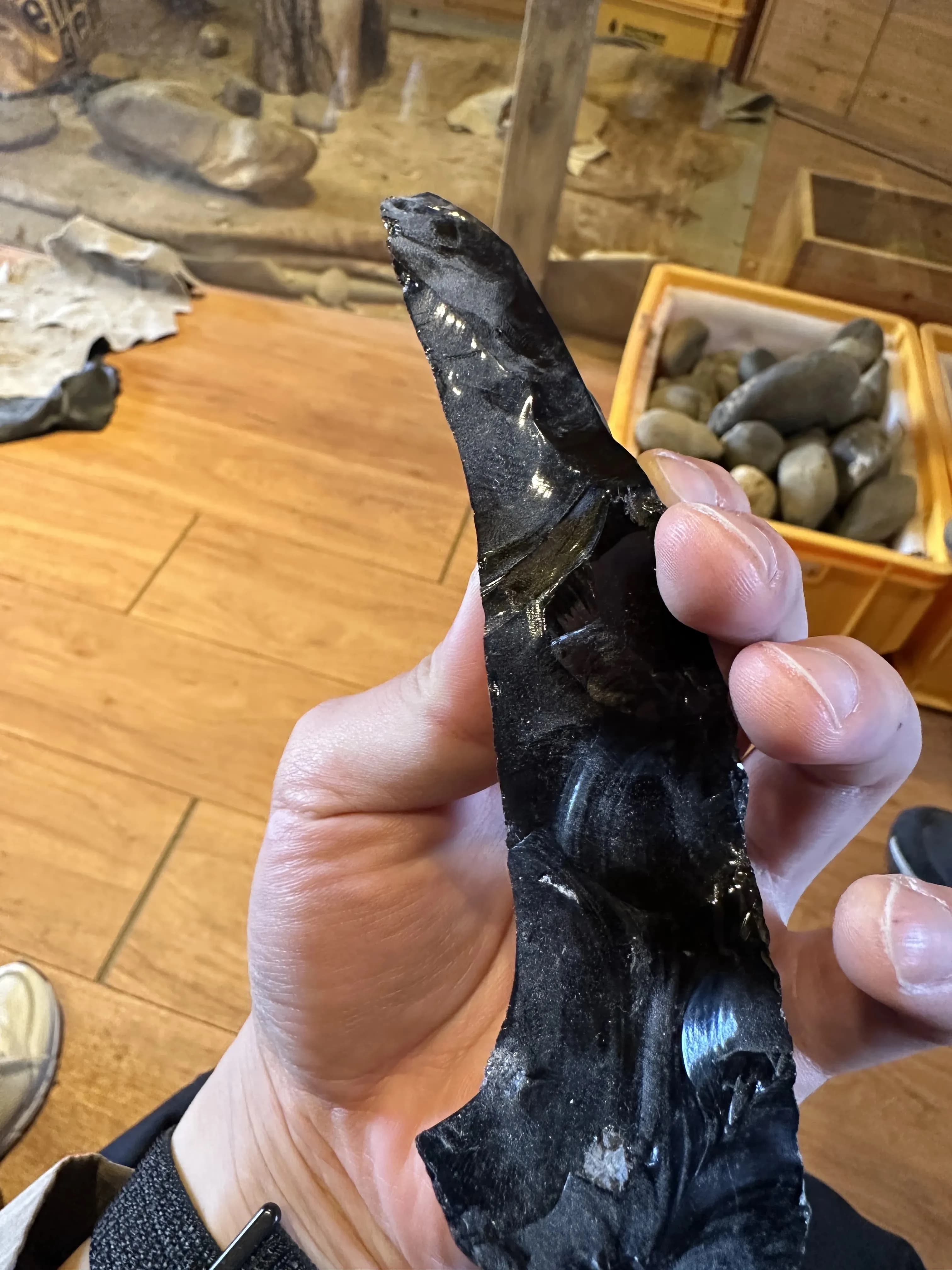
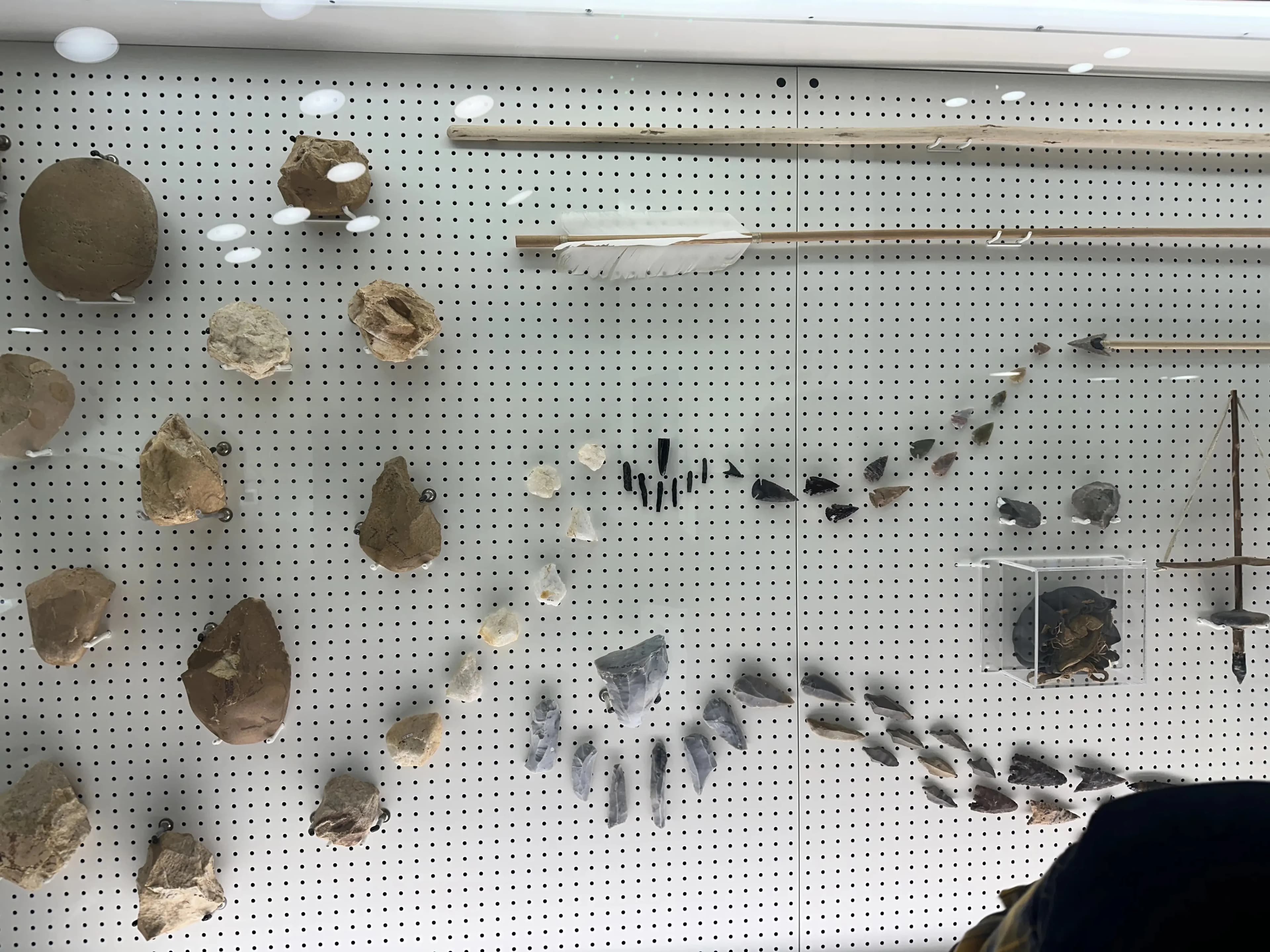
He showed us an actual hand axe and an obsidian blade, so I took some photos.
It looked exactly like the hand axe he had just demonstrated, which was fascinating.
After the lesson, we toured the museum.
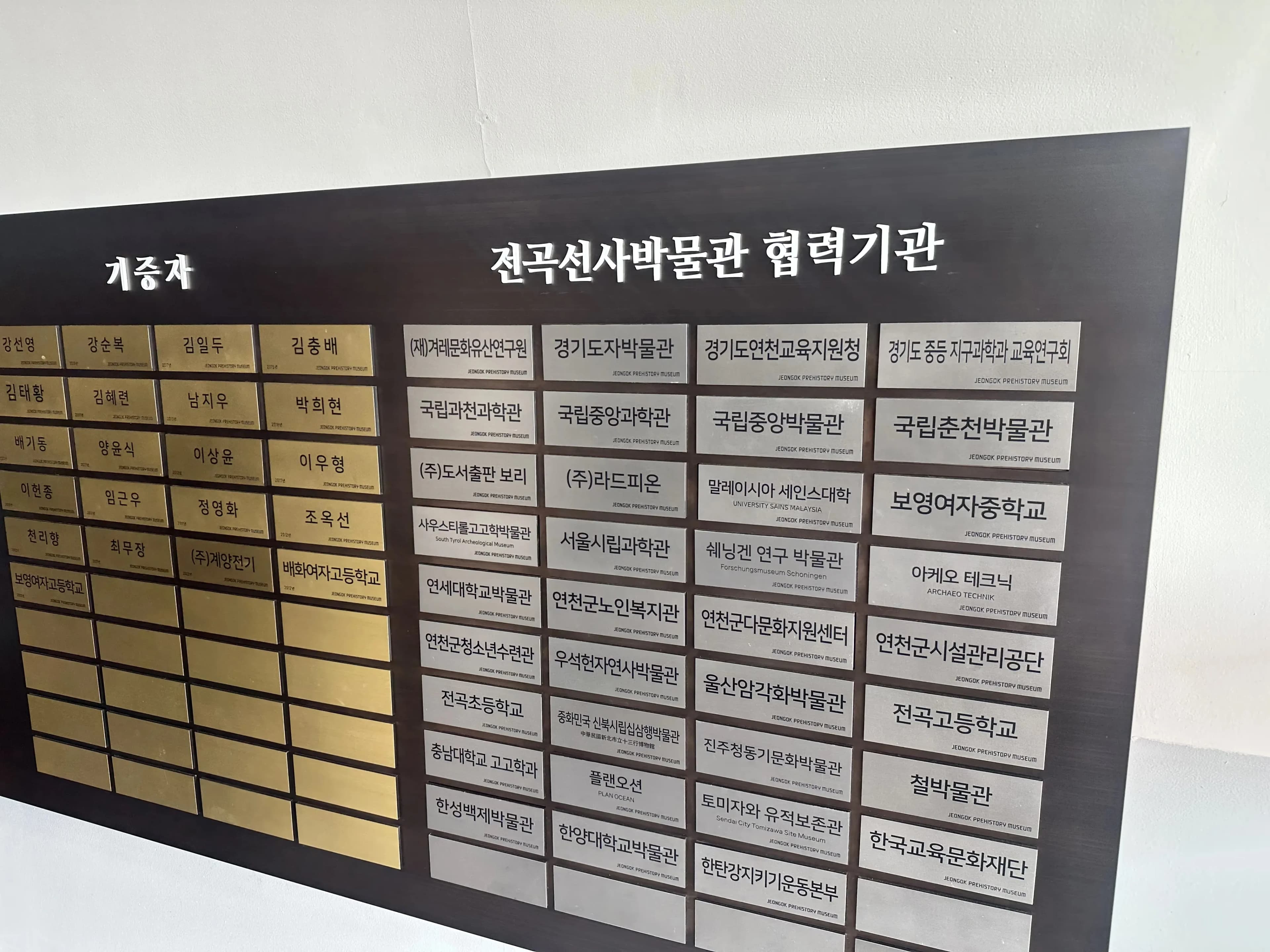
At the museum entrance, I saw the Gyeonggi Secondary Earth Science Education Research Association listed among the partner organizations, so I took a commemorative photo.
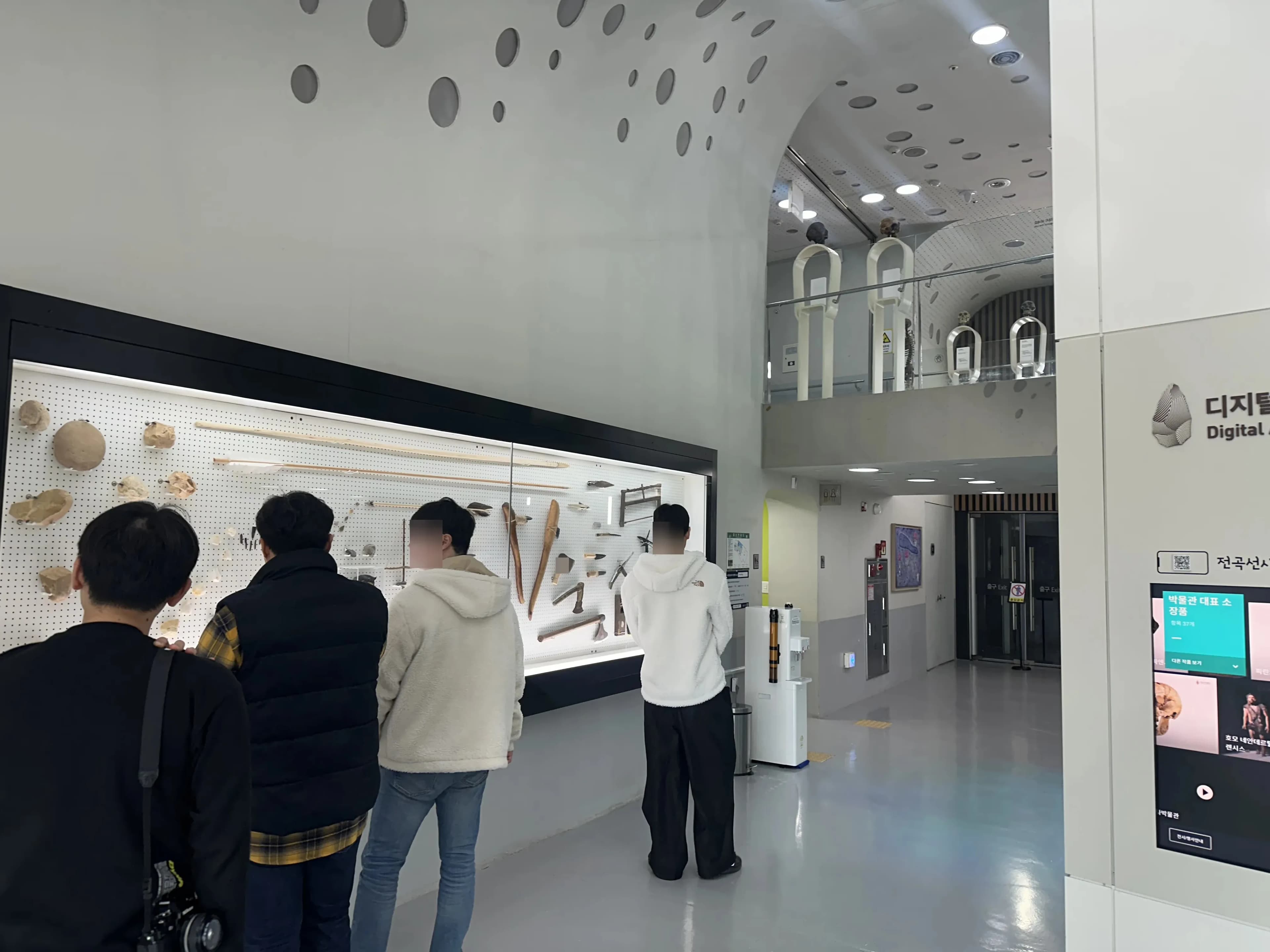
Right in front of the museum entrance there was an exhibit on the history of tools.
It dynamically portrayed the process from simple stones to flaked stone tools, hand axes, and polished stone tools, then tools for making tools, and then tools for making the tools that make tools.
What stood out was that it didn’t just address the Paleolithic period but dynamically depicted the whole process leading up to the present.
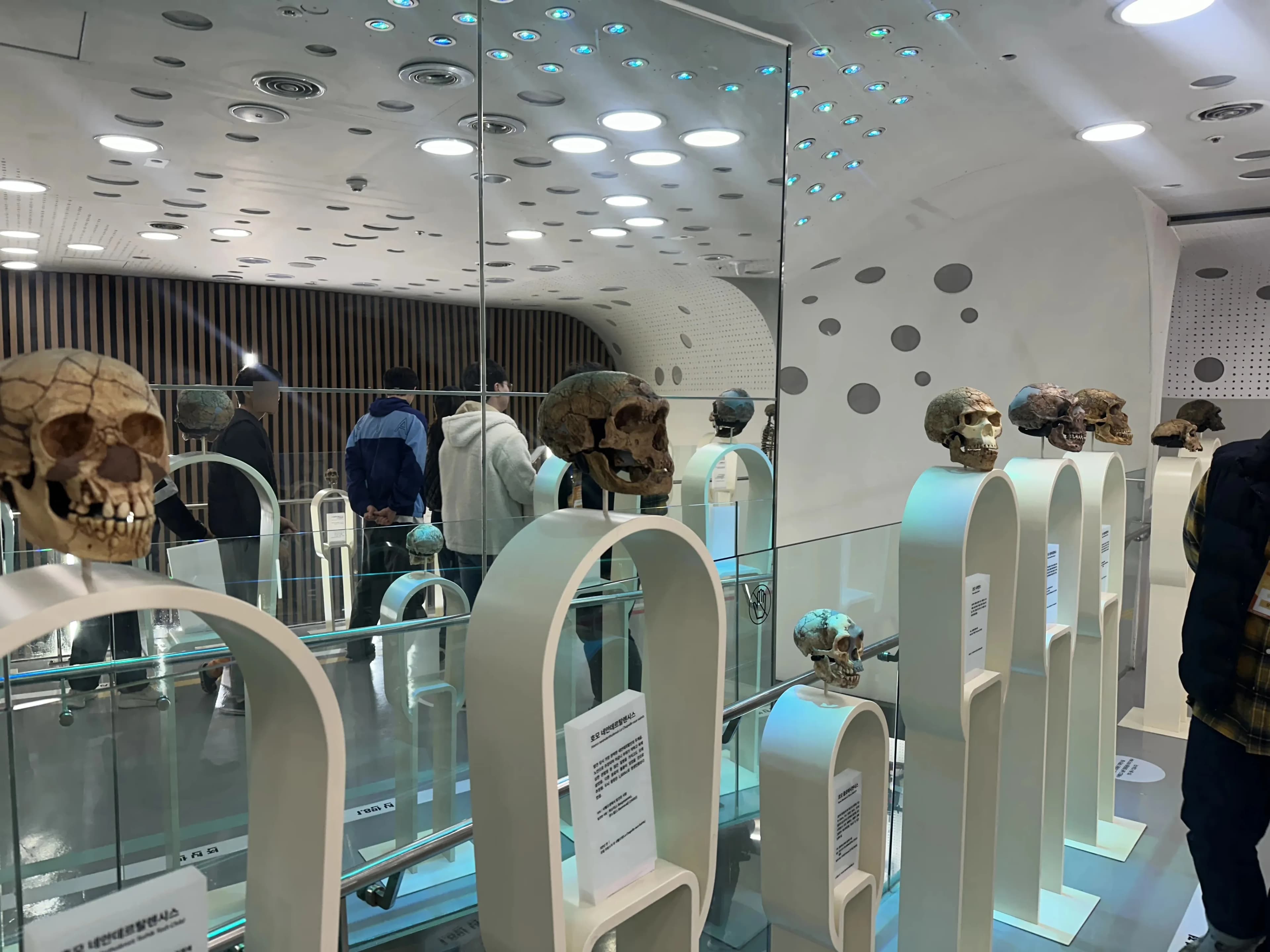
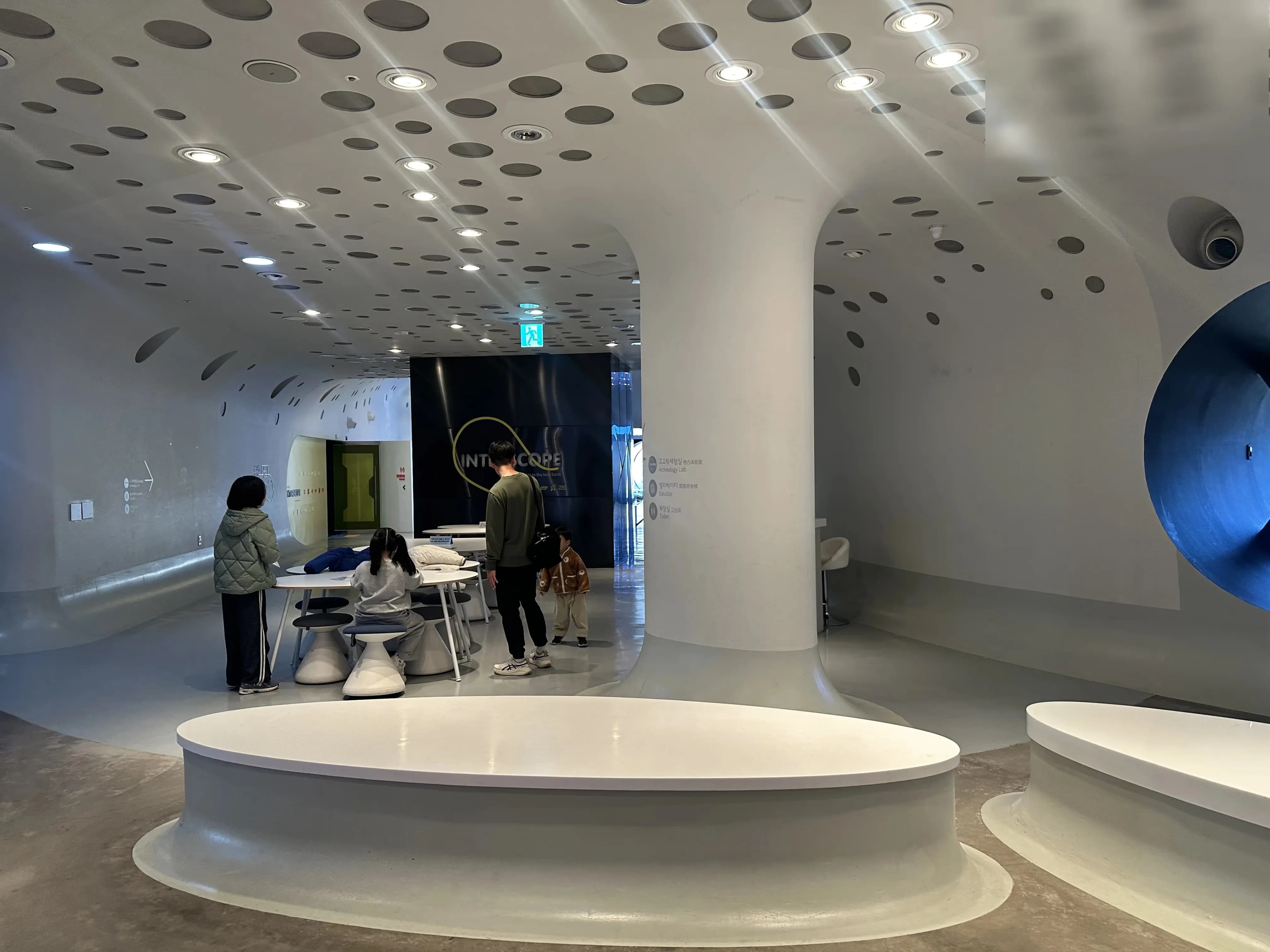
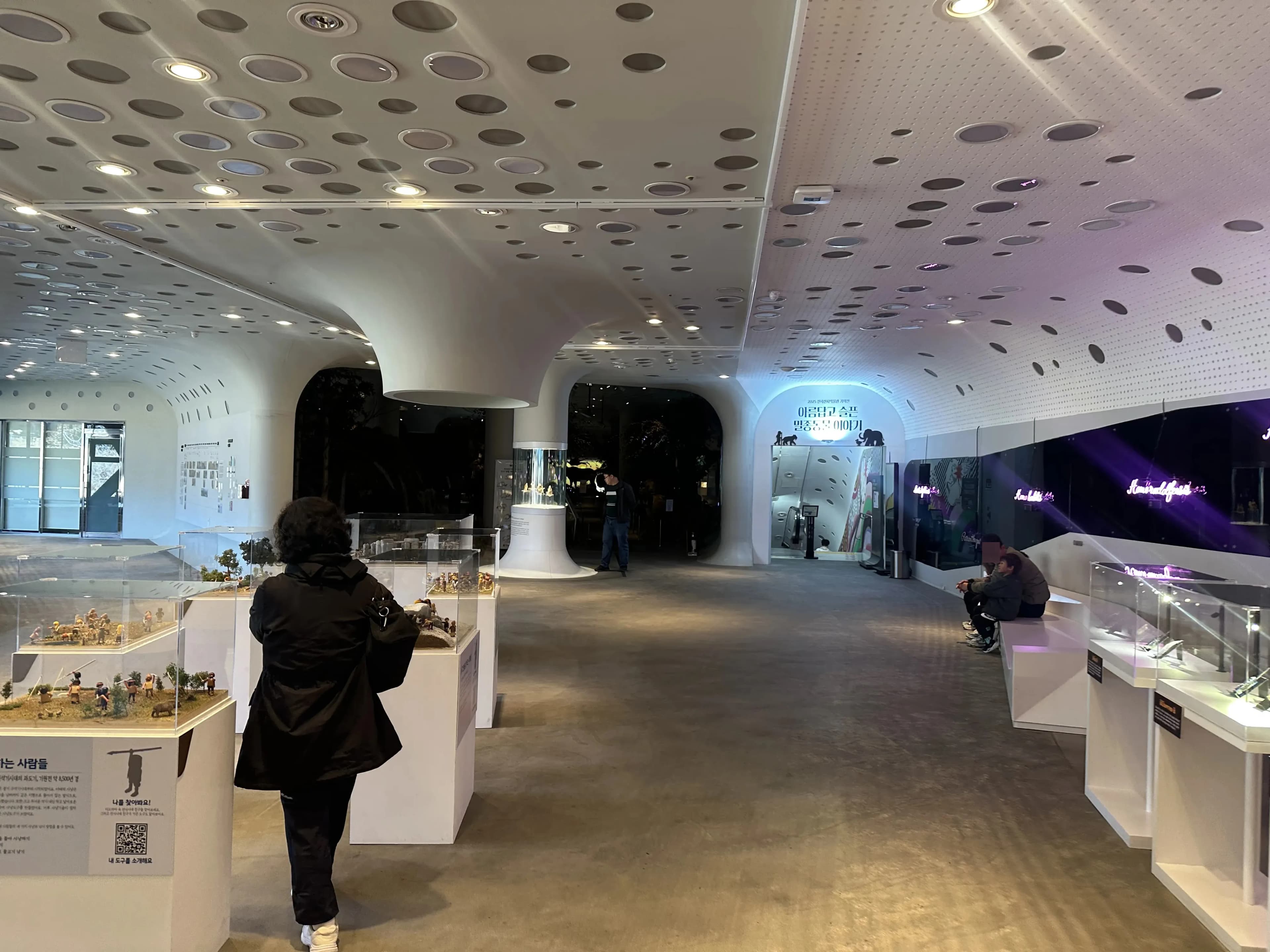
And this theme seemed to run through the entire museum.
The present and the past, and even the beauty conveyed by the sculptures.
The sculptures, which looked almost alive, also felt very dynamic.
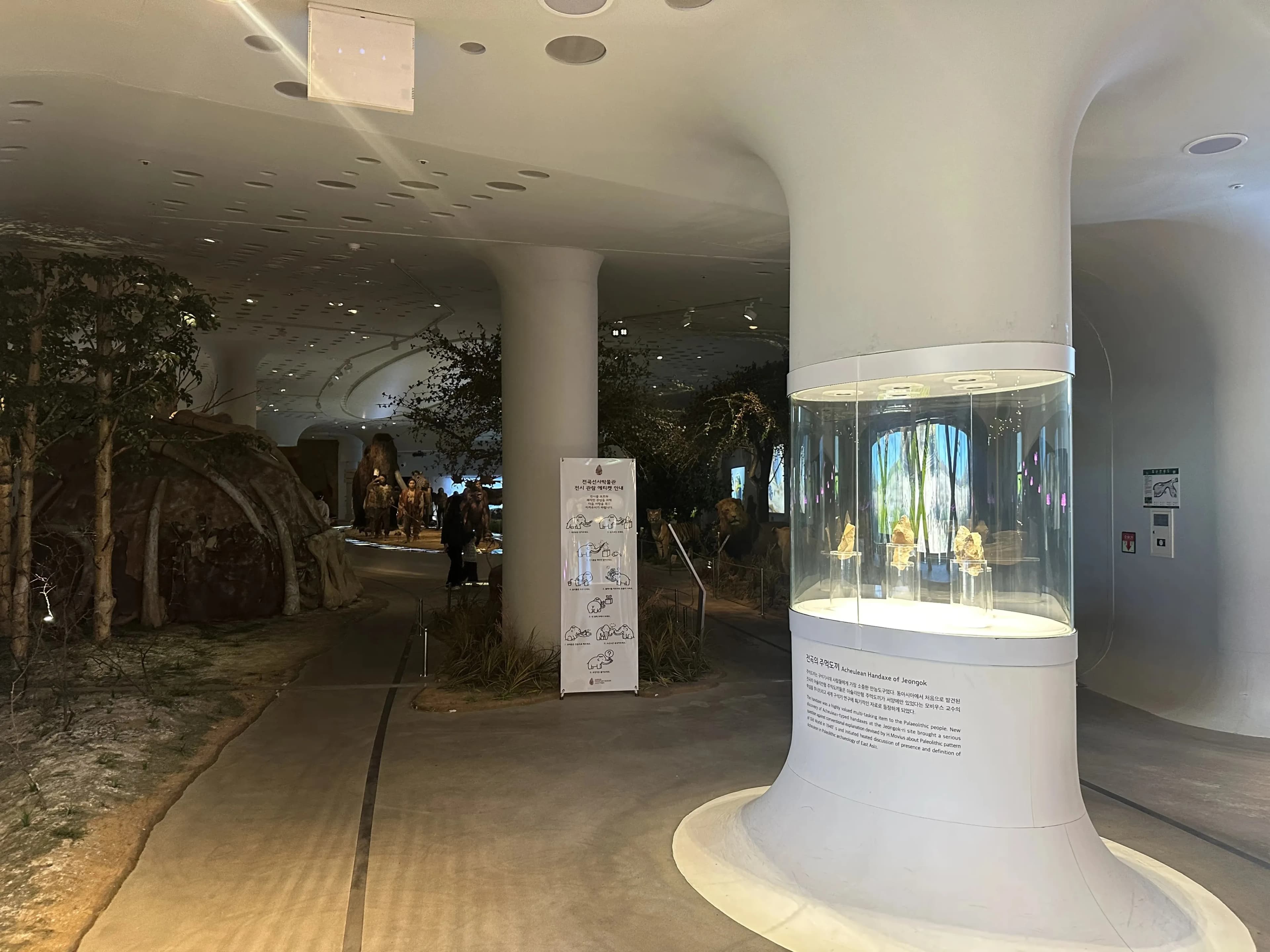
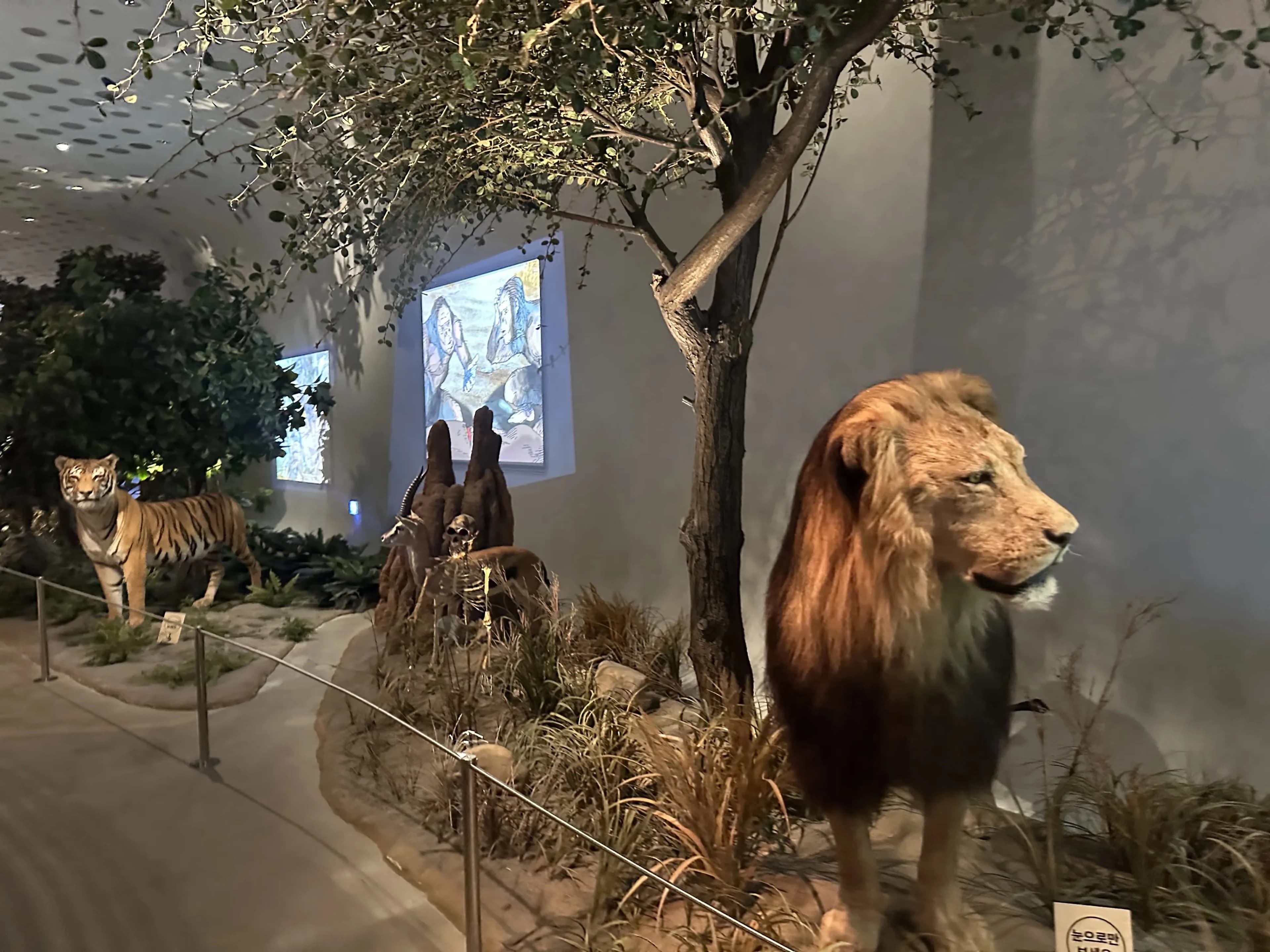
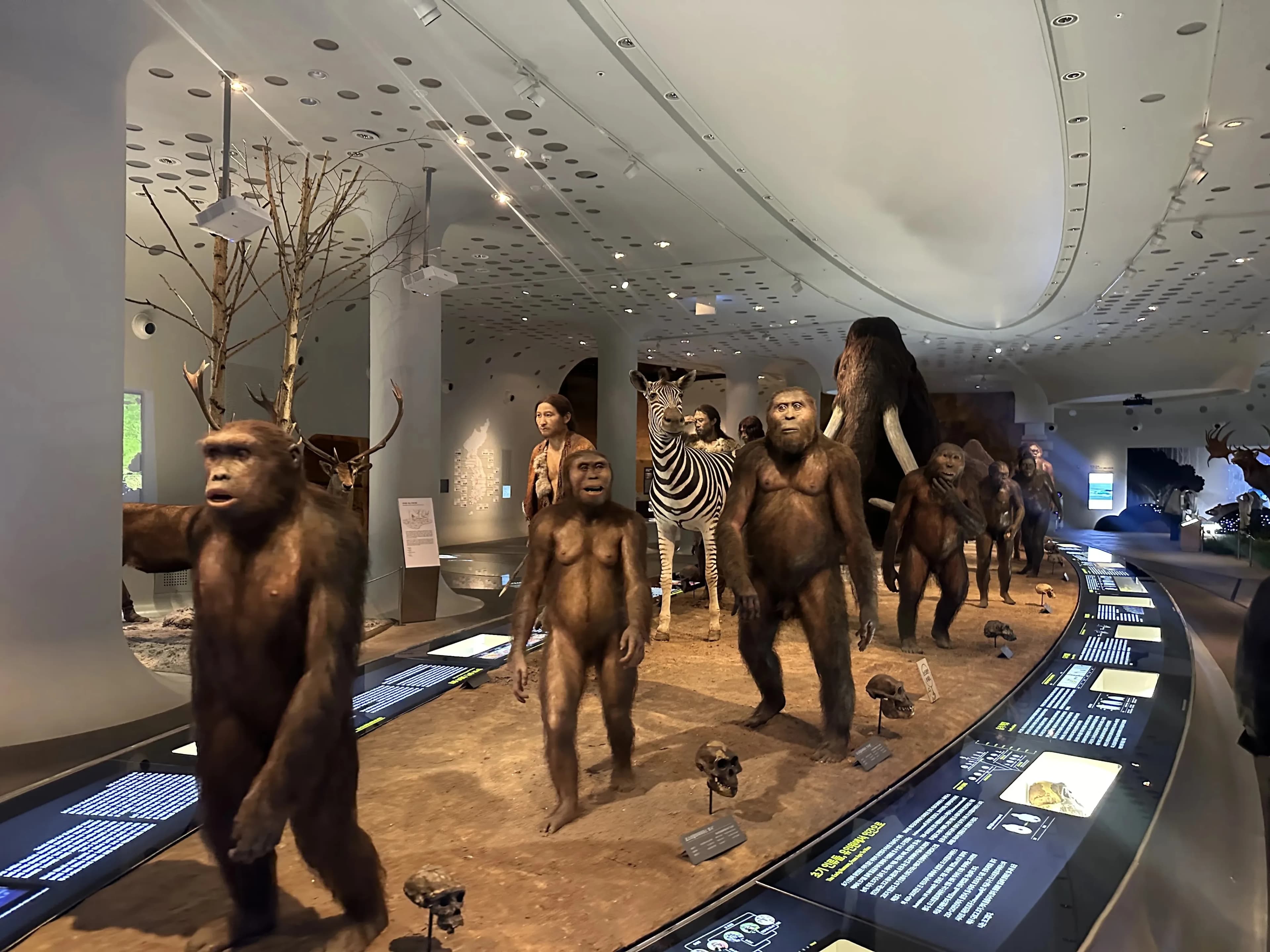
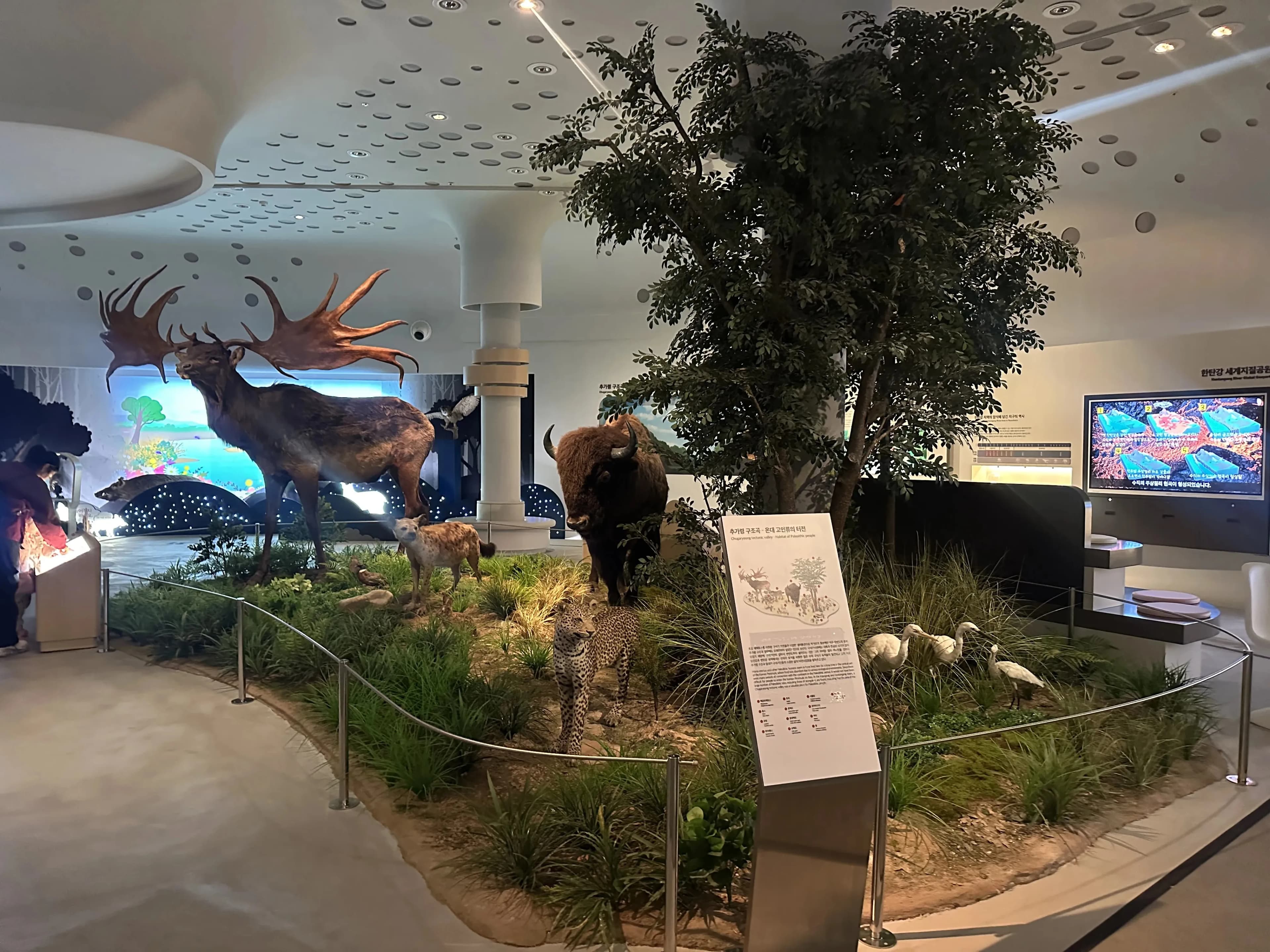
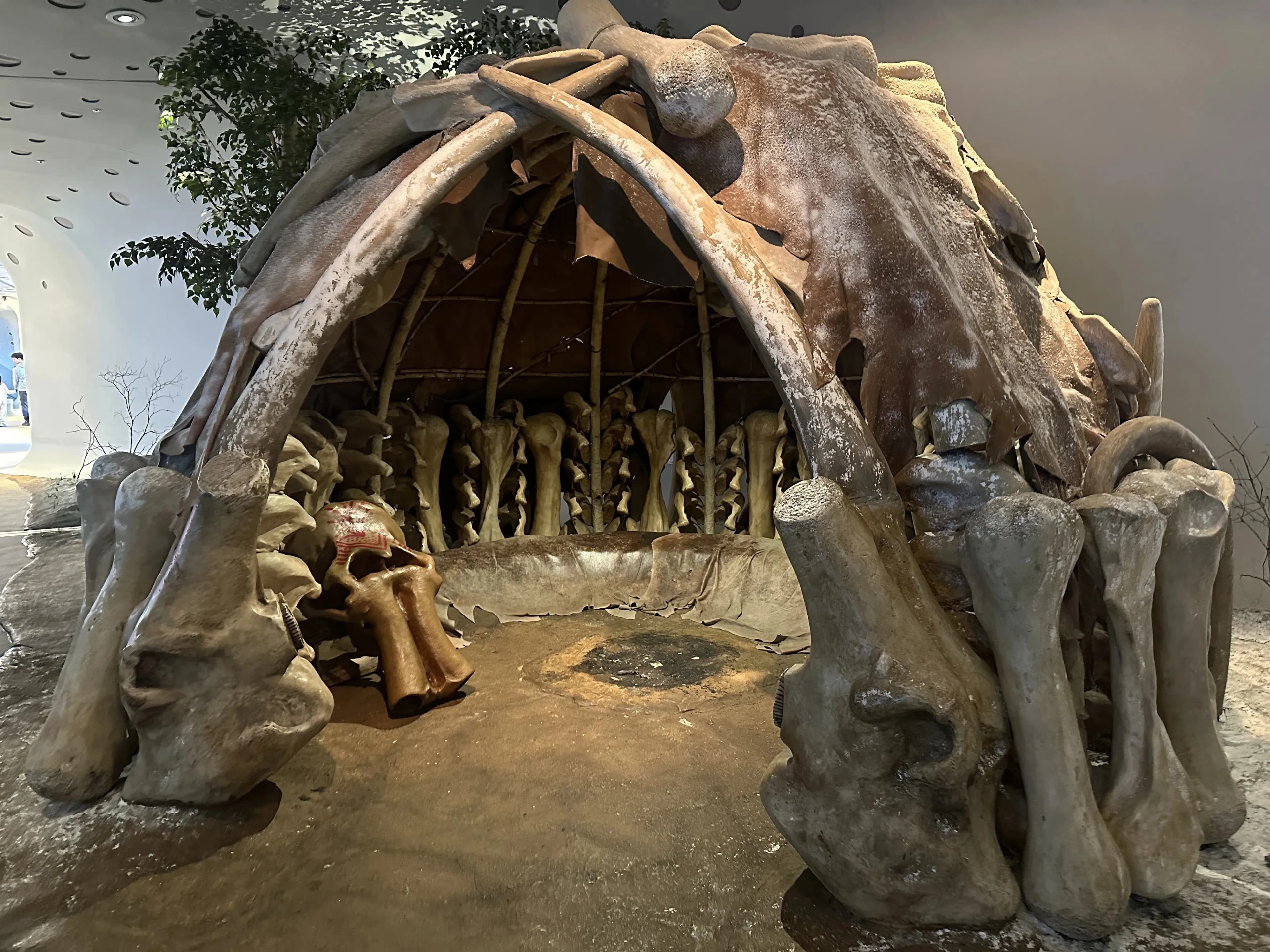
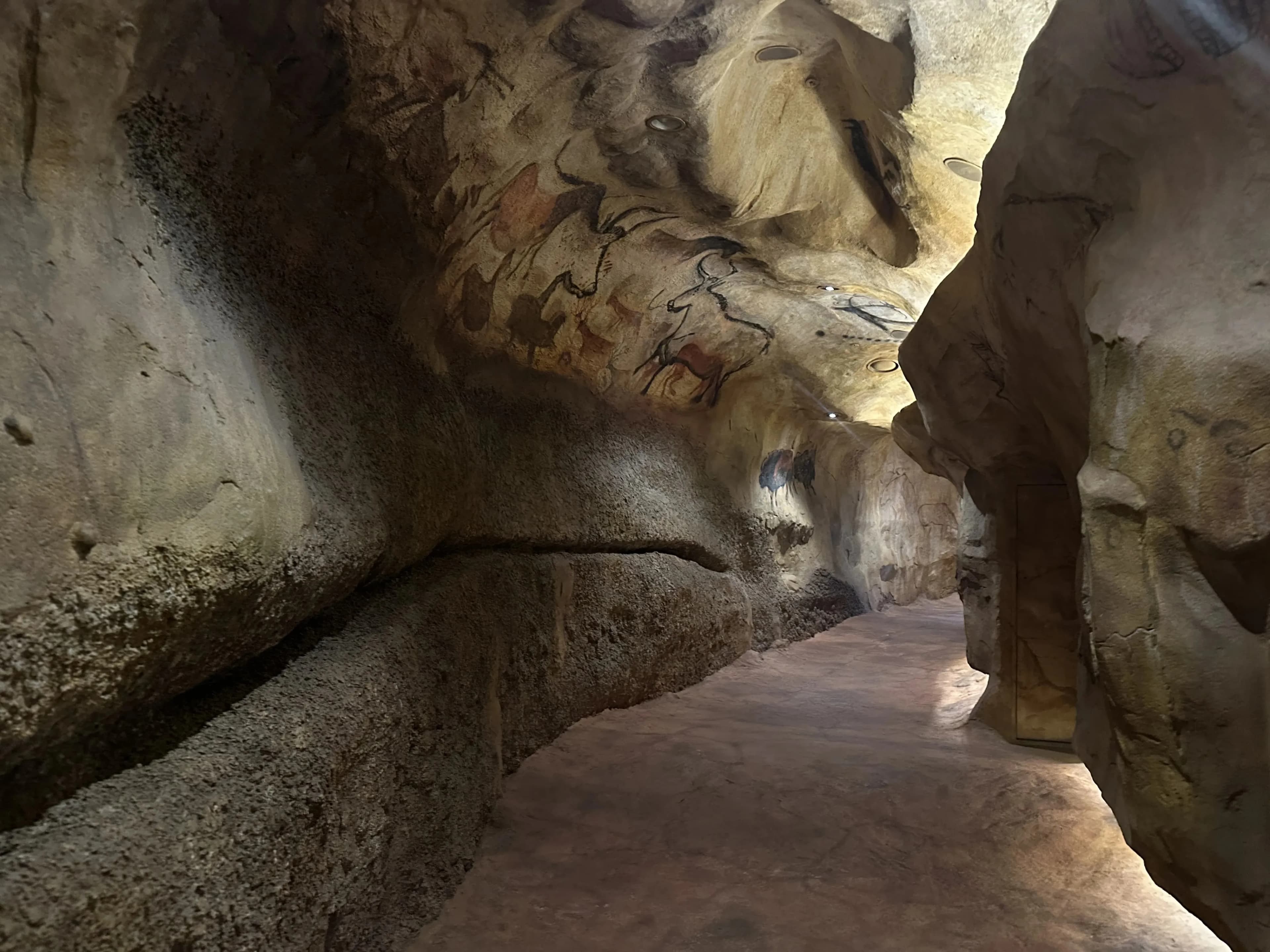
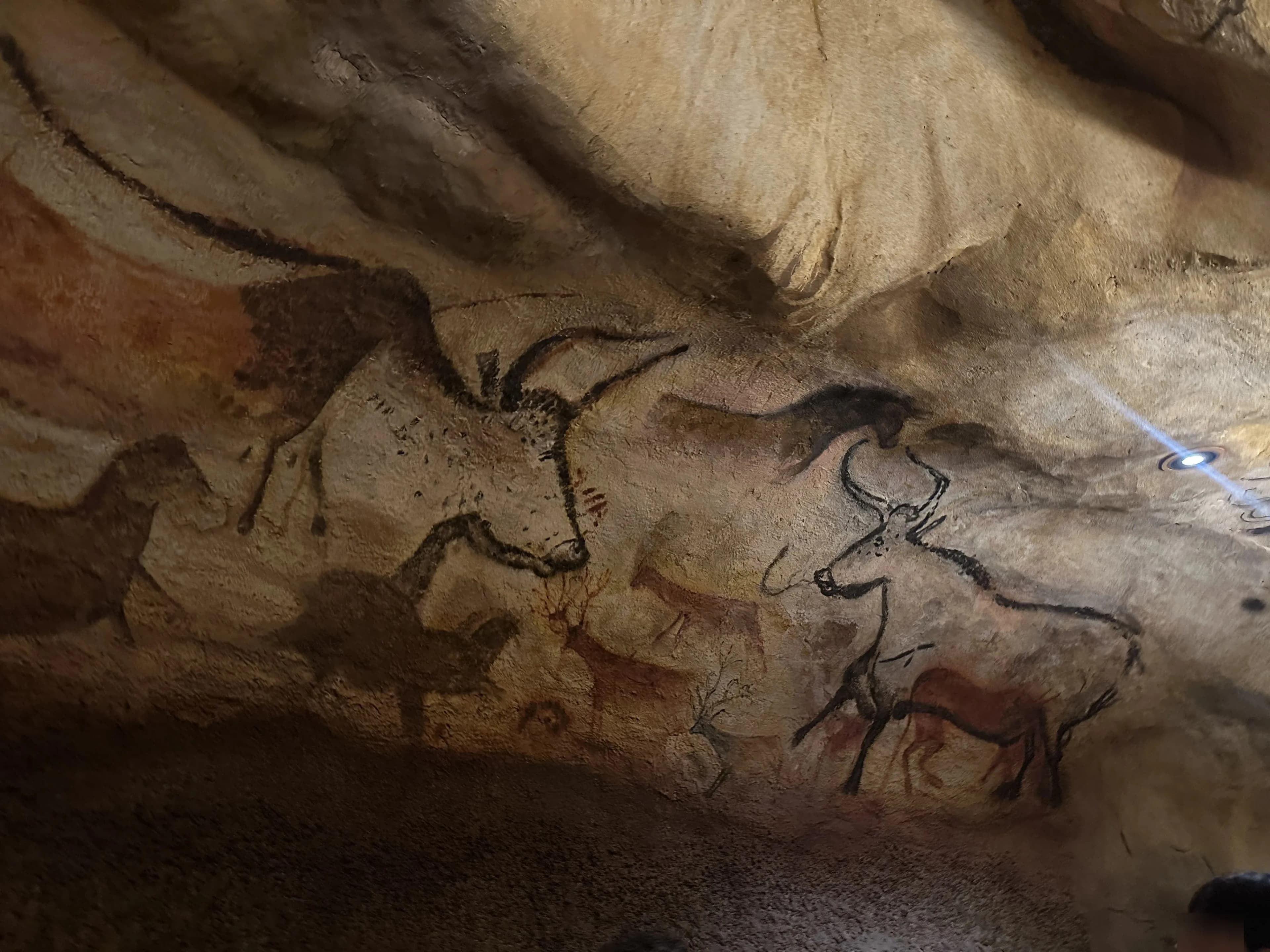
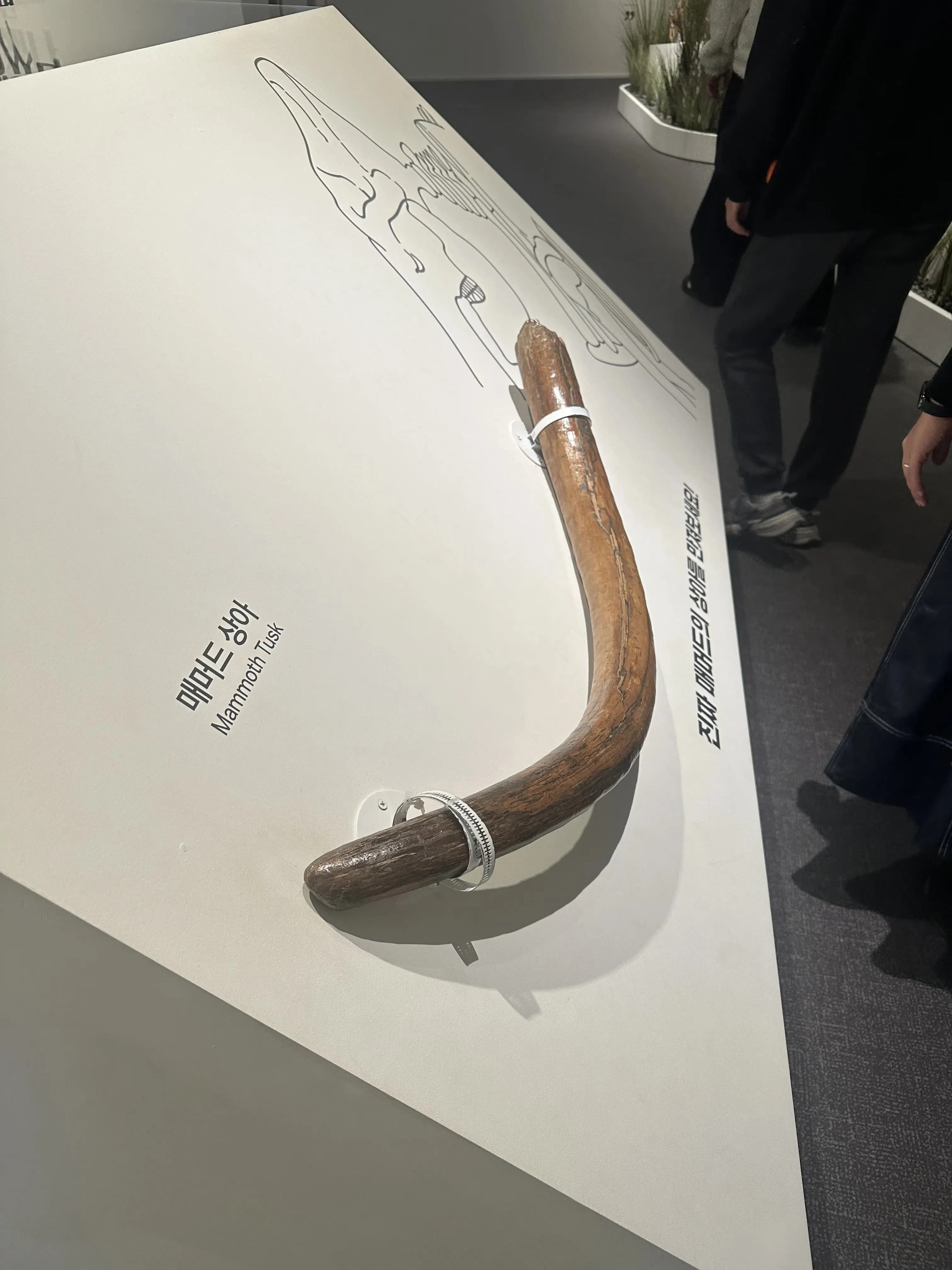
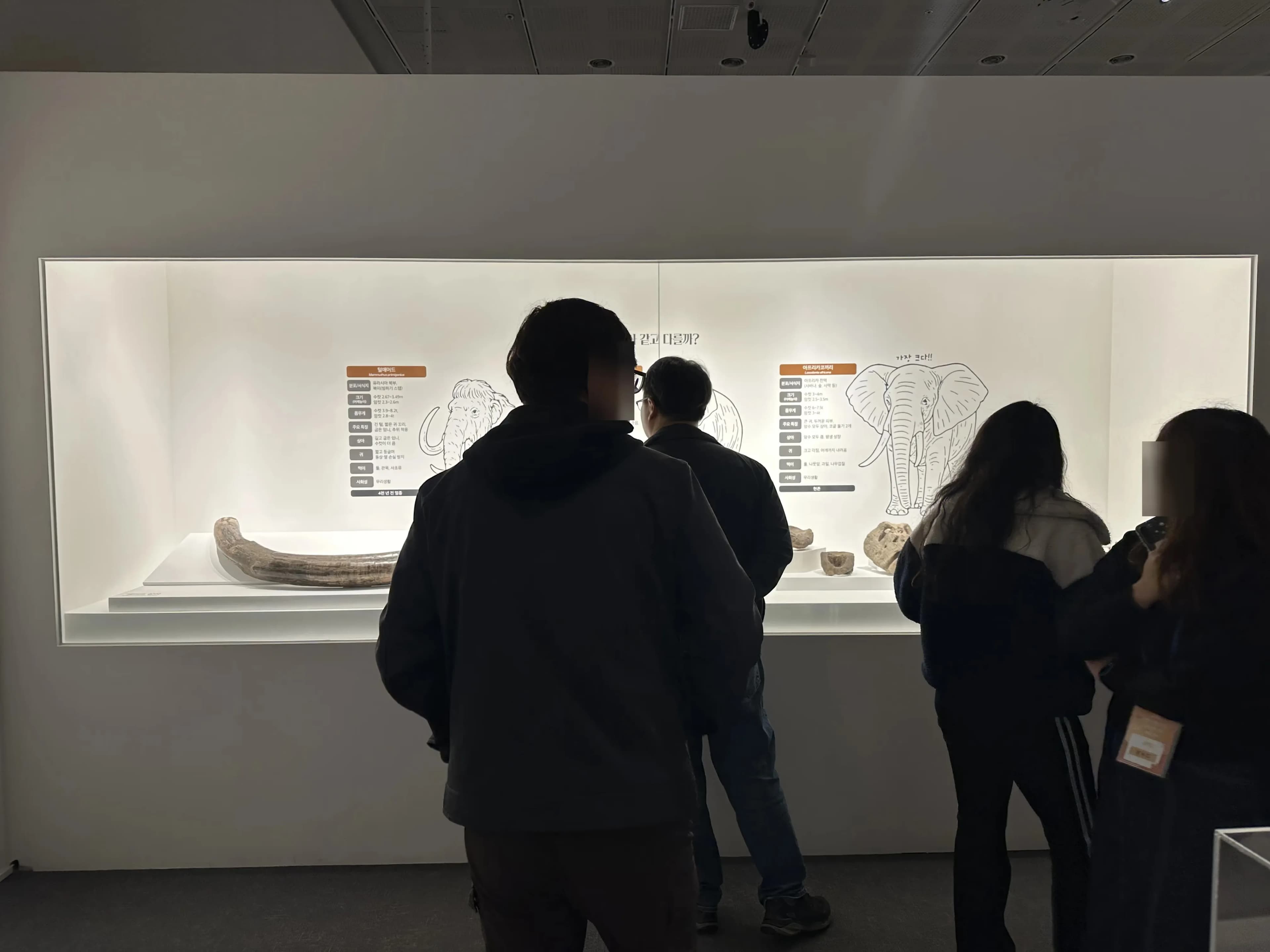
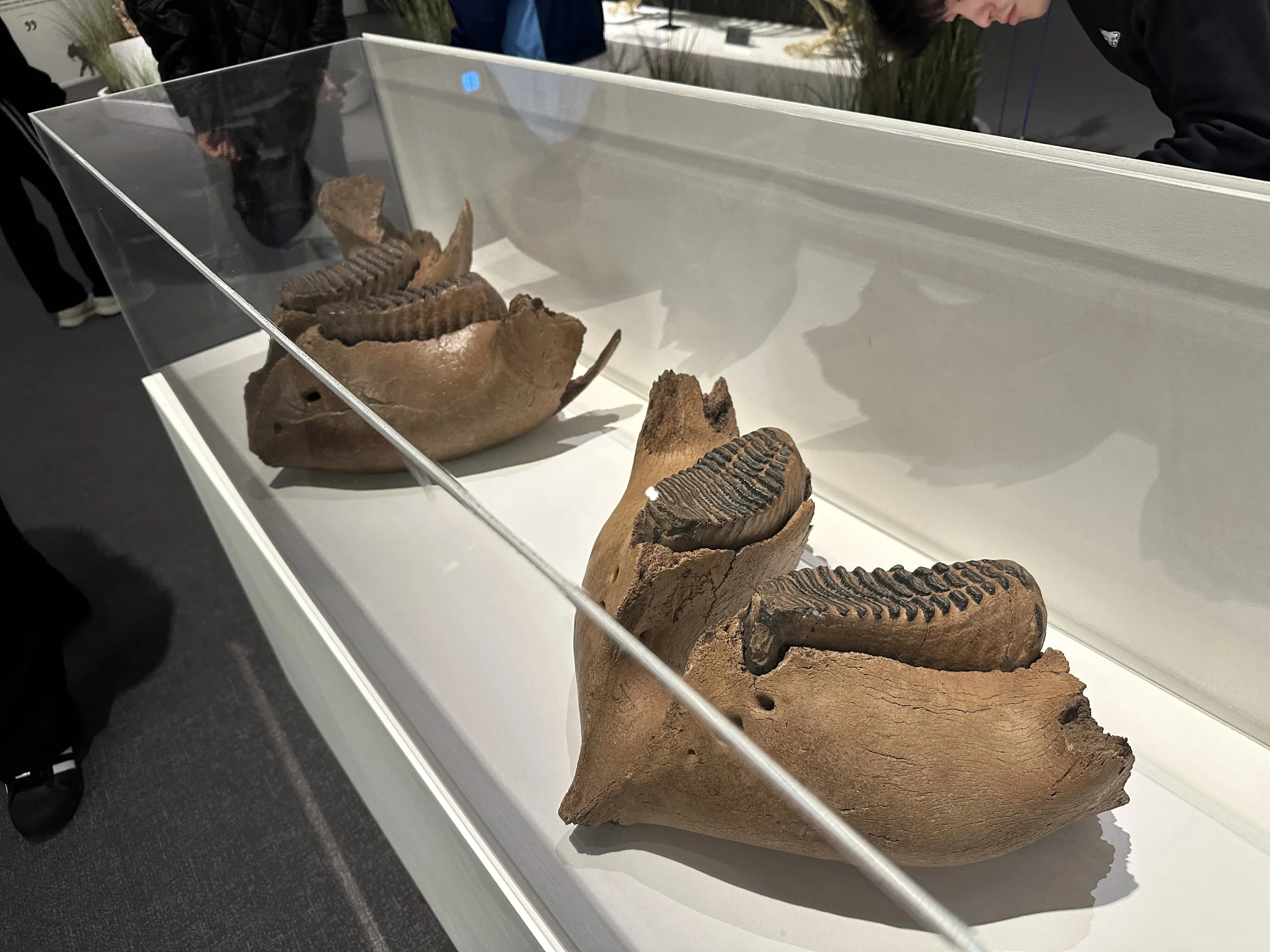
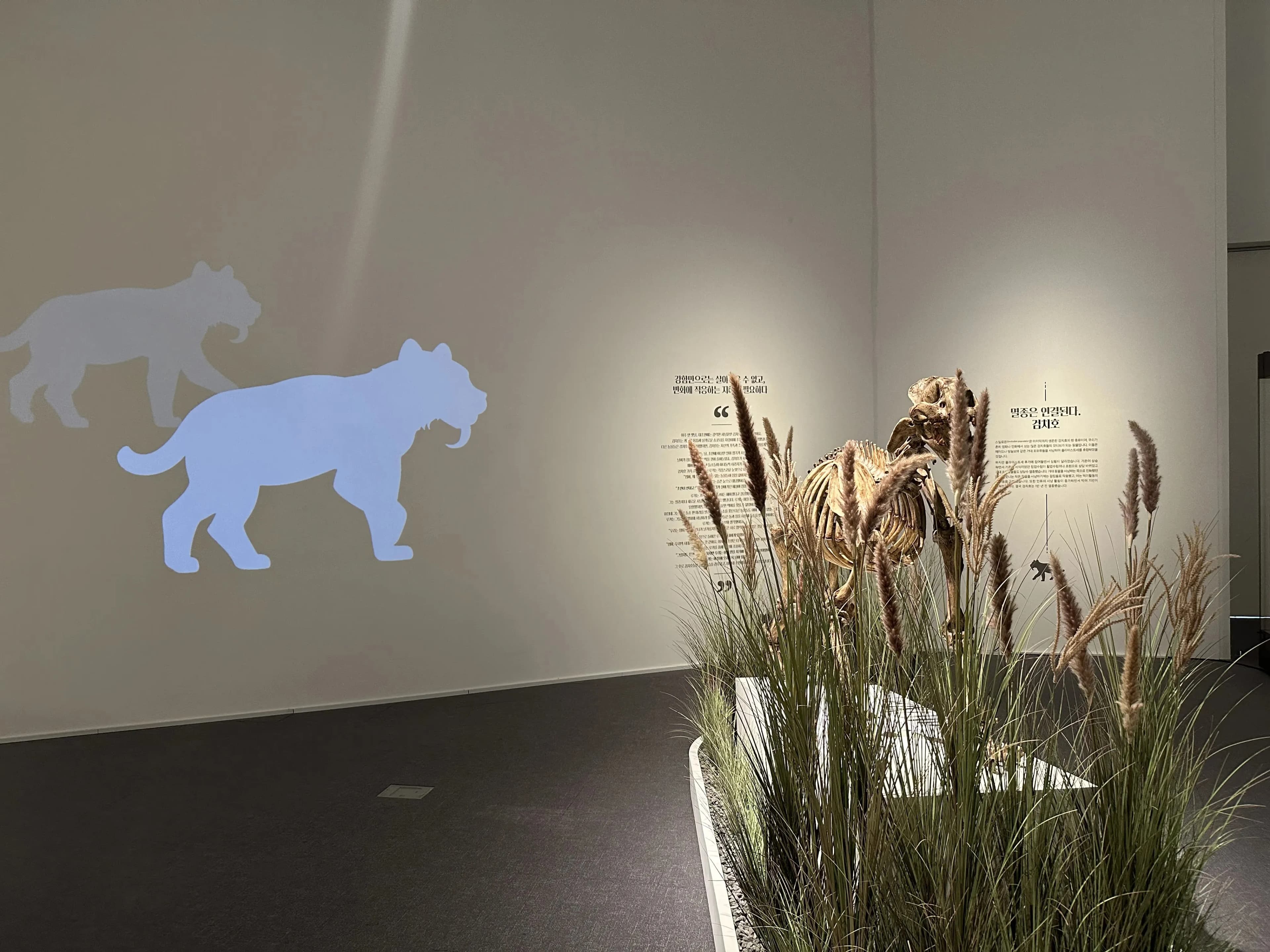
On the lower floor, there was an exhibit about animal extinctions.
They even had mammoth tusks that you could actually touch, which was amazing.
4. Field trip reflections
To be honest, I had two business trips overlapping on the same day, so it was a bit of a stretch to attend this training, but it was truly satisfying.
Watching everyone head back out at 1 a.m. and unpack their equipment for stargazing again, I could really feel the teachers’ passion for earth science.
It felt great to gather with fellow earth science geeks and cheer each other on for the first time in a while.
According to the secretary of the Gyeonggi Earth Science Education Research Association, this is a place where you get back as much as you put in.
I definitely want to participate again next time.
댓글을 불러오는 중...