Heat Equilibrium and Energy Transfer Methods - Middle School Science

힘센캥거루
2022년 3월 19일(수정됨)
23
earth

While teaching middle school students about Earth's radiation balance, I heard that this concept is quite difficult to understand.

There are no articles written for middle school students online, so I decided to write one.

This installment will cover heat equilibrium and energy transfer methods, and the next installment will discuss Earth's radiation balance.

I hope many students who love science will read this and find it helpful.

1. Why Does Hot Water Cool?

During a third-year middle school class, before teaching about radiation balance, there is a question I always ask the students.

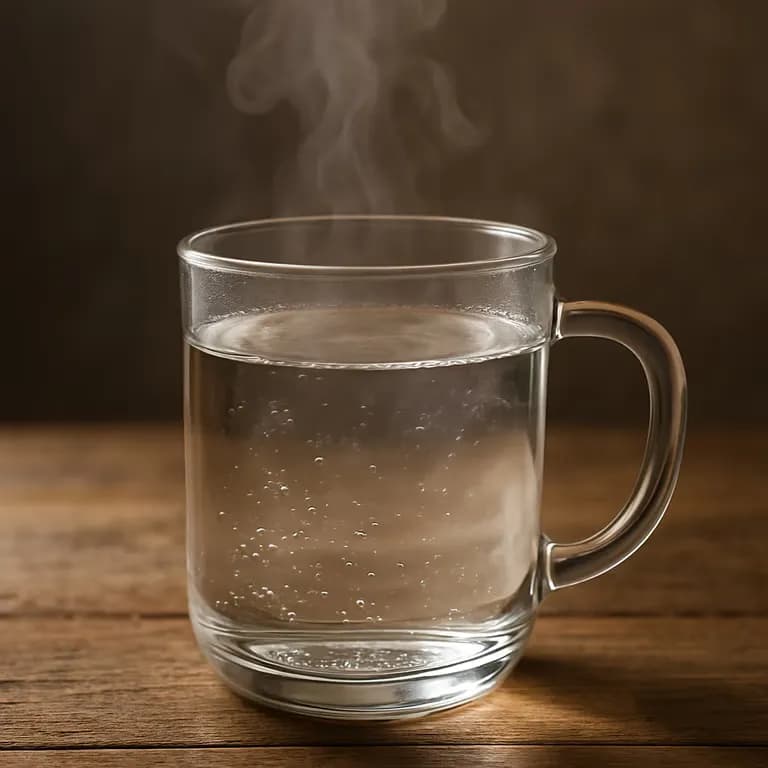
Why does a vessel with hot water cool down when left for a long time?

Uploaded image

It may seem like a very natural and common sense phenomenon, but it might be slightly challenging for middle school students to explain this scientifically.

Occasionally, students who remember what they learned in second-year middle school explain this through heat equilibrium.

So this time, let's take a closer look at how heat equilibrium is achieved.

2. Heat Equilibrium

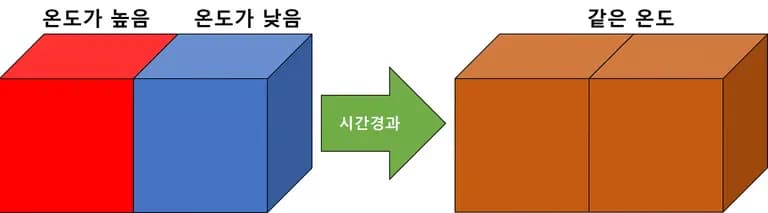
Heat equilibrium refers to a state where two objects with different temperatures reach the same temperature and there is no heat flow.

Uploaded image

As shown above, when we place objects with different temperatures together, they reach the same temperature over time.

At this point, we say that there is no heat flow between the two objects and that heat equilibrium is achieved.

Then what is heat?

3. Heat and Energy Transfer

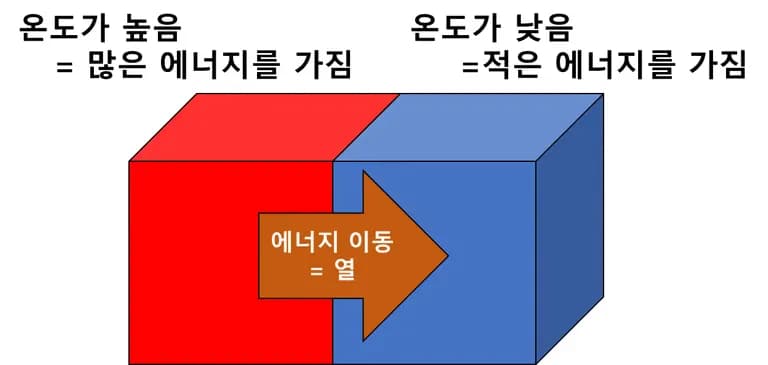
Generally, the higher the temperature of a substance, the more energy it has, and the lower the temperature, the less energy it has.

At this point, energy moves from the side with more energy to the one with less energy, that is, from a hotter object to a cooler object, and this transfer is called heat.

Uploaded image

An object that releases energy cools down, and an object that receives energy heats up.

This heat transfer continues until the temperatures of the two objects become equal.

The flow of heat is as natural a phenomenon as water flowing from high to low places.

Therefore, energy flow is often compared to water flow.

4. Methods of Heat Transfer

Heat is transferred mainly through three methods: convection, conduction, and radiation. Convection involves the movement of both energy and matter.

Conduction is the transfer of energy through materials, but there is no movement of the material itself.

For example, let's understand the process of cooking ramen in the video below using 1) convection and 2) conduction methods.

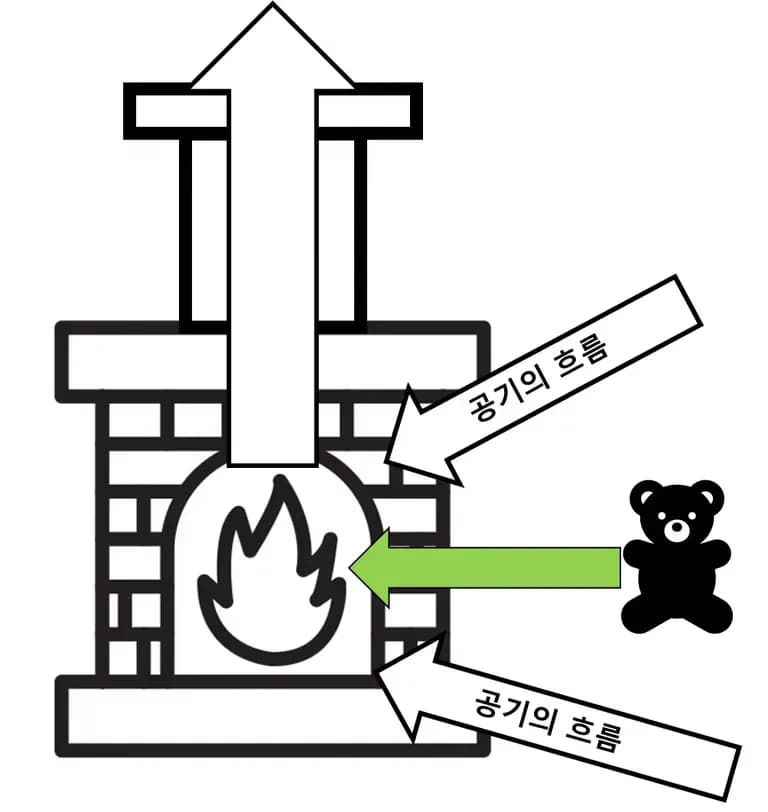
In the video above, the reason why the doll is drawn into the fireplace is because of convection.

Inside the fireplace, the air is heated, and the heated air escapes through the chimney.

At this time, a flow is formed where the air in the room is drawn into the fireplace to fill the empty space left by the escaping air.

The doll is drawn in along with this flow.

Uploaded image

So why does a person in front of the fireplace feel warmth?

Since the warmed air by the fireplace fire all escapes through the chimney, the warmth is not felt due to convection.

Conduction through the air is considerably slower compared to convection.

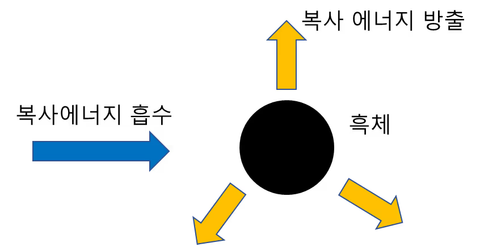
Therefore, the energy from the fireplace is mainly transferred through radiation rather than conduction or convection to the person in front.

Electromagnetic waves such as infrared and visible light (light) are emitted by the fireplace and deliver energy to people.

This method of energy transfer is called radiation.

6. Conclusion: Why Does Hot Water Cool?

Now, it's time to answer the initial question. Why does hot water cool, and why does it reach heat equilibrium?

1) Energy moves from objects with high temperature to those with low temperature.
2) Methods of this energy transfer include convection, conduction, and radiation.
2-1) Convection: Placing your hand above the hot water transfers heat along with hot air.
2-2) Conduction: Touching the vessel allows you to feel the temperature transferred from the water.
2-3) Radiation: Although invisible, energy is emitted in forms like infrared and microwaves.
3) Therefore, hot water cools because energy is emitted to the surroundings, which are at a lower temperature than the water, through convection, conduction, and radiation.

For future high school studies, I hope you understand well about heat equilibrium and energy transfer methods.

For more information on Earth's radiation balance, please refer to the below article.

댓글을 불러오는 중...