[This article was produced using AI based on a live video stream.]

Attendance-focused vs. achievement-reflecting… “Finalizing the system without support measures is risky”
The National Education Commission has begun full-scale discussions on overhauling the completion criteria for the high school credit system. With opinions sharply divided over whether to focus on attendance rates or to also factor in academic achievement, many are arguing that concrete support systems must come first before the system is implemented.
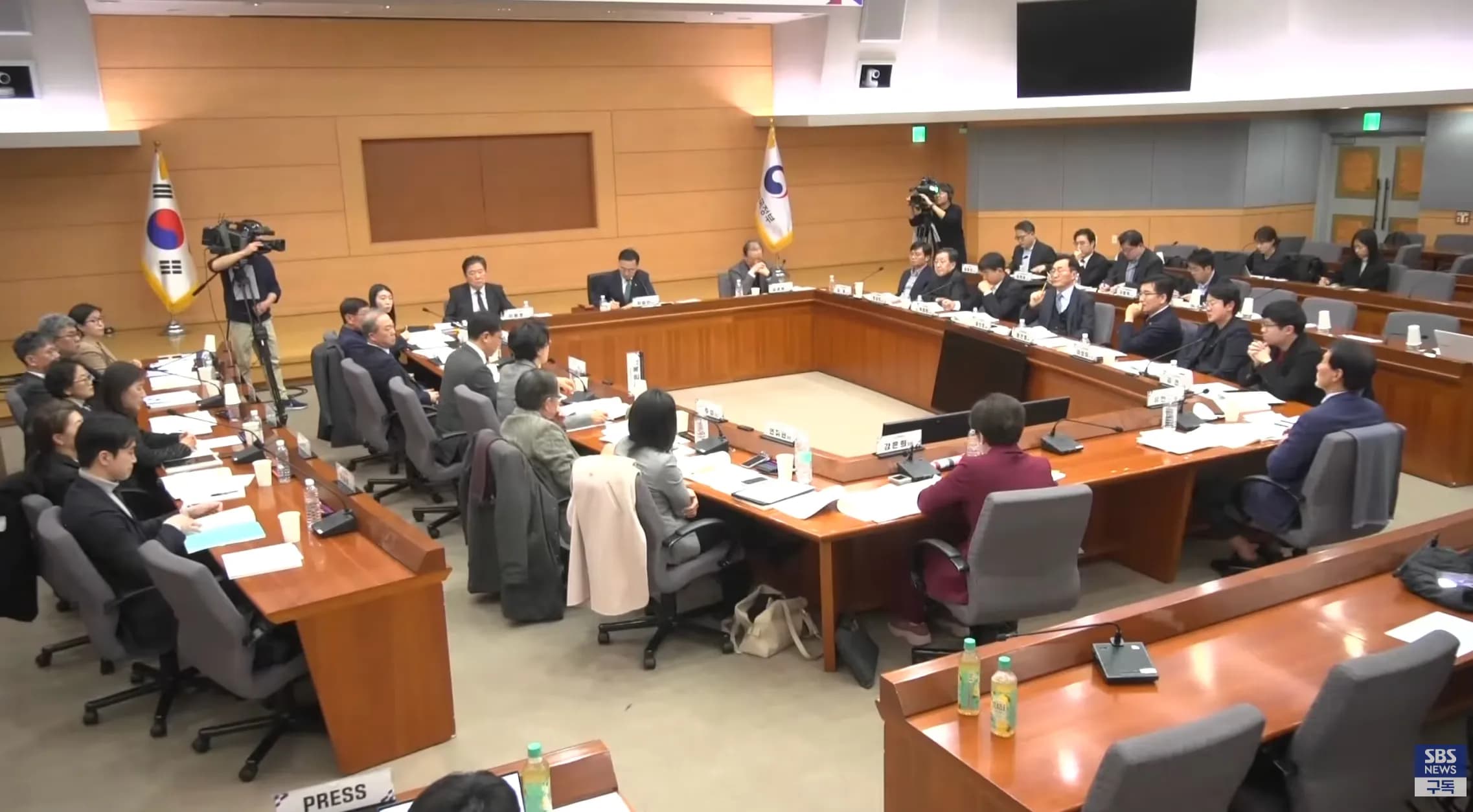
The National Education Commission held its 64th meeting on January 15 and deliberated on the reform plan for the high school credit system as a main agenda item. Six new members joined the meeting, where a total of four deliberation items, including the reform of the high school credit system, and one reporting item were discussed.
78 comments from advance notice… Majority say “attendance-based criteria are sufficient”
The Commission reviewed the results of a 20-day advance administrative notice on the completion criteria for the high school credit system. During this period, a total of 78 comments were submitted, with the majority insisting that graduation and credit completion criteria should be simplified to focus on attendance rates.
The reform plan requires students to fulfill both course completion and creative experiential activities as graduation requirements, while allowing attendance rates and academic achievement to be selectively reflected in the credit completion criteria. However, since the specific standards are to be determined later by a notification from the Minister of Education, concerns are being raised in the field about significant uncertainty.
Recommendation: reflect achievement in common subjects, focus on attendance for electives
During the Commission’s discussions, a differentiated application based on subject type was also proposed. The recommendation is to reflect both attendance rates and academic achievement for common subjects, while determining completion of elective subjects mainly based on attendance. The discussion also included opinions that various pathways such as supplementary completion should be provided for students who fail to meet the achievement standards.
However, experts in the field are concerned that such standards could place a heavy burden on actual school operations. Teachers’ organizations, parents, and students have made it clear that they oppose the current reform plan, arguing that graduation criteria, like compulsory education, should be based on days of attendance. In particular, there is criticism that the currently implemented “Minimum Achievement Level Assurance Guidance” is ineffective and is instead causing side effects.
“Reflecting achievement without support risks collapsing the field”
Some members argued that attendance alone should be used as the completion criterion, while others maintained that in order to uphold the purpose of the system, reflecting achievement—at least in common subjects—is unavoidable. However, there was a shared understanding that if achievement standards are introduced, compensation for the increased workload of teachers and administrative and financial support must accompany it.
In response, the Ministry of Education proposed securing an additional 700 teachers dedicated to the high school credit system and expanding high school credit support centers to all local education offices by the end of the year. Nonetheless, many remain skeptical as to whether it is realistically possible to directly operate supplementary courses and other programs by March next year.
“Conditional implementation” amid calls for a mid- to long-term roadmap
Inside and outside the Commission, there are growing calls for a mid- to long-term implementation roadmap rather than short-term patchwork measures. They argue that finalizing the system without sufficient preparation could cause confusion for both students and teachers.
While acknowledging these limitations and concerns, the National Education Commission decided to move forward with the reform of the high school credit system, judging that discussions on improving the system can no longer be delayed. It emphasized, however, that it will continue to reflect on-the-ground opinions during implementation and will put in place practical support measures.






댓글을 불러오는 중...