Do you need plant LEDs in a typical home?
This article seeks to answer that question.
It includes reviews of purchased plant LEDs, exploration of DIY possibilities, and conclusions drawn from research papers.
For those in a hurry, here's the conclusion:
For ornamental plants, regular LEDs (daylight color) are more effective than plant LEDs.
1. Buying a Plant LED.
Recently, my wife started growing ornamental plants like rubber trees and monstera, which got me interested in plants as well.
However, the rubber tree we brought home wasn't growing well.
The reason was a lack of sunlight. Our house faces southeast and is on the ground floor, so the trees outside block the light.
For our various plants, we decided to purchase plant LEDs.

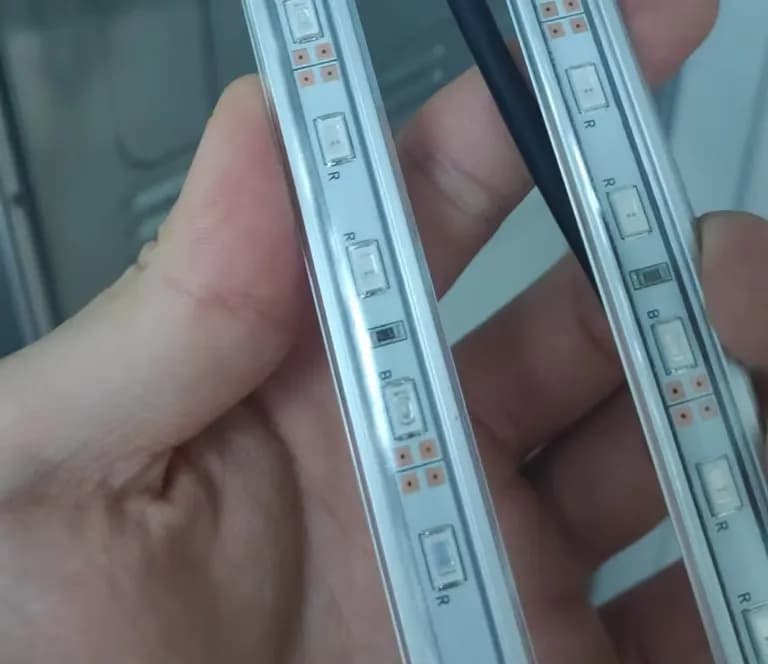
We initially bought plant lights from a place called Bitsol LED, and two 50cm lights cost nearly 60,000 won.
Each was about 12w, and originally, I lined them up in a row but felt the light was much weaker than sunlight.
So I arranged two rows of LEDs, keeping a 30cm distance from the plants.
Thinking it was better than nothing, I kept using them but decided I needed more LEDs.
So, I decided to try making them myself.
2. Can You Make a Plant LED Bar?
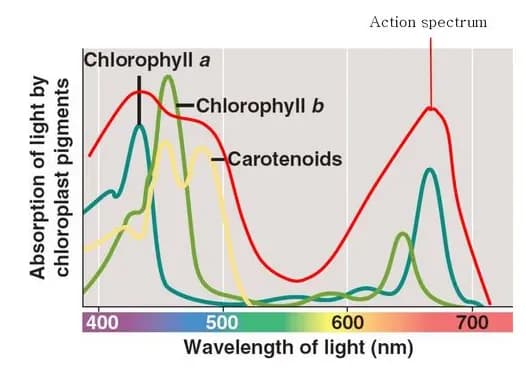
The image below is a photosynthesis graph for plants. It's clear that green plants have higher efficiency in red and blue light.
Hence, if you make LEDs with the right blend of blue and red, you could create plant LEDs.
Making plant LEDs using already-made LED bars was quite simple.
While many companies boast competitiveness, ultimately combining red and blue LEDs suffices for plant growth.
There might be efficiency issues, but when growing plants at home, choosing affordable goods seems wiser than spending a lot of money.
A company called Grinmax had the most reasonably priced LED bars.
After using a plant LED bar at home, the biggest drawback was the aesthetics.
As soon as you install plant LED lights, the red and blue lights merge into a purple hue that's painful to look at for long.
And finding a place to attach the bars, not to mention how unattractive it looks, was a major issue.
Then I discovered white plant lights.
I thought a white plant light might maintain aesthetics without affecting photosynthesis, so I looked into it.
3. Can You Make Plant LED Bulbs?
The product below is from Philips, a well-known company selling plant LED bulbs.
Most reviews mention a 'pink hue,' which makes sense considering the secret to creating white with LEDs.
Most white LEDs sold today are essentially blue LEDs coated with fluorescent material to appear white.

Therefore, the spectrum curve of 'daylight-colored' LED has a peak in the blue range and follows a blackbody radiation-like pattern in other ranges.
Plant LEDs add red wavelengths, resulting in a pinkish hue or an incandescent light feel.
Anyway, for our home's aesthetics, I attempted to make plant LED bulbs but concluded it wasn't possible after research.
1) There are many PCBs for making LEDs, but they are limited in use, hard to purchase, or expensive (using AliExpress, Device Mart)
2) Even if you create a circuit using a PCB, there's no case to enclose it, making it crude.
3) It’s near impossible to match the design of commercial products by hand.
Having reached this conclusion, I almost bought two 30,000-won bulbs when my wife noticed something intriguing.
A new shoot on our home monstera kept turning towards the candle warmer.
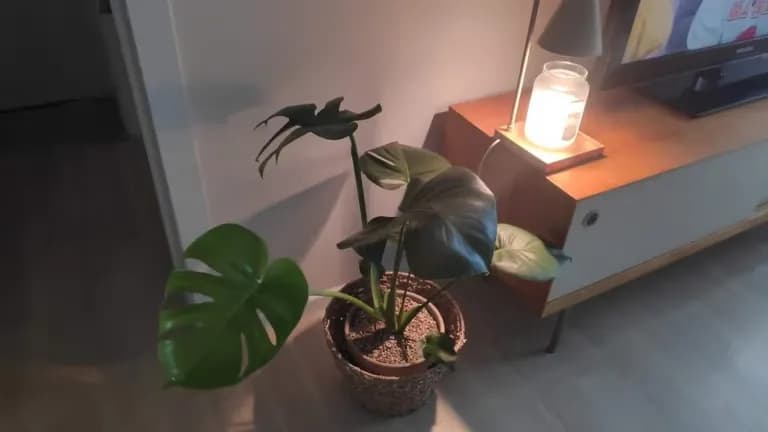
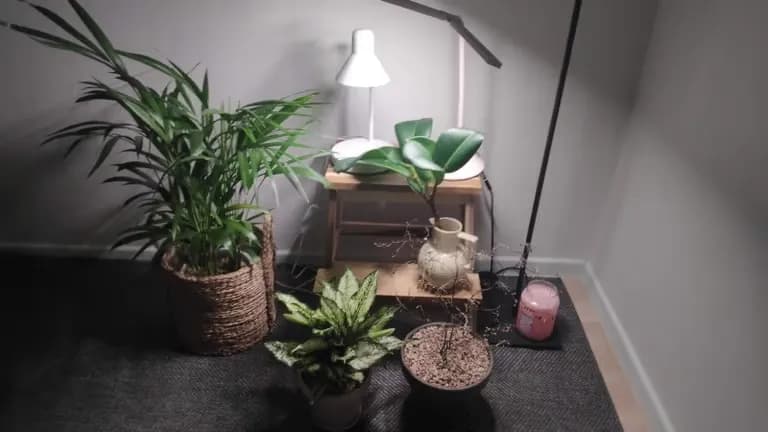
Based on this observation, I placed the rubber tree, which was under the plant LED, beneath a cool white LED lamp and observed it.
In four weeks, a root that barely grew under the plant LED started rapidly growing, visible to the eye.
Most plant LEDs tout benefits for edibles like lettuce and cabbage, but we don't grow those plants.
Would plant LEDs be effective for my monstera, rubber tree, and palm tree? That was the key point.
4. Ornamental Plants and Plant LEDs
Before writing this article, I referred to three papers. You don't need to read the experimental processes, just the conclusions.
-For Chima lettuce, growth was greater with only white light compared to a mix of blue and red at different intensities. |
-Barley grows fast under R,G,B,W mixed light, and samchae under R,B mix, but differences are minimal. |
-Compared white light, amber light, red light, blue light, red and blue mixed light, natural greenhouse light, and fluorescent lights (Osram 30 W, F) |
Ultimately, for those of us growing ornamental plants at home, it's better to buy general white LEDs than red-blue plant lights.
The precise phrase from the last paper is below.
The ideal light for enhancing functionality and ornamental value of indoor plants was white and mixed light. However, mixed light fails to show the plant's true colors and tires the eyes quickly, making white light a more effective choice for ornamental value, economy, and functional improvement based on plant growth conditions.
Effects of LED Light Quality on the Growth of Foliage Plants Indoors (Kim Myungsun, Chae Sucheon, Lee Myungwon, Park Gapseon, An Seungwon), p9 Conclusion
5. Conclusion - Do You Need Plant LEDs in Your Home?
For ornamental plants we grow at home, we don't need plant LEDs.
Using strong daylight LEDs and placing them closer to plants can promote photosynthesis.
I spent sleepless nights thinking about buying multiple 30,000-won plant lights and how to make plant LEDs, but now I feel at peace.
Time to buy some cheap daylight LED bulbs.


댓글을 불러오는 중...