I wrote a reflection after each session every day, but with writing student records and doing this as well, I ended up having to cut down on sleep every night.
I decided to write them in batches, thinking that if I kept going like this, my body wouldn’t hold up.

1. Simple Regression Model – Coefficient of Determination
In a simple regression model, you can’t understand the shape of the data just from the linear regression curve or the coefficients alone.
For example, when you have data like the sets below, the intercept and slope of the regression curves for the two datasets are the same.
But the two datasets are different.
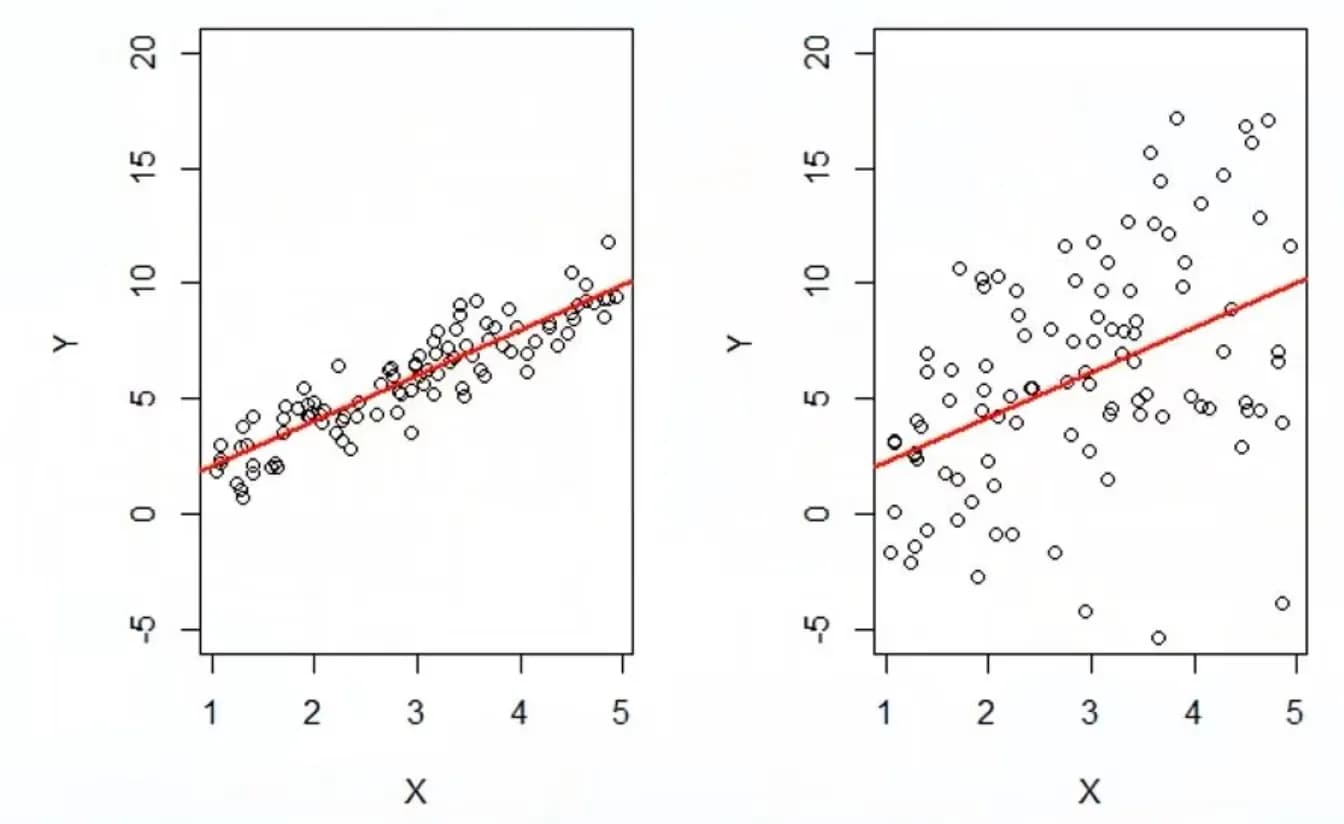
The coefficient of determination is obtained by squaring and summing the differences in Y values for the linear regression.
By doing this, you can see how far the actual data points are from the predicted line.
If the coefficient of determination is 0, the regression model explains 0% of the total variance of the dependent variable, and if it is 1, the regression model explains 100% of the total variance of the dependent variable.
2. Multiple Regression Model
A multiple regression model is used when the dependent variable does not depend on just a single independent variable.
Below is a 3D graph representing a situation where the post-test score is related to the pre-test score and age.
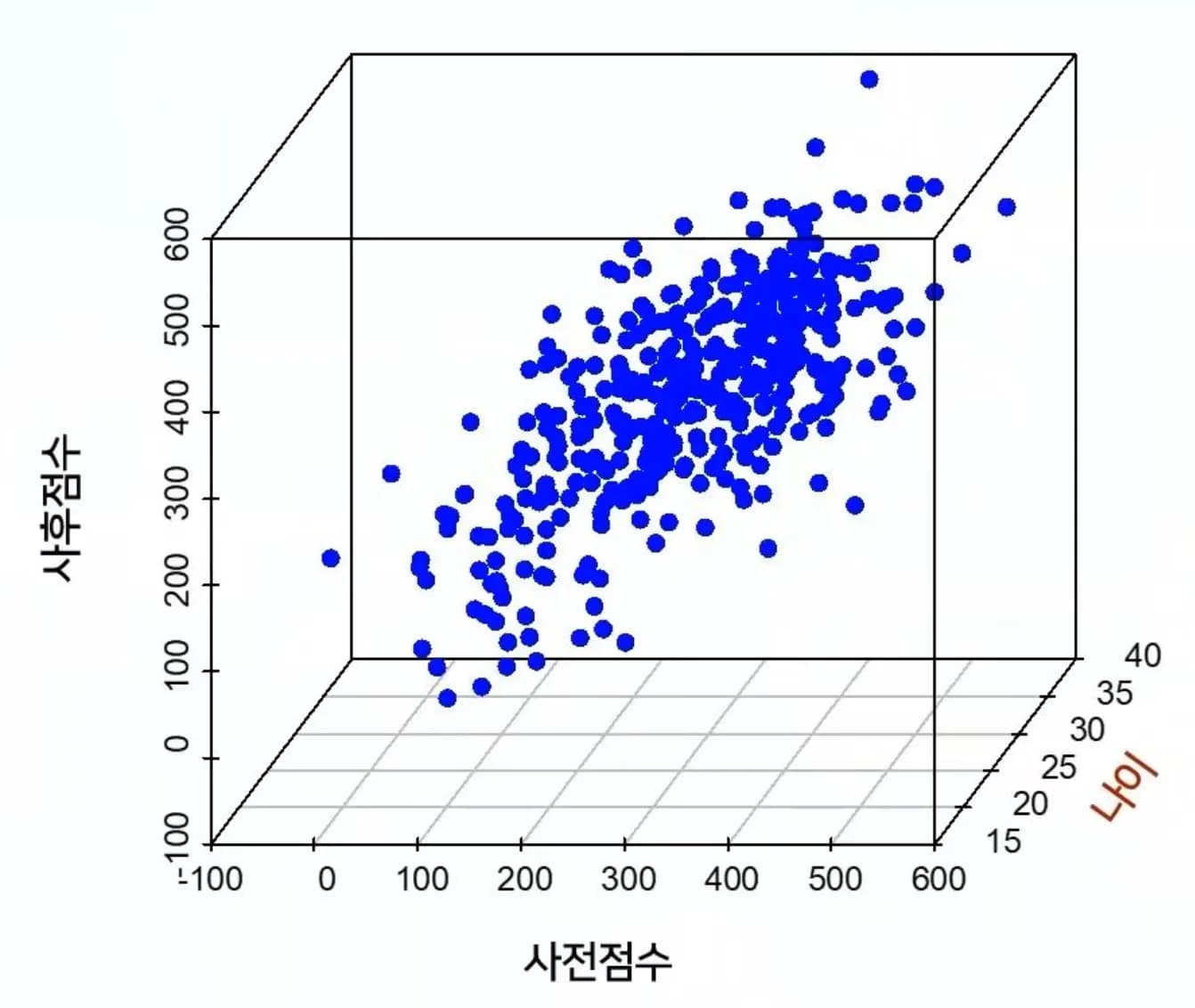
When you conduct multiple regression analysis here, you obtain a single plane.
One point to be careful about is that this explains the change in the dependent variable in response to a change in one independent variable while controlling for another independent variable.
3. Comparison of Regression Models and Variable Selection
The more variables you add to a regression model, the larger the R value becomes.
For this reason, instead of using the simple R value, we use the adjusted R value, etc.
This reduces the R value by penalizing it each time a variable is added.
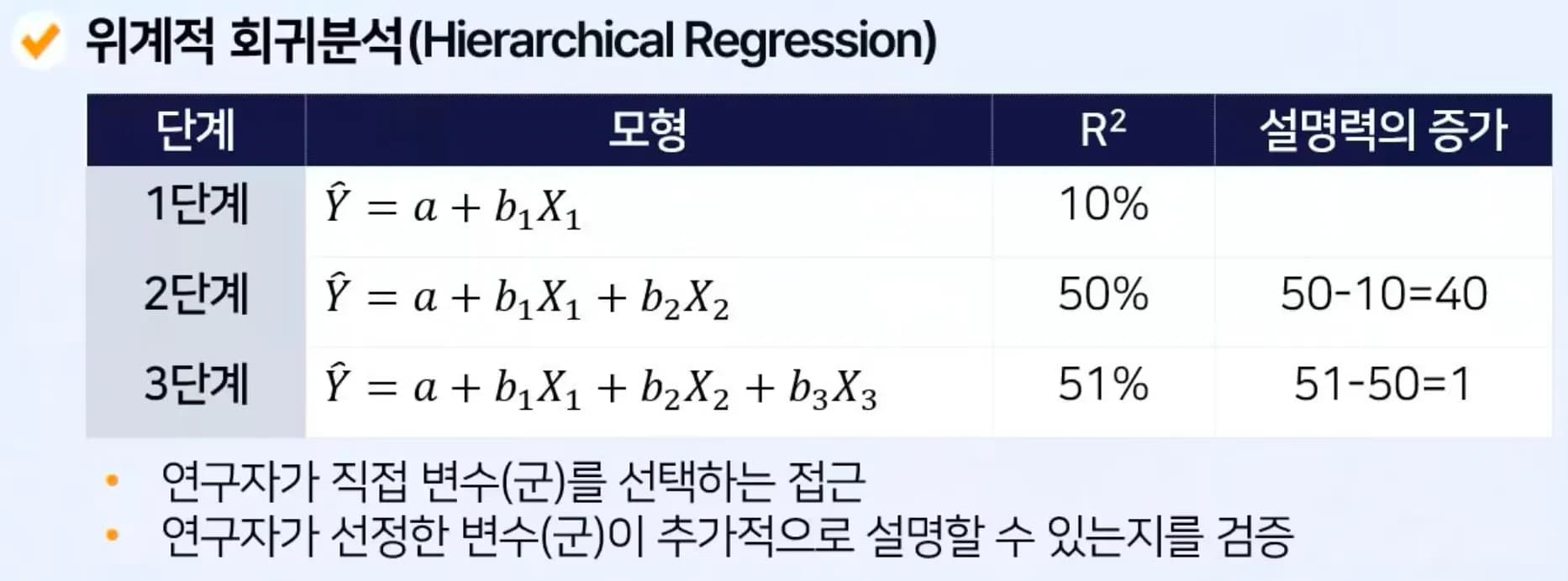
When choosing a regression model, you can consider which model to select by adding variables step by step.
This is called hierarchical regression analysis.
Without adding new variables, you can also draw quadratic or cubic curves with a single variable and make the relationship with the variable more complex.
4. Reflections
I thought the analytical methods used in research papers would be extremely difficult, but it turns out they’re not as hard as I expected.
It feels more familiar because it’s a method I already knew.
But will that really be the case in practice...?
I think every day about how I should write my paper, but I still don’t have a good sense of what topic to dig into.
I hope that by the time this training is over, I will have found my research question.






댓글을 불러오는 중...