A teacher I know told me there was a residential woodworking workshop being held in Incheon.
And among the options, they said I absolutely had to take Master Kim Jang-hoe’s class...!
So we all applied together.
1. How to apply, and location
I’m linking the Korea Human Resources Development Service of Korea Global Skilled Crafts Promotion Institute’s vocational training platform STEP below.
You can apply for teacher training there.
Going by expressway, the location wasn’t that far from Nowon.
But it took more than 30 minutes for the last 7 km before the destination.
The traffic jam was severe.
2. Orientation
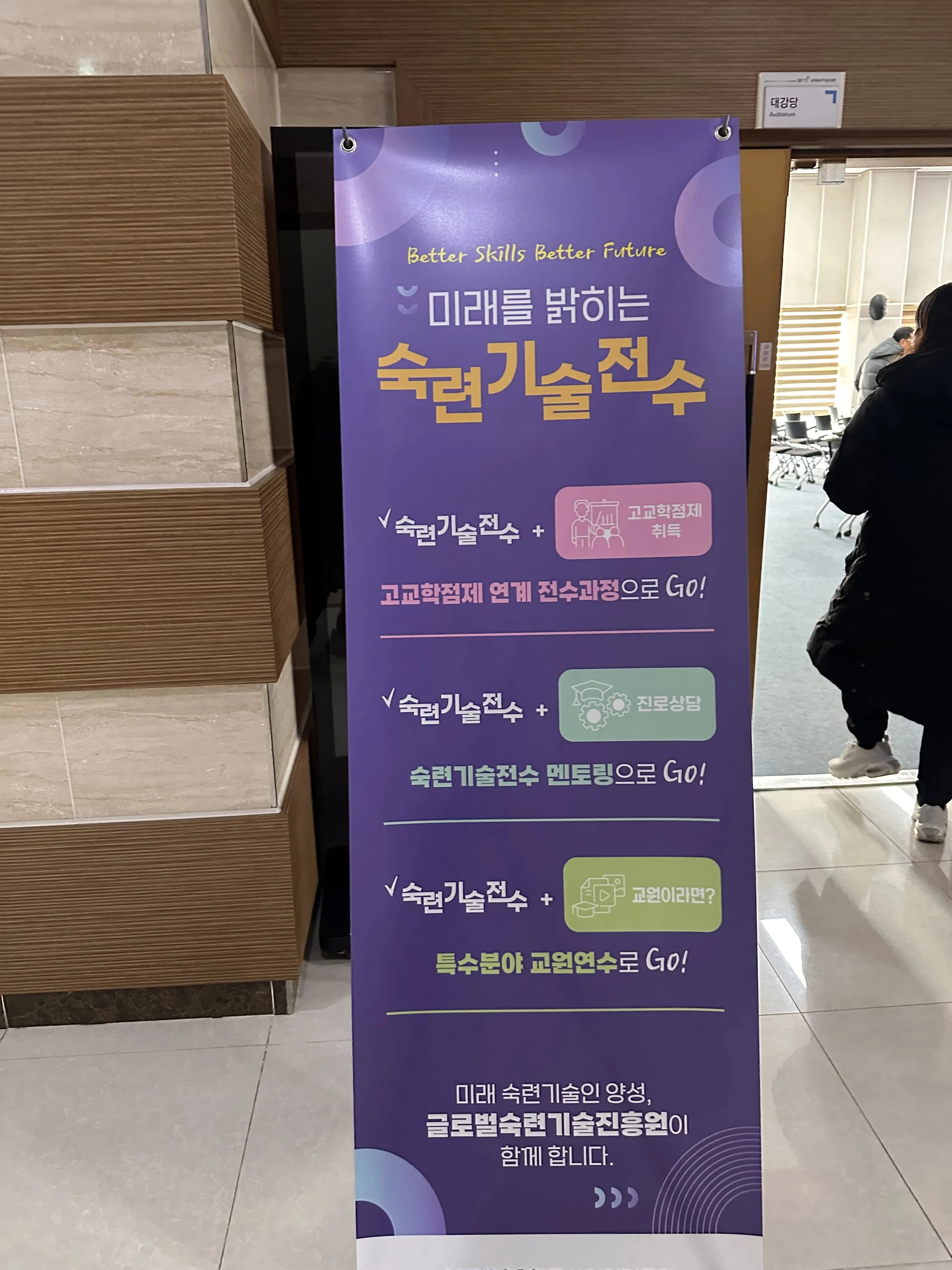
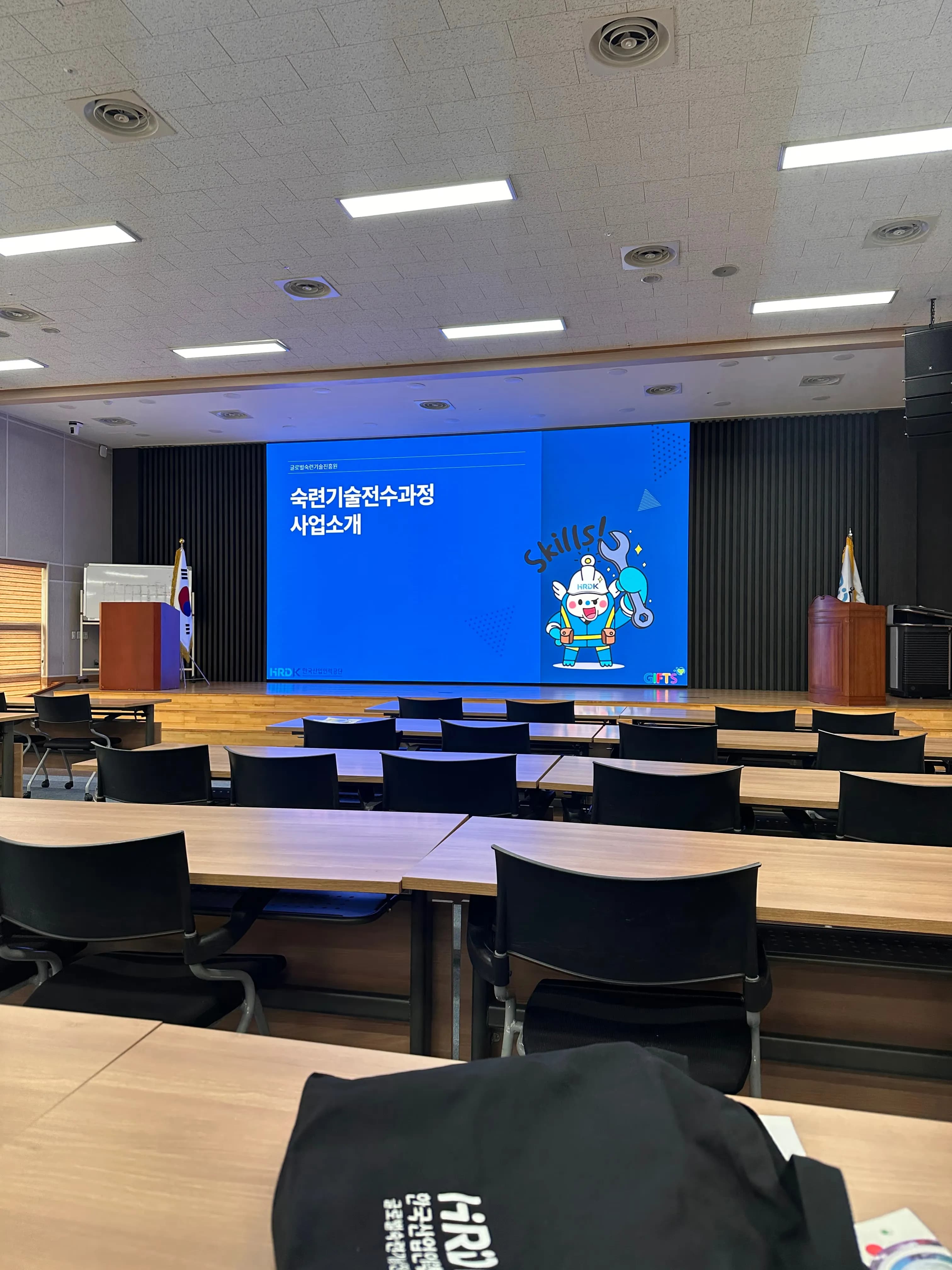
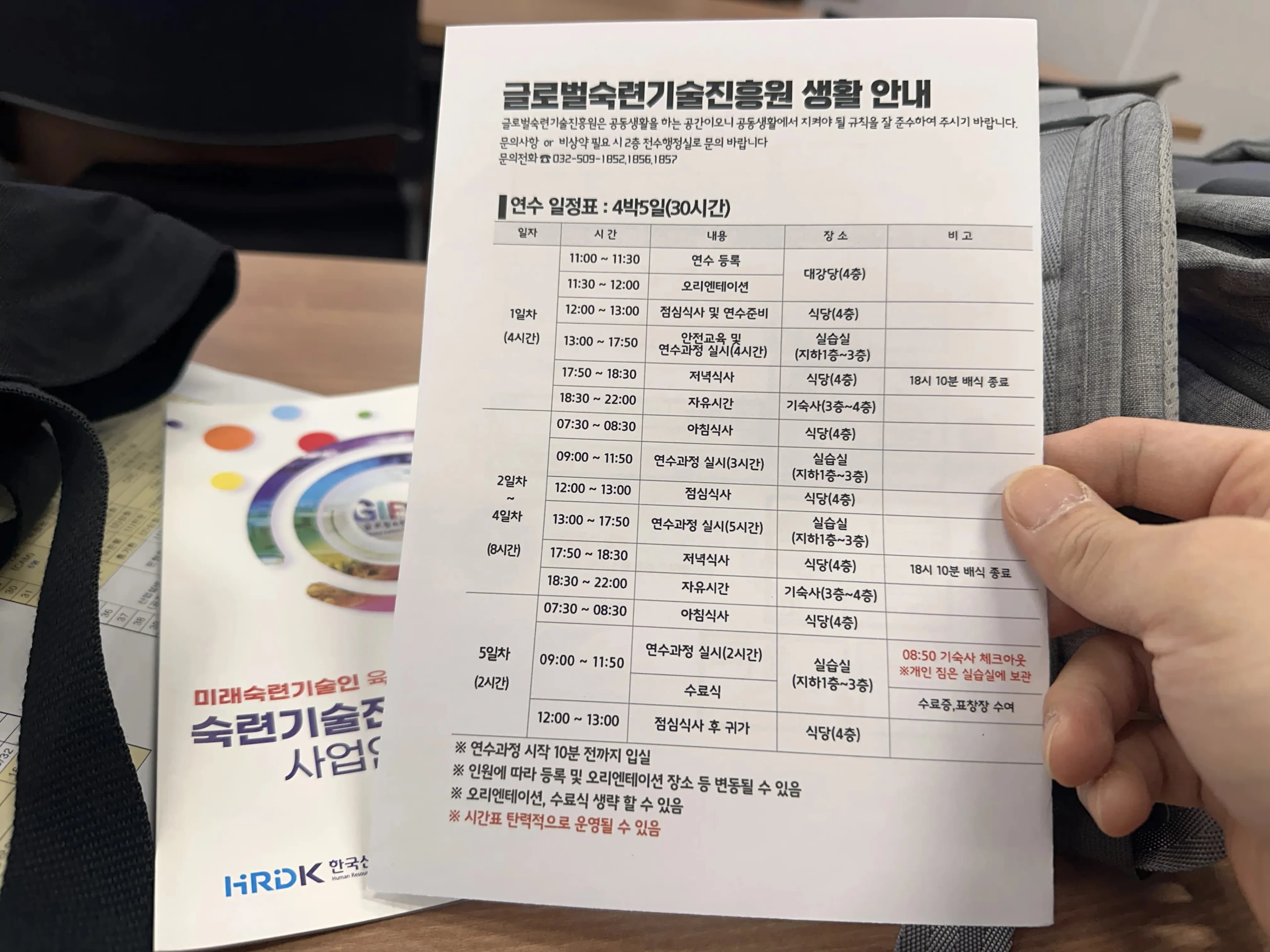
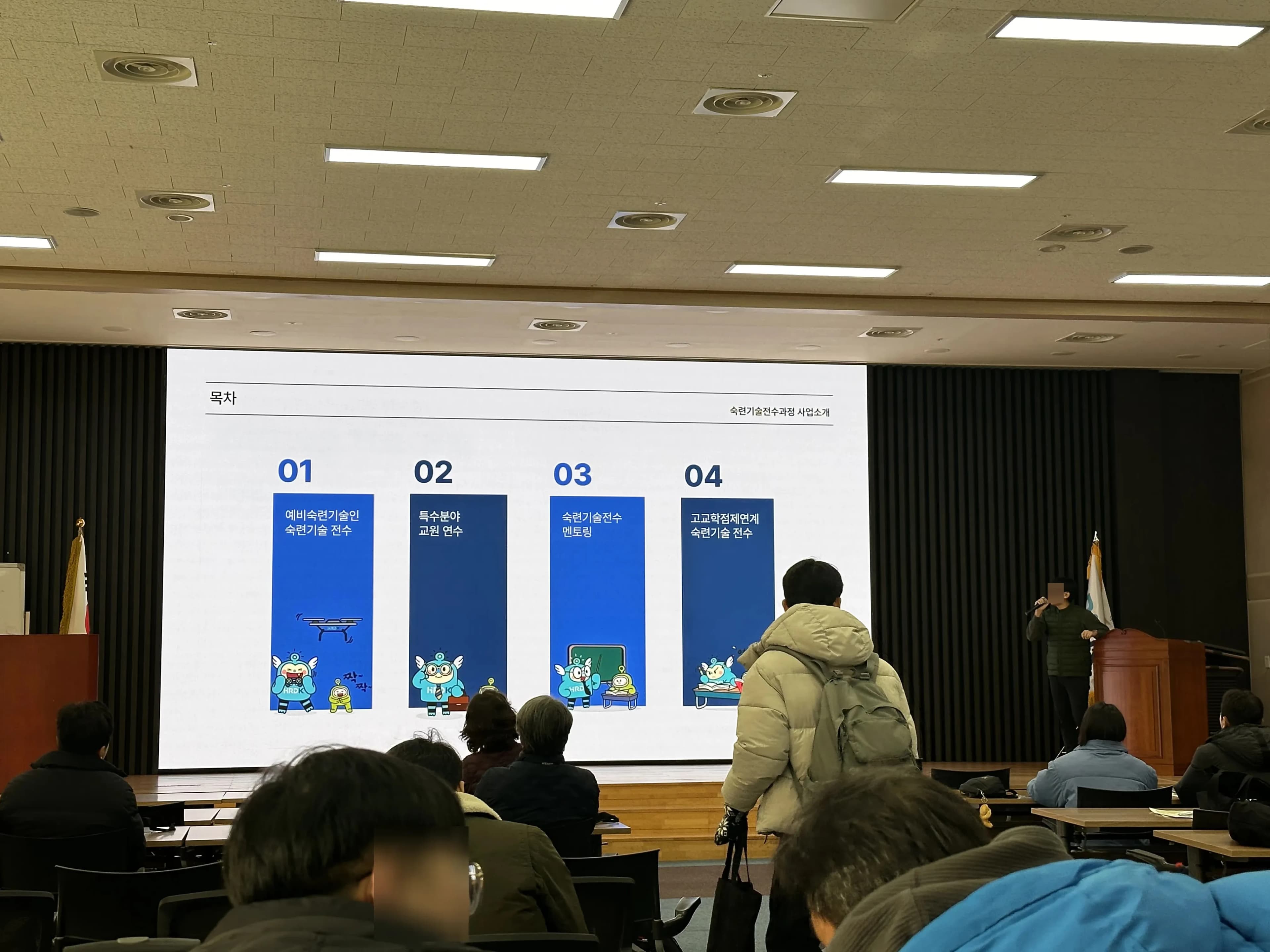
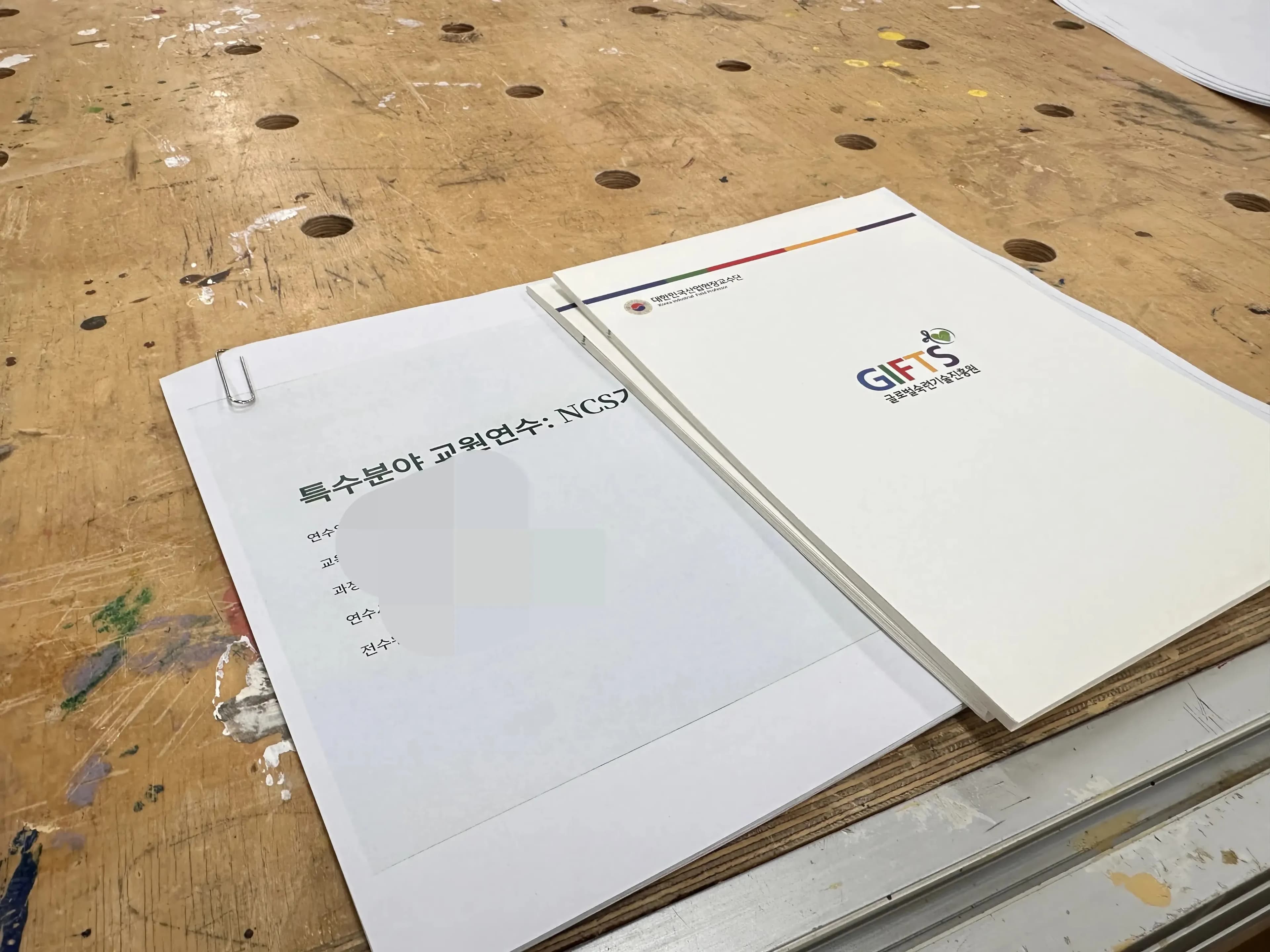
Before starting the training, there was a preliminary orientation.
They went over the training schedule, meals, accommodation information, and so on.
To be honest, it was only through this workshop that I first learned what the Global Skilled Crafts Promotion Institute actually is.
3. Accommodation
The lodgings are on the 3rd and 4th floors.
They said it was strictly two people per room, but last year there were many vacancies so many people ended up using a room alone.
This year, however, there were many guests from overseas and lead teachers from other schools, so it had to be two people per room.
If someone snored badly or had unavoidable circumstances, they were given a single room.
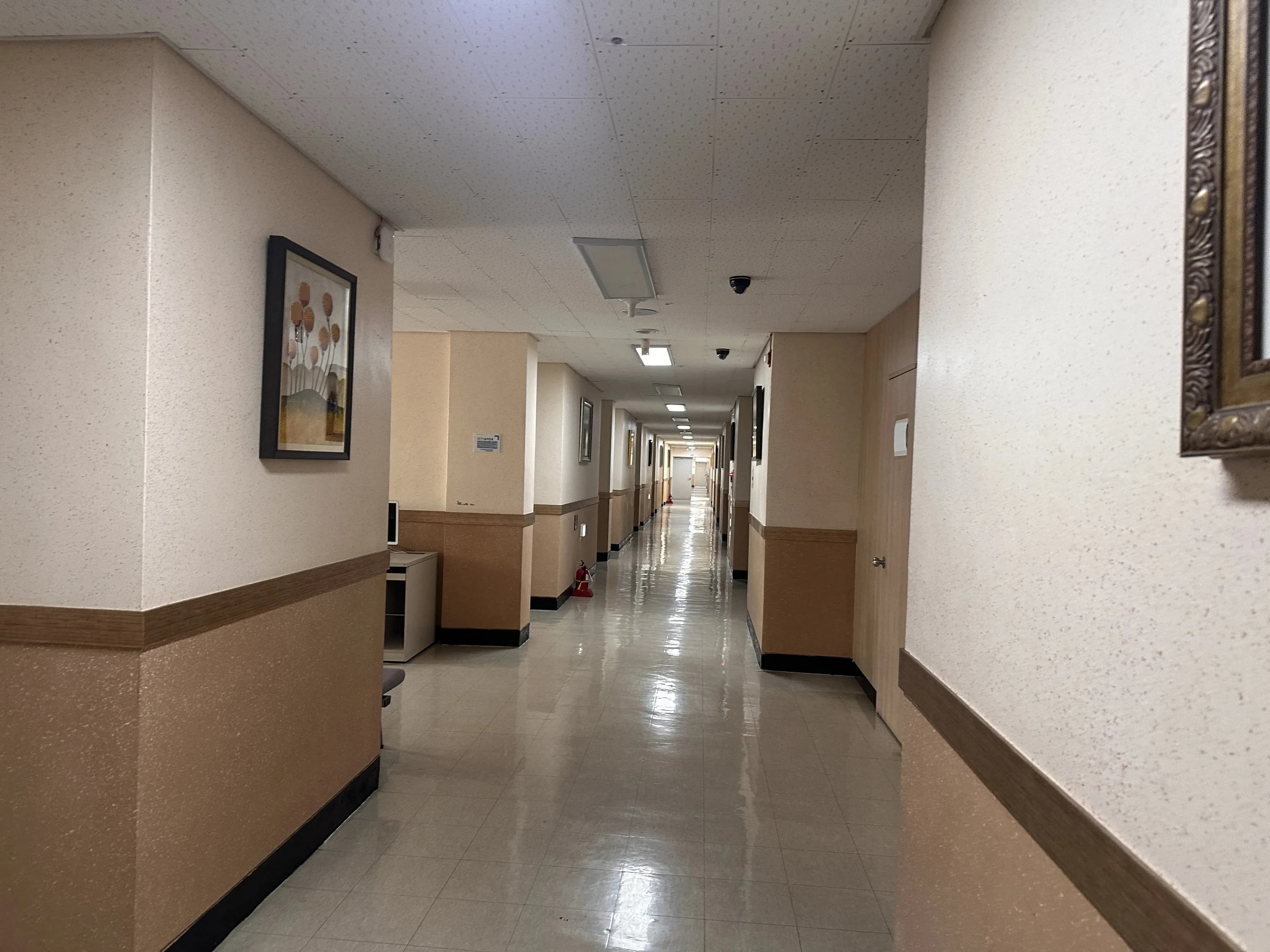
Even though I didn’t request it, I was fortunately assigned to share a room with a teacher I know.
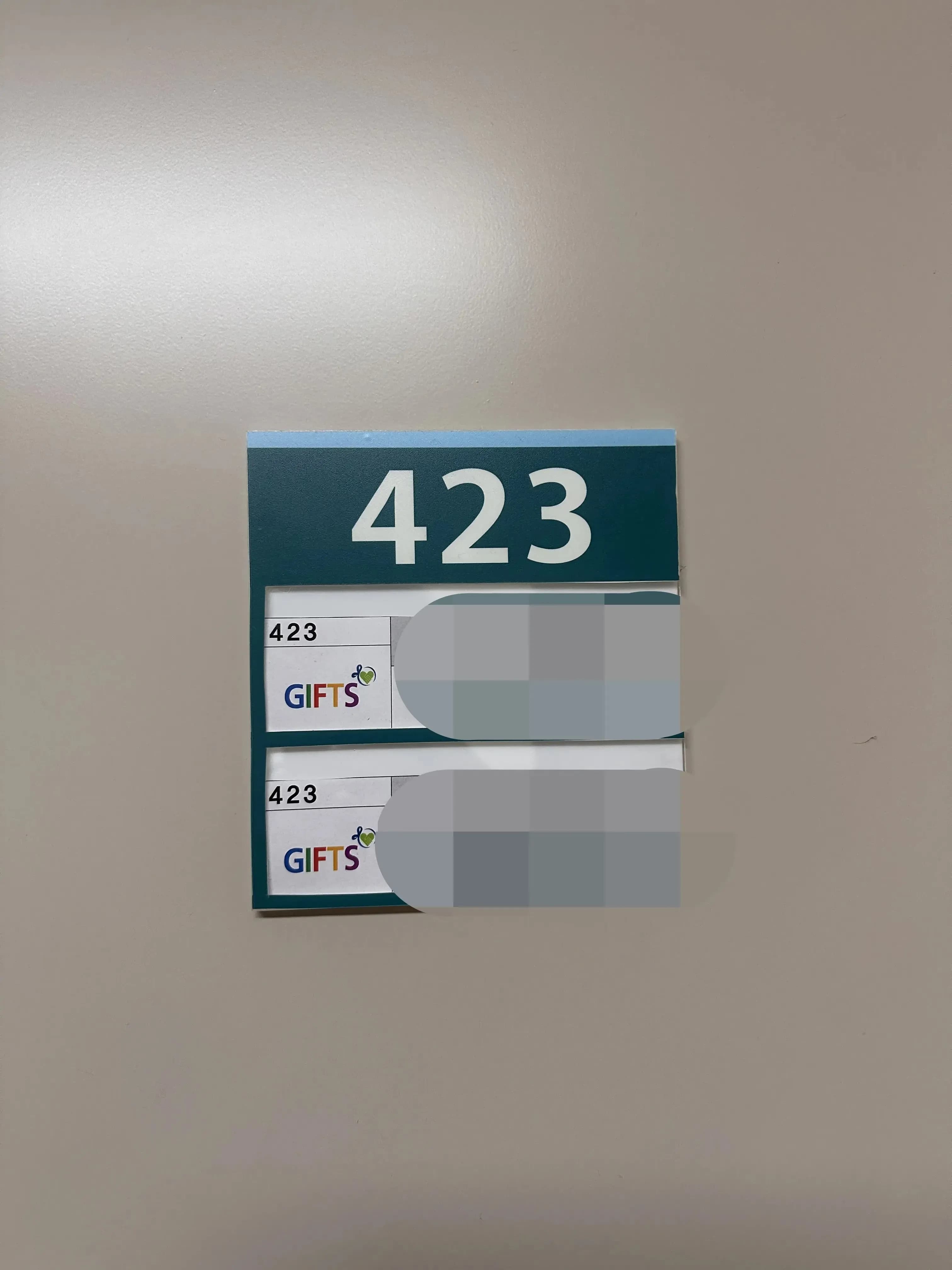
In front of each room, the teacher’s affiliation and name are written like this.
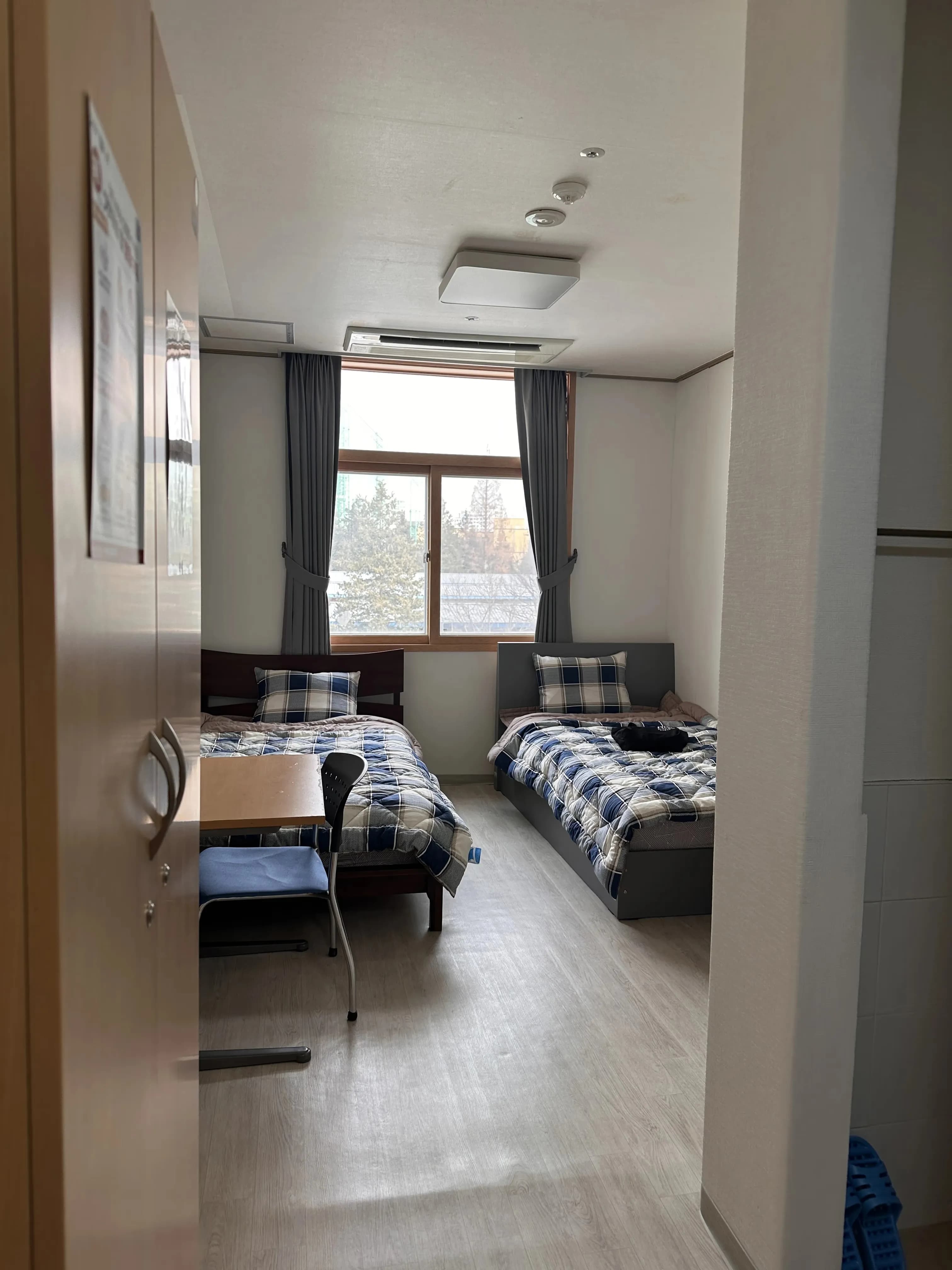
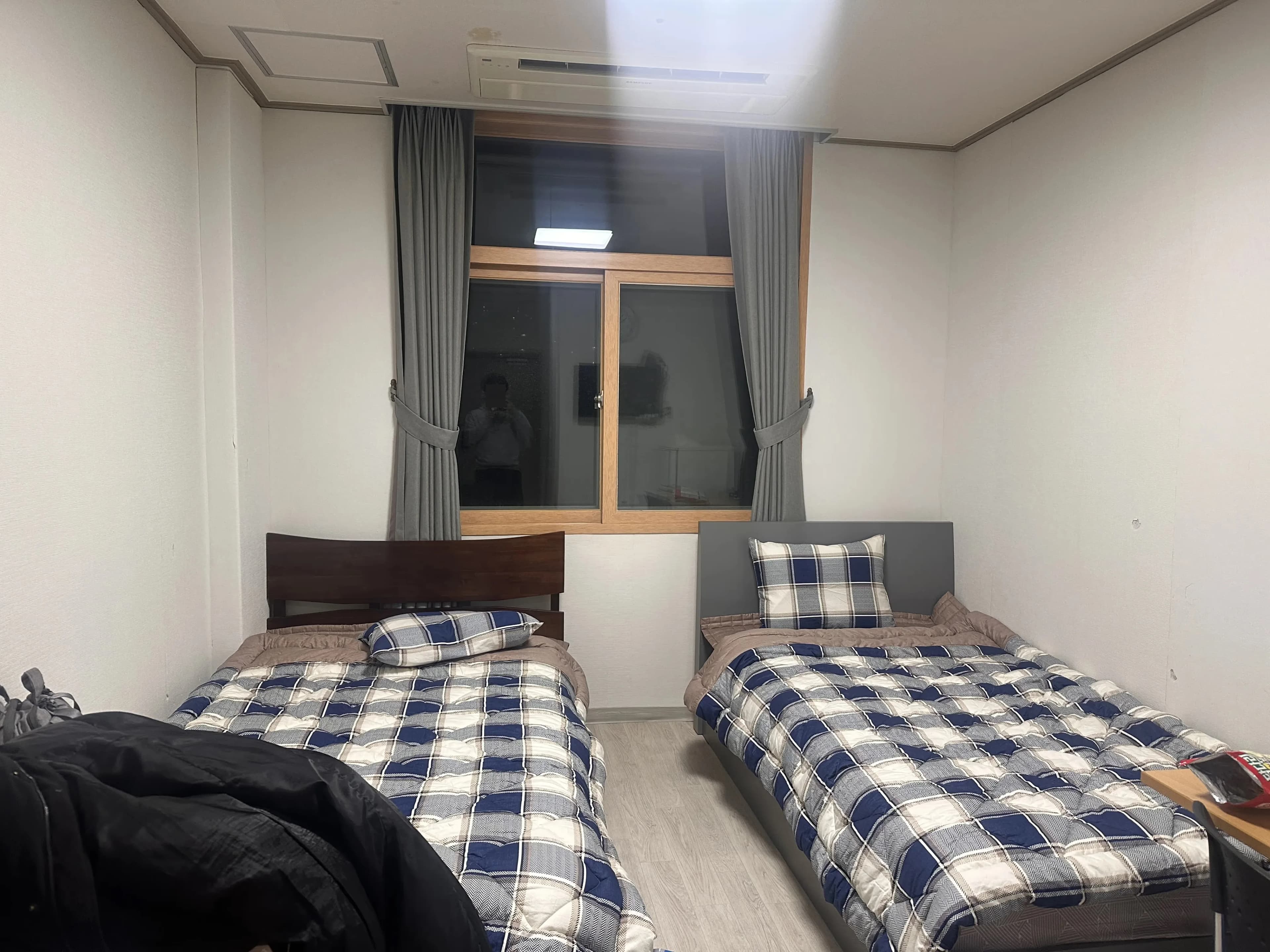
The room itself feels like a college dormitory.
Still, the bed seemed a bit wider than the ones I remember.
And there was also a small individual desk.
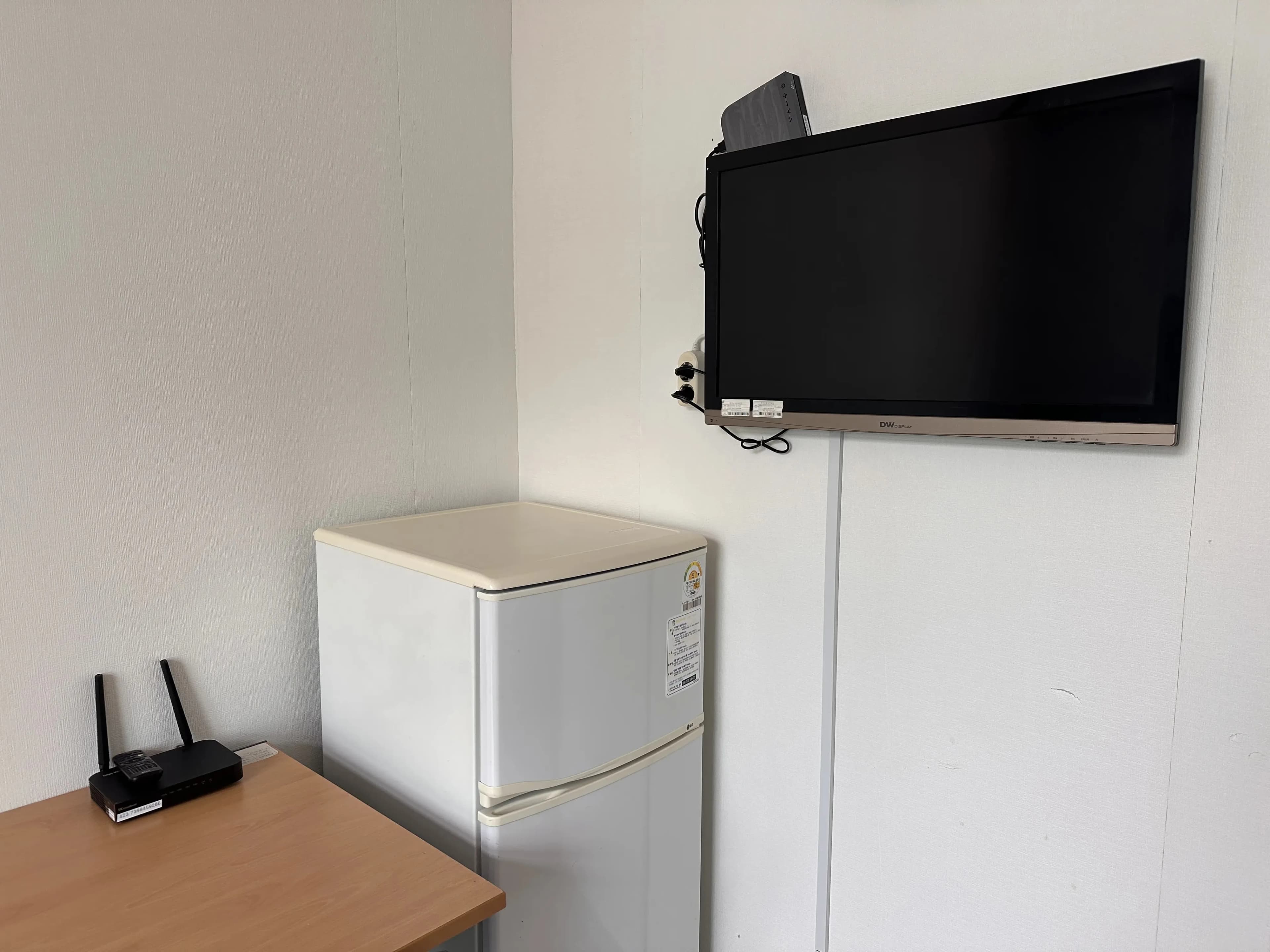
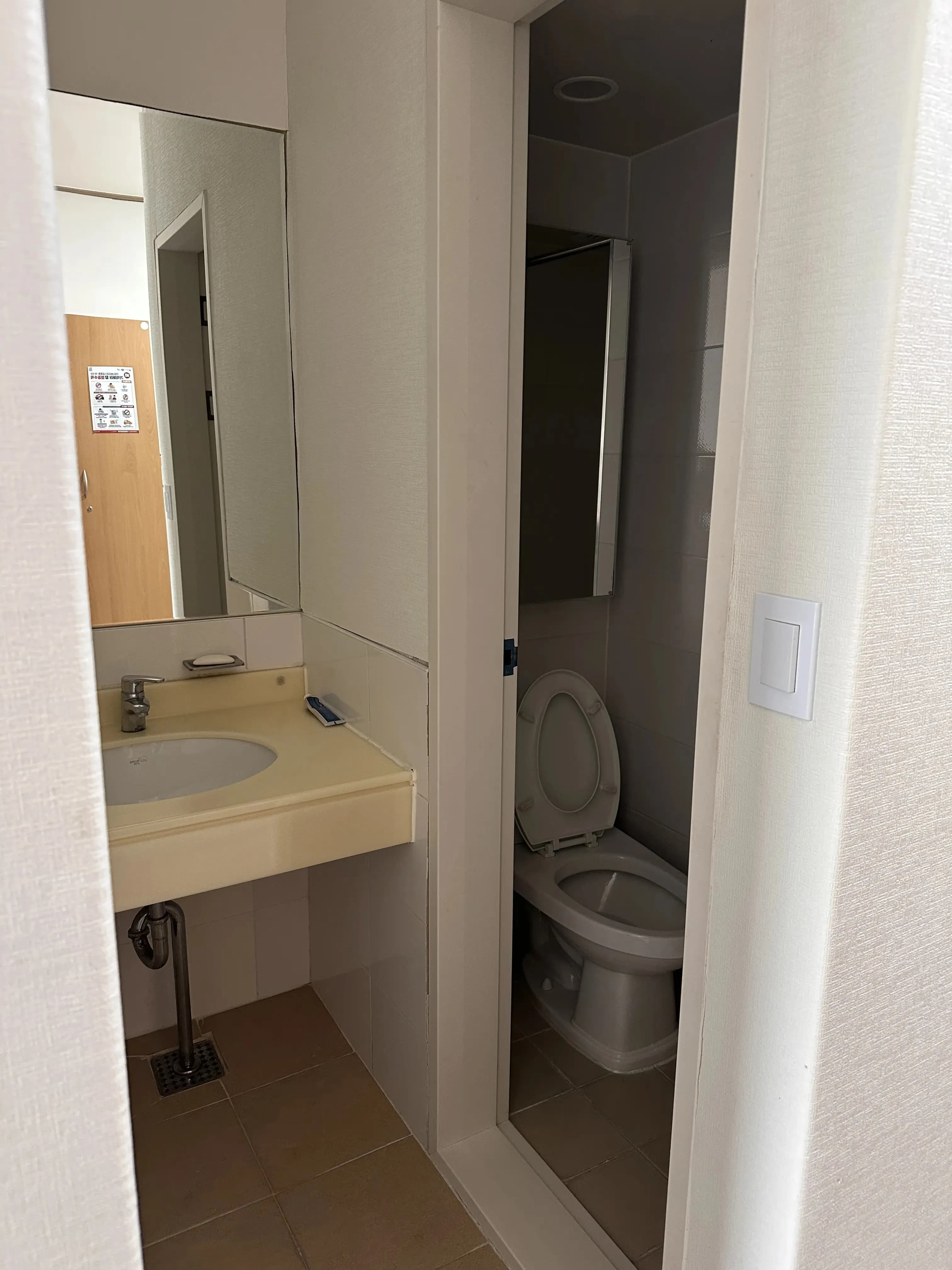
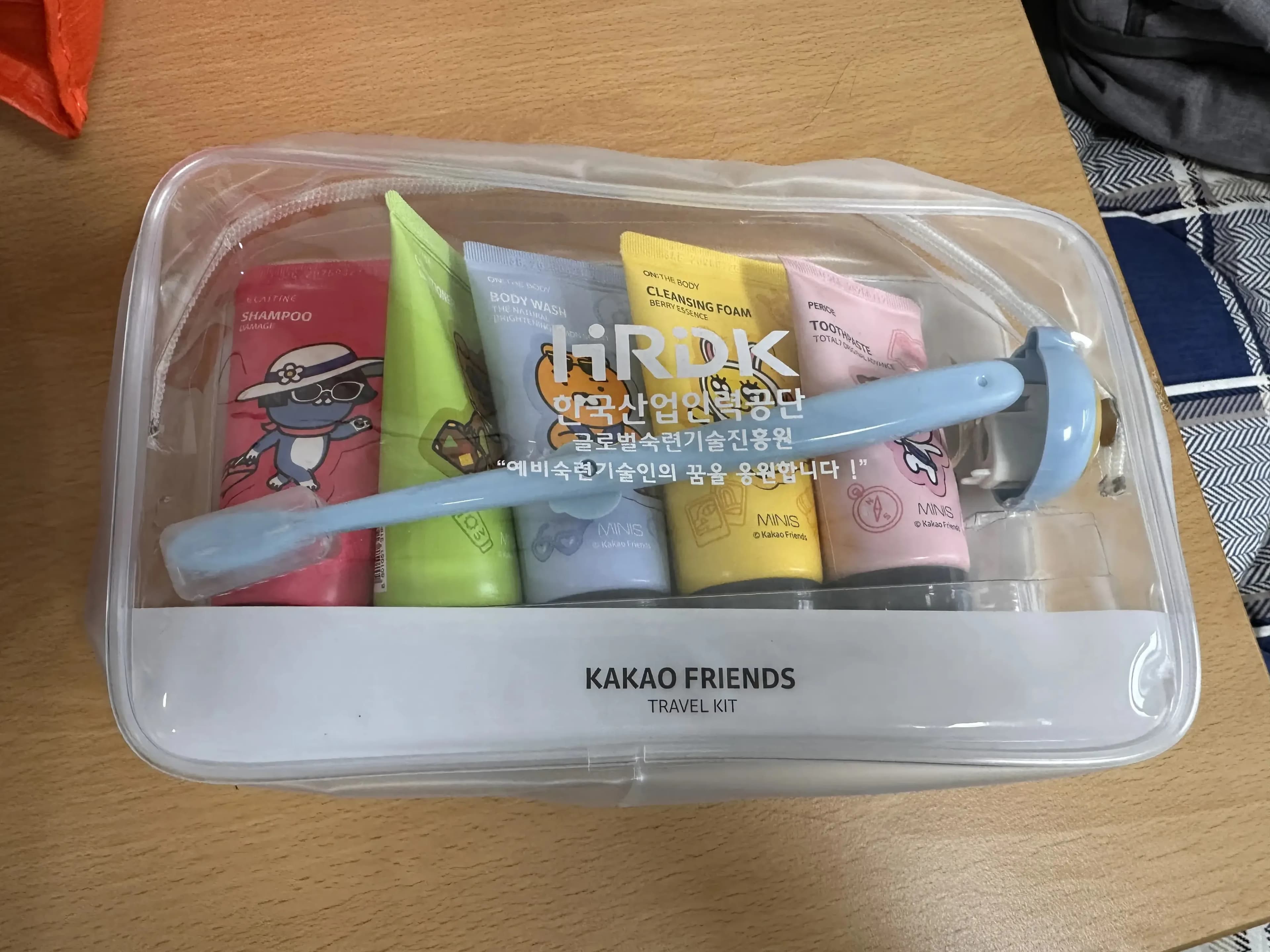
Just as the text message from the Institute said, they provided simple toiletries like the ones below, which made things convenient.
There was toothpaste, a toothbrush, shampoo, body wash, etc., and they replaced the towels in each room every two days, so you really could just show up with your body.
If you need anything specific, make sure to pack it yourself.
4. Meals
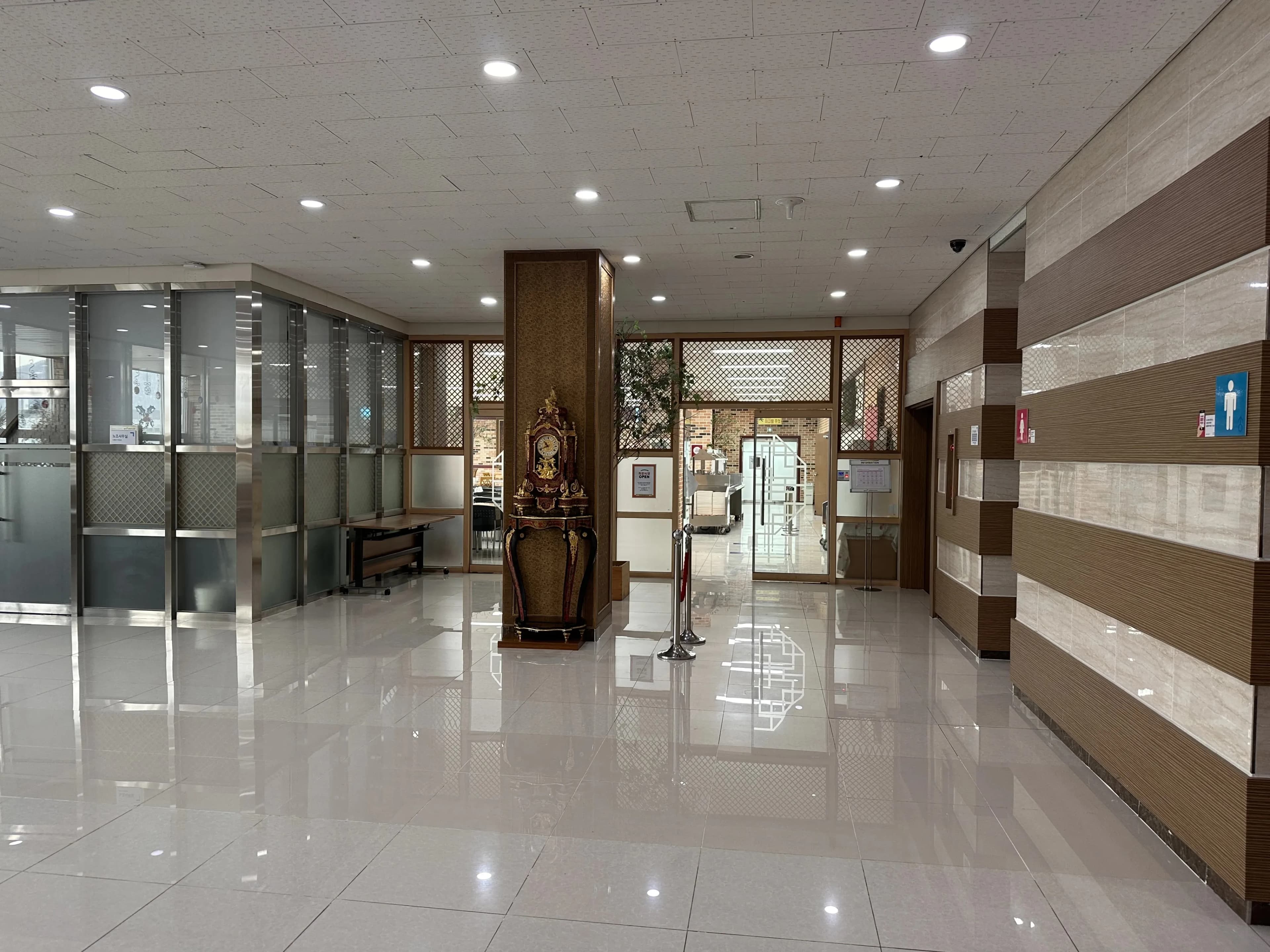
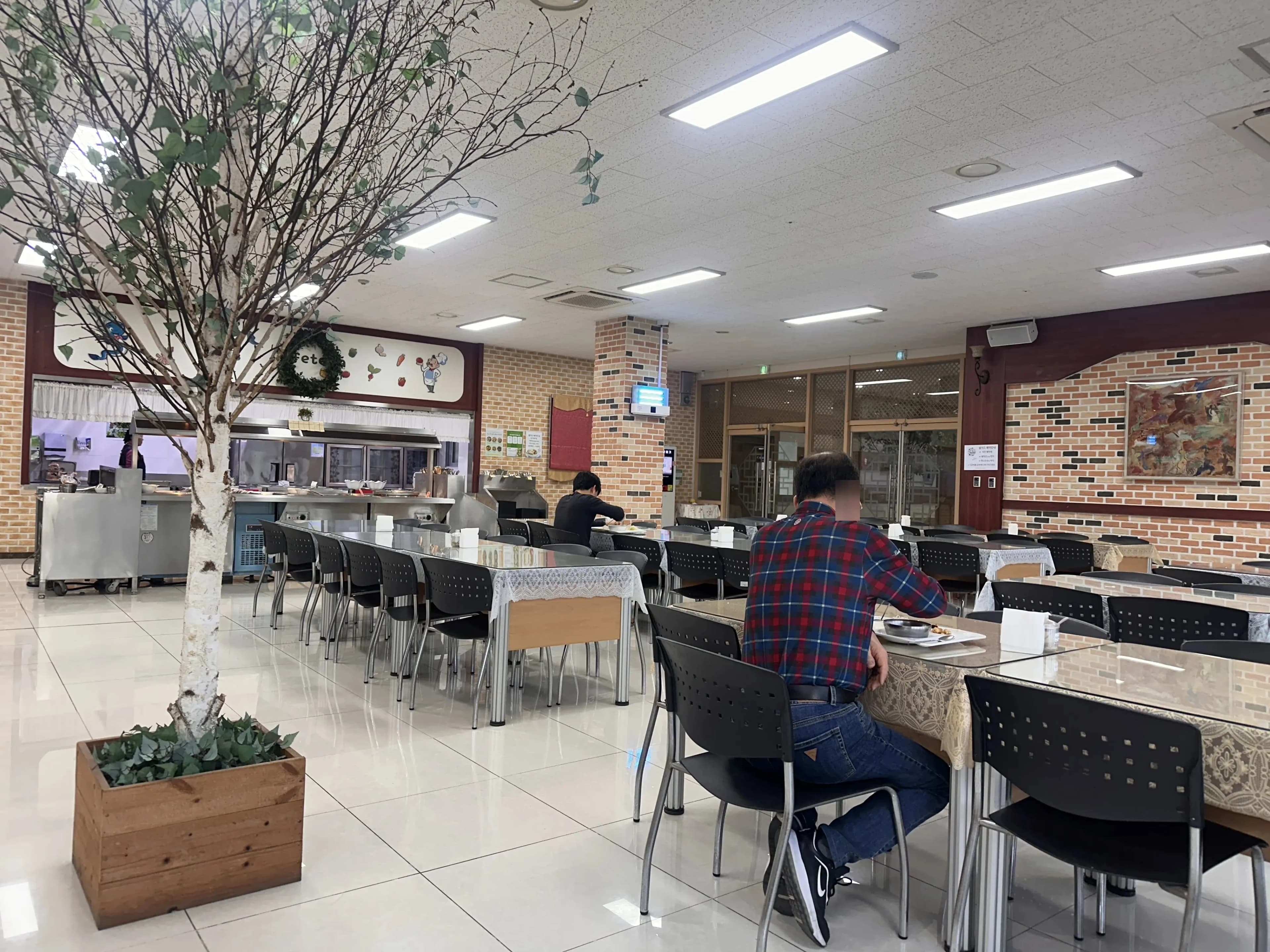
All three meals are provided.
When I come to places like this, I oddly end up eating breakfast every day.
It’s cafeteria-style, so you just take as much as you want.
I’m on a diet, so I only took a little.
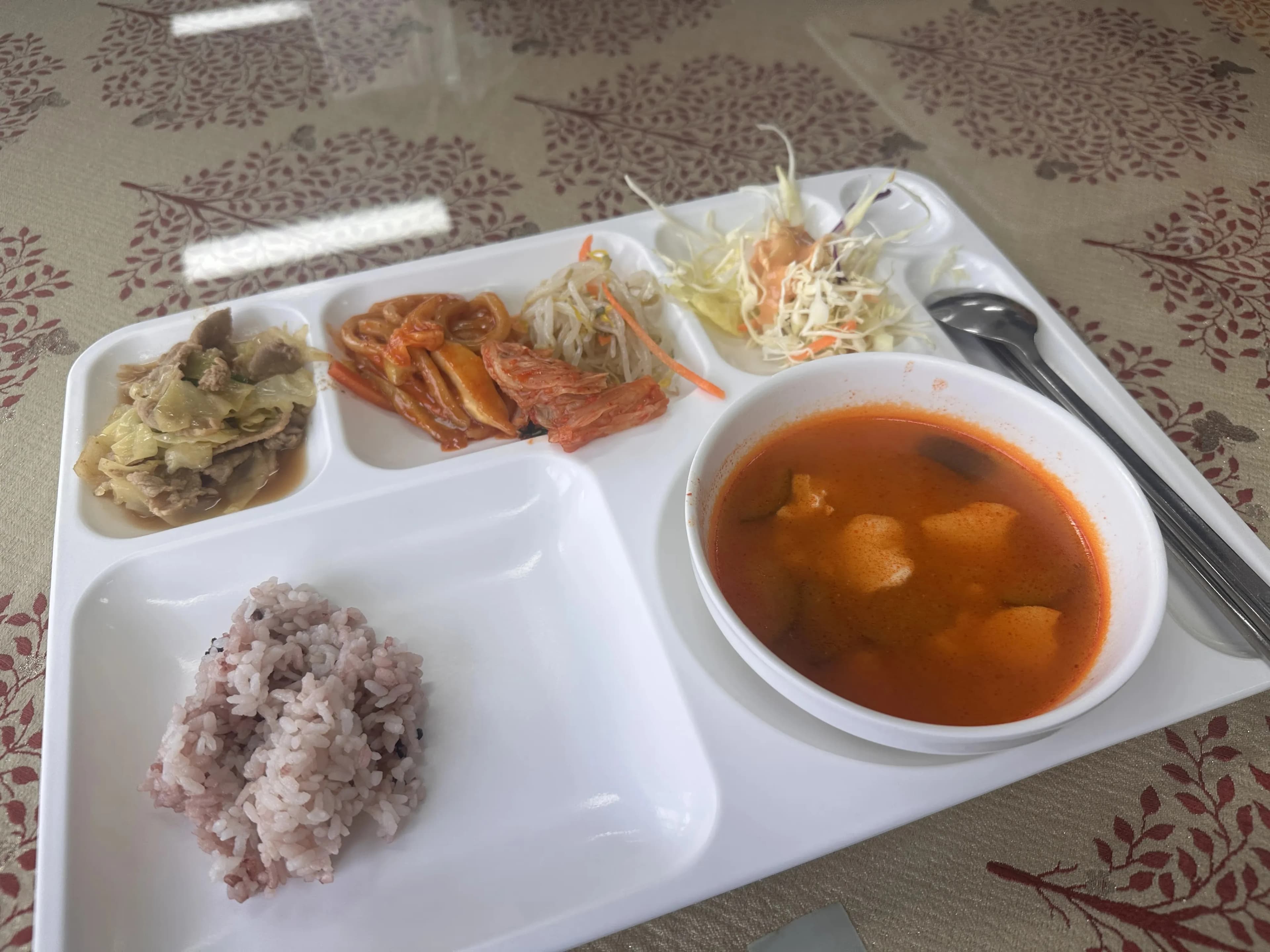
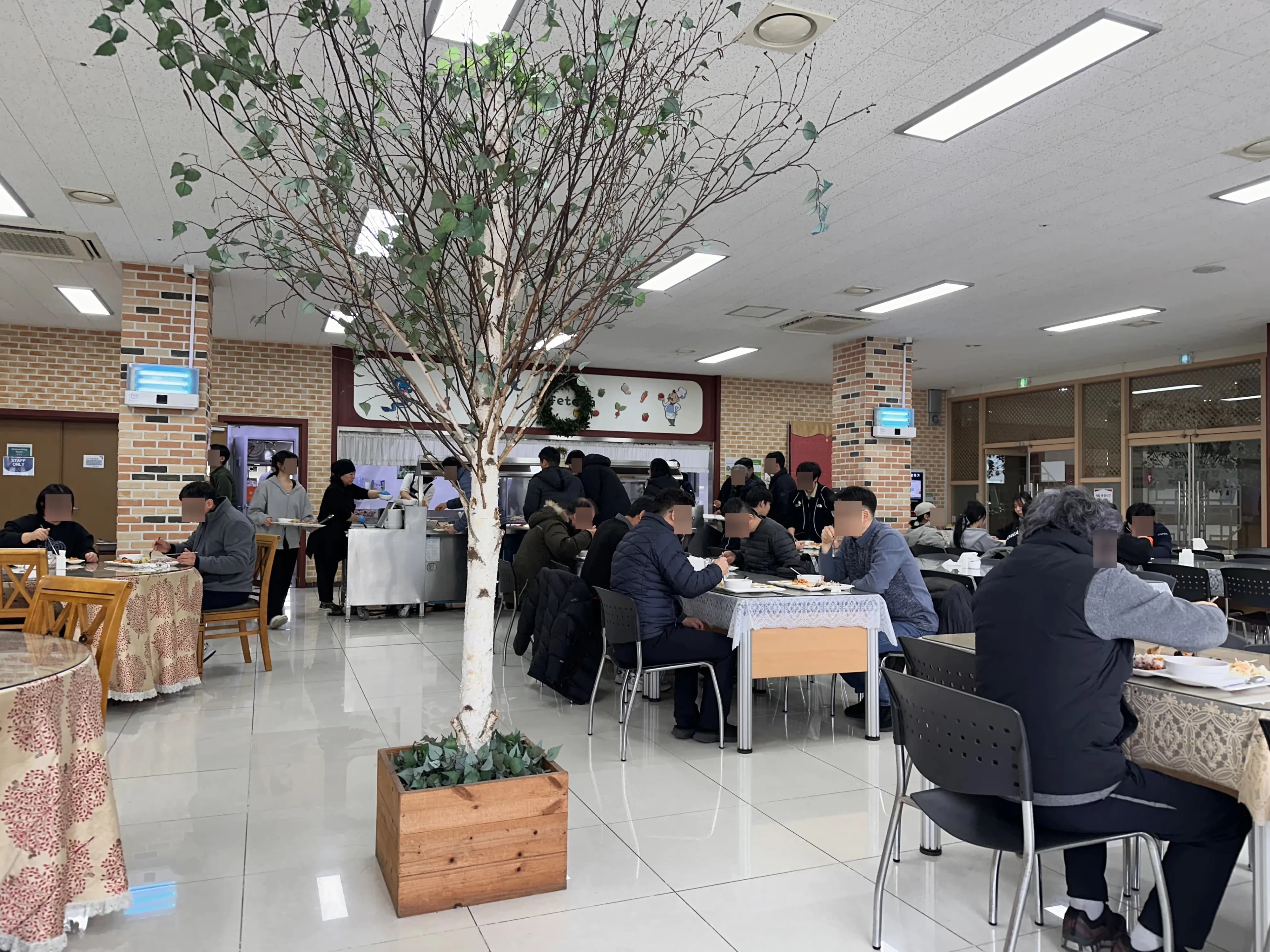
For reference, the menu cycles around.
For example, if they serve black bean noodles for lunch, they’ll serve them again for dinner.
If they served black bean noodles last week, they’ll serve curry the following week.
I really liked that there was salad with every meal.
It felt like if I just kept eating like this, I might actually lose weight.

5. Café
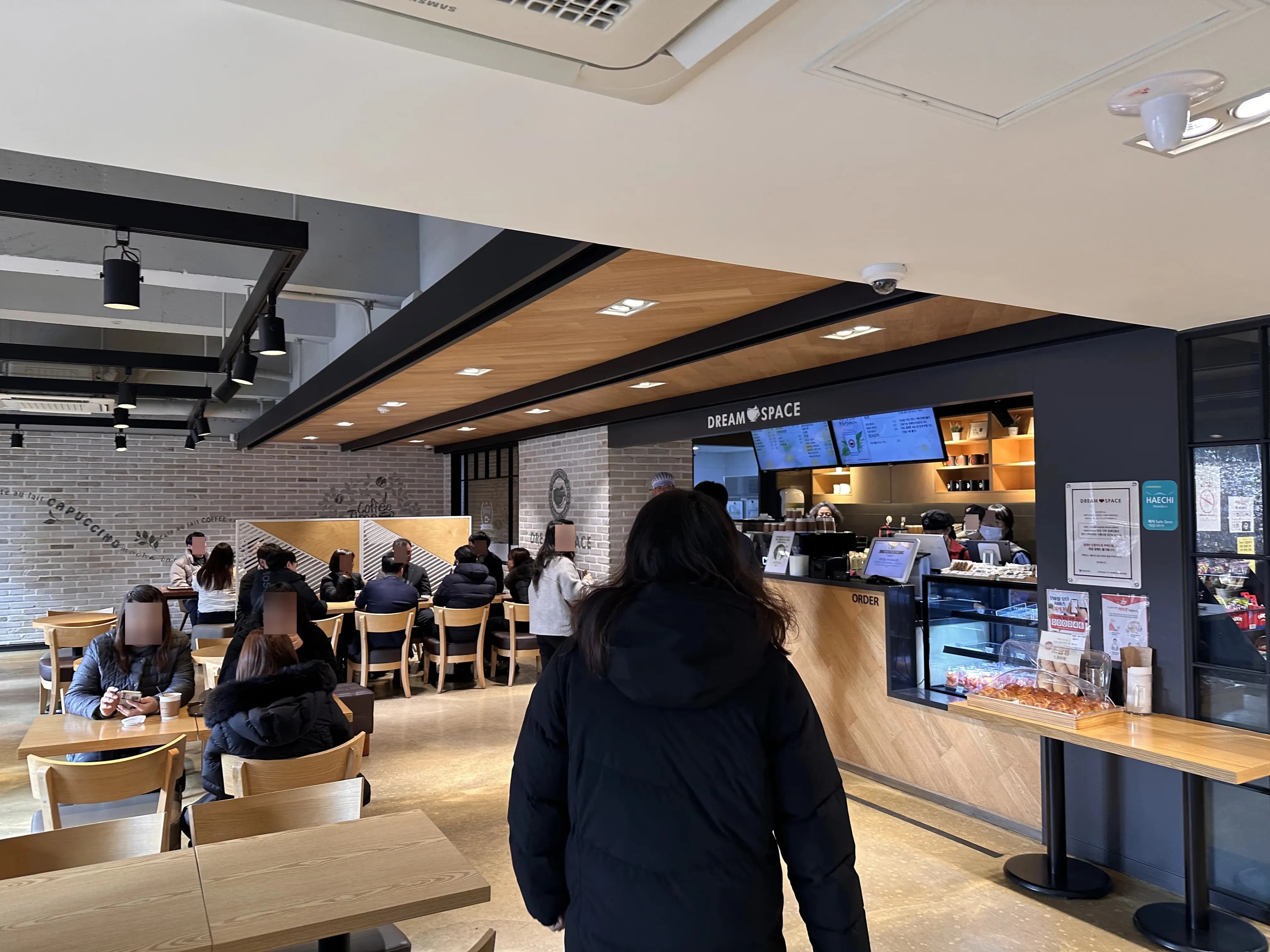
There’s a small café about a 2–3 minute walk from the training building.
The café’s name is Haengbok Doodreami.
The café is open from 08:00 to 18:00.
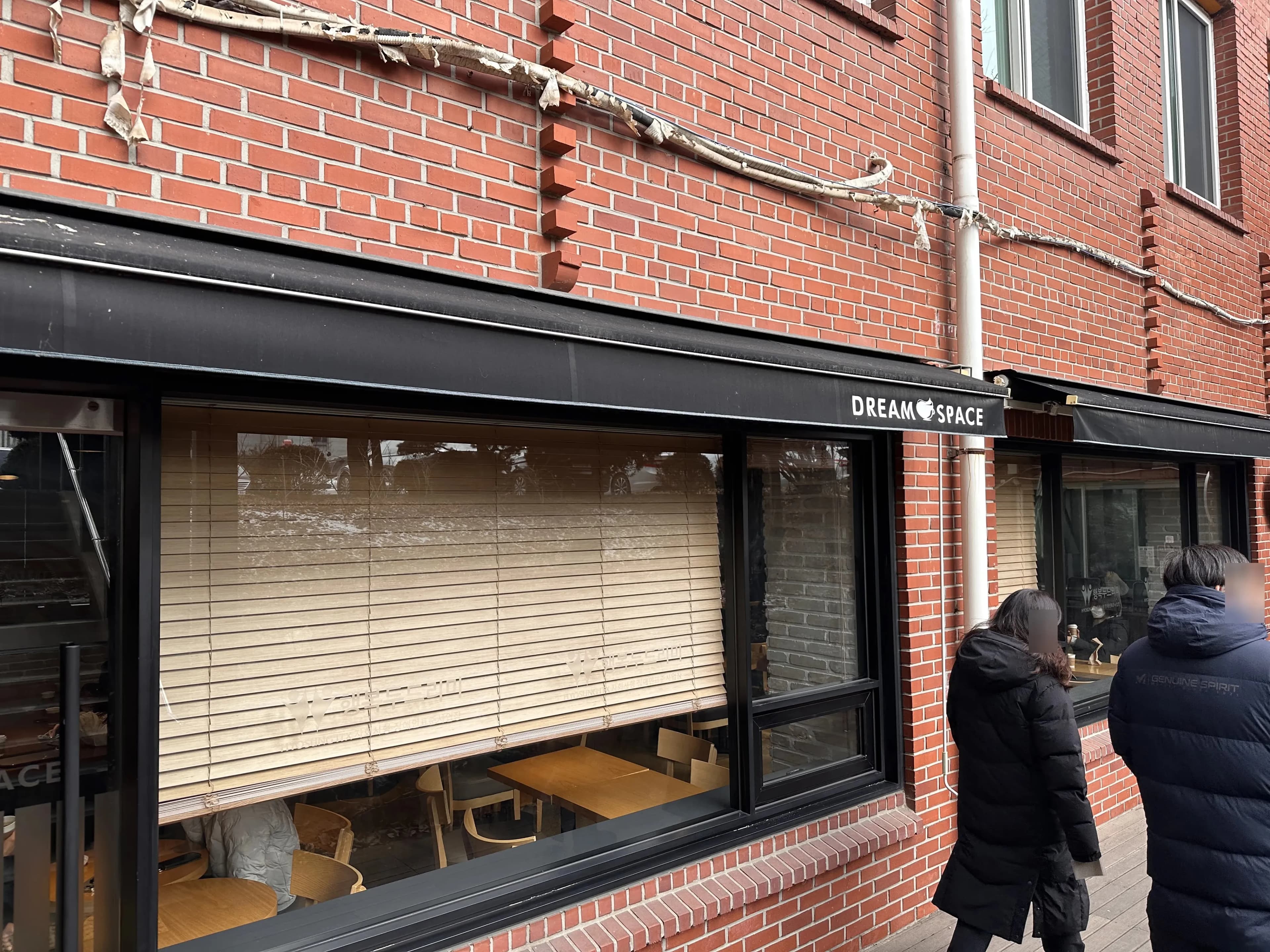
Looking it up, I found that it’s run in connection with an independent living center for people with disabilities.
The coffee tasted quite good, so I bought a cup every day.
6. Woodworking training
1) Day 1
The training took place in the woodworking room on the 2nd floor.
They said Master Kim Jang-hoe’s class filled up immediately.
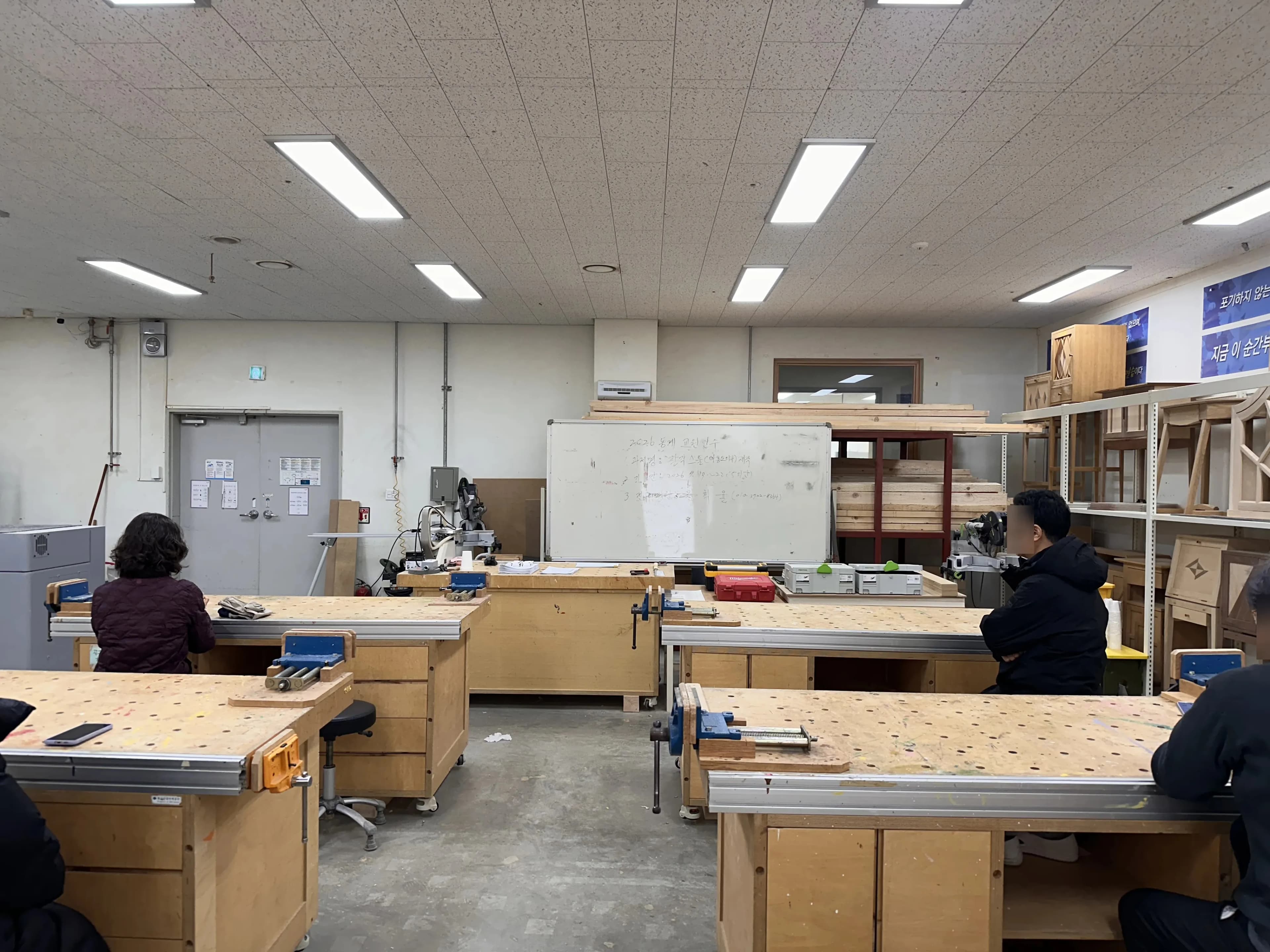
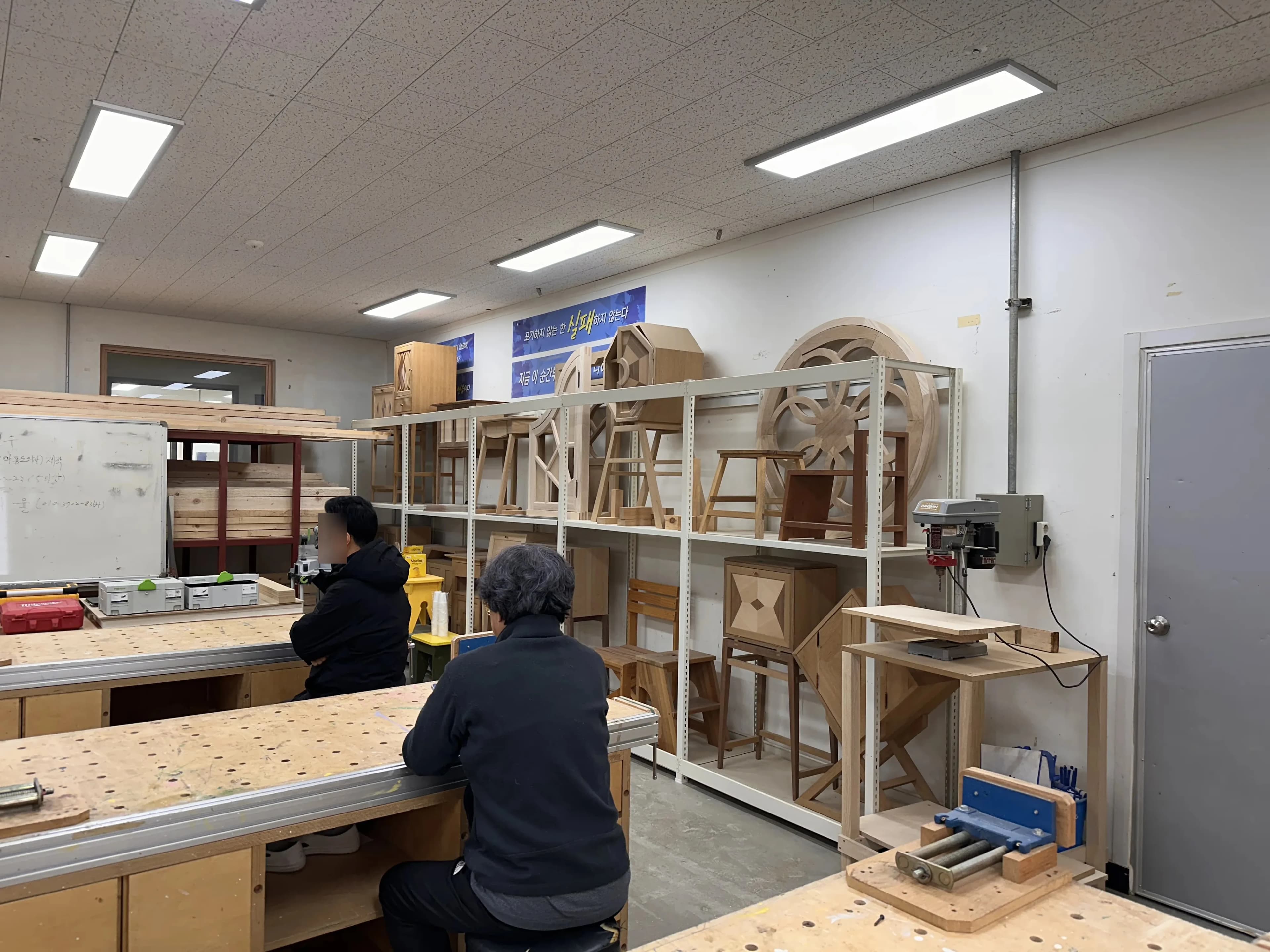
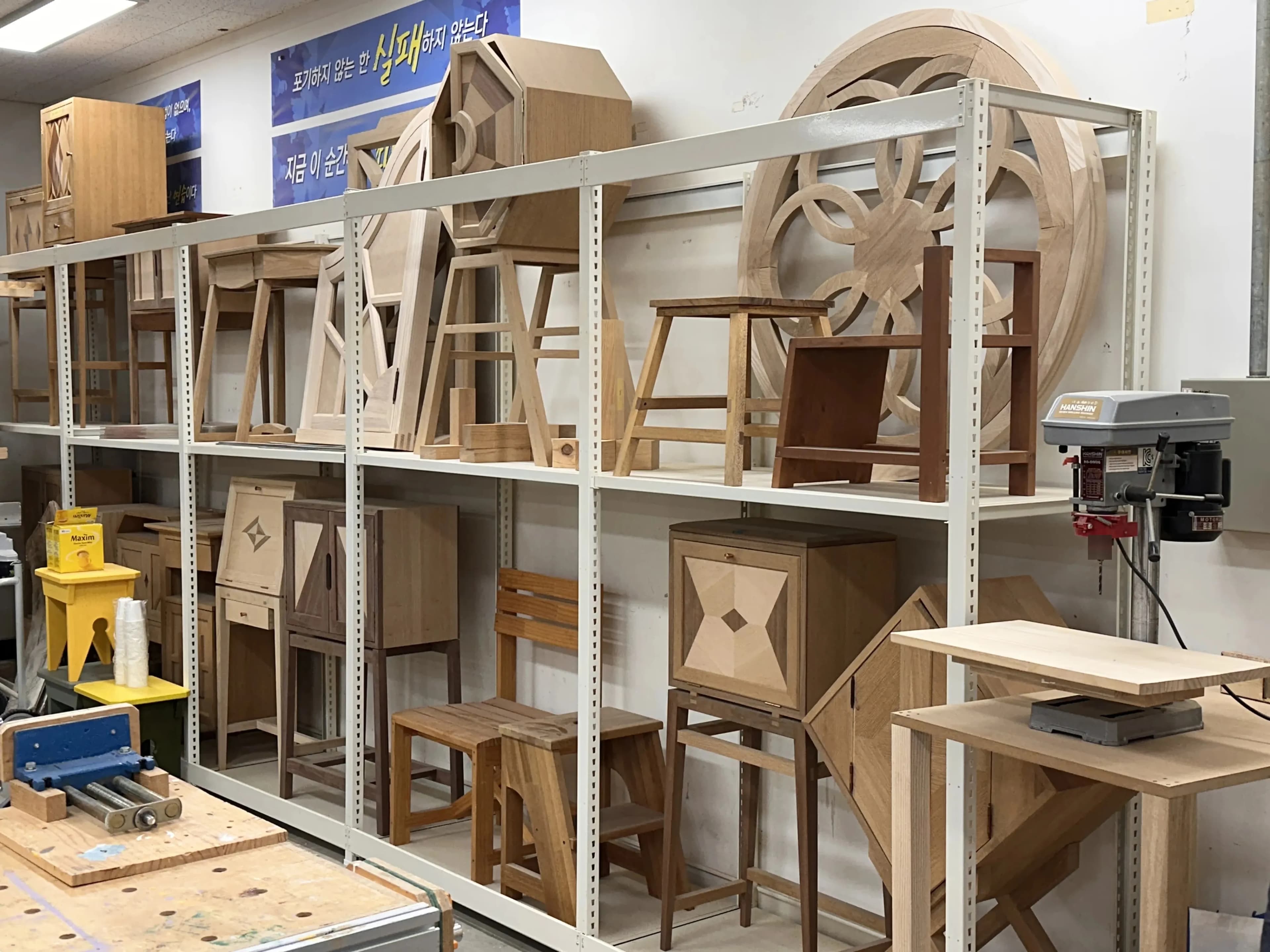
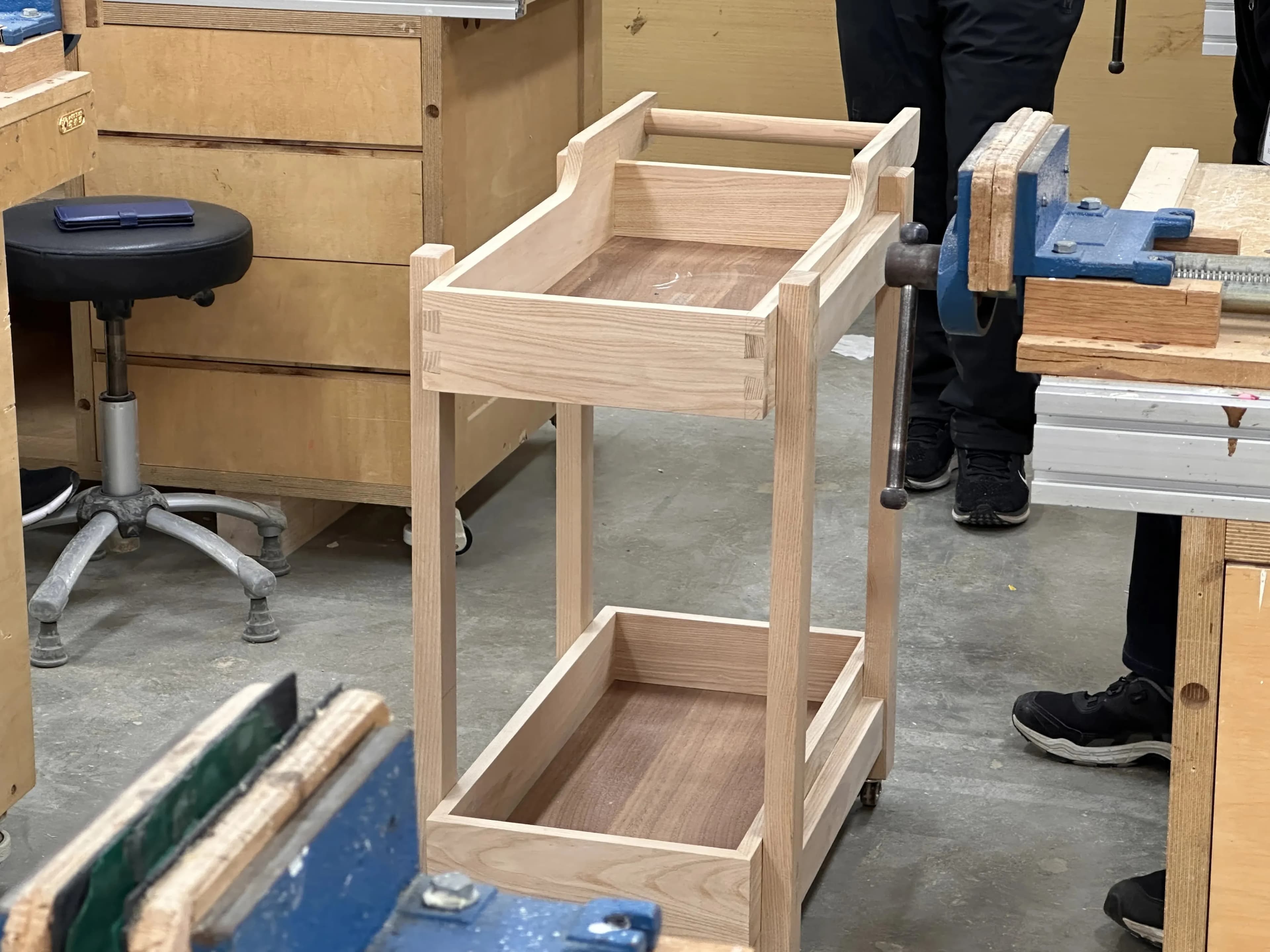
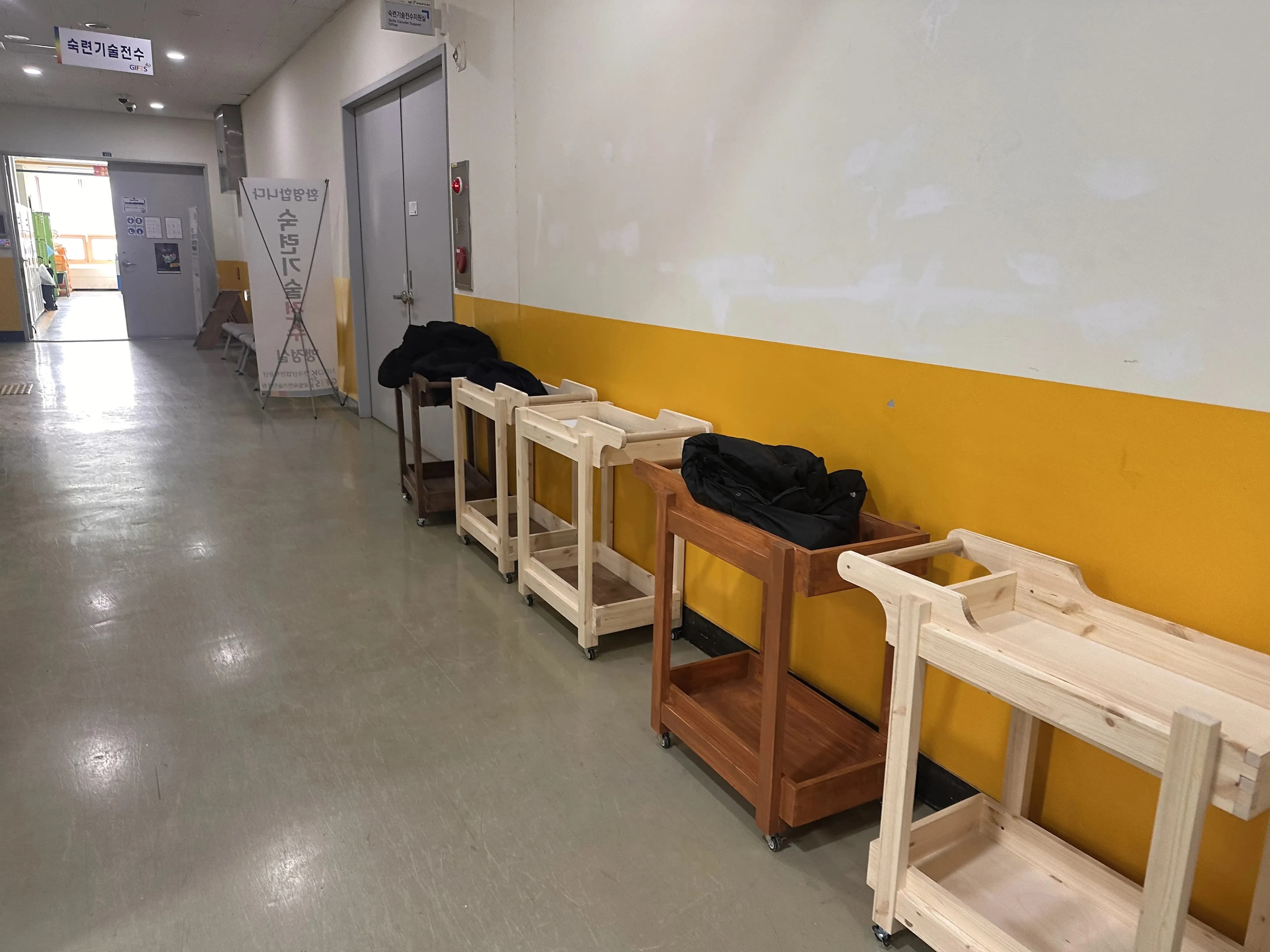
What we were going to make over the five days was a solid wood wagon (trolley).
But when I touched it, the master’s sample seemed to be made from slightly different material.
One teacher even jokingly said they wanted to take home the one the master made instead of their own.
Once we actually finished our trolleys, you could immediately feel the difference in heft.
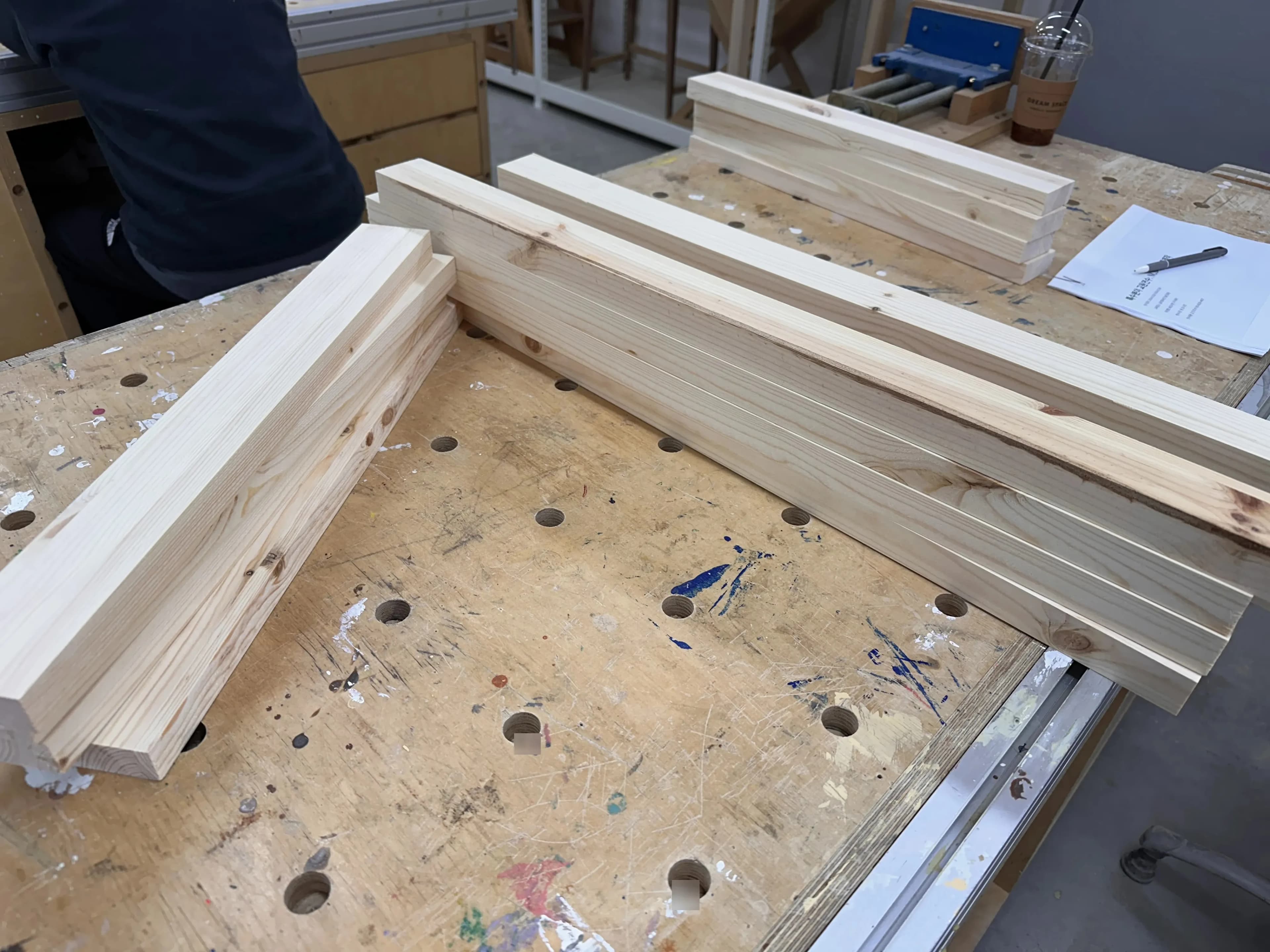
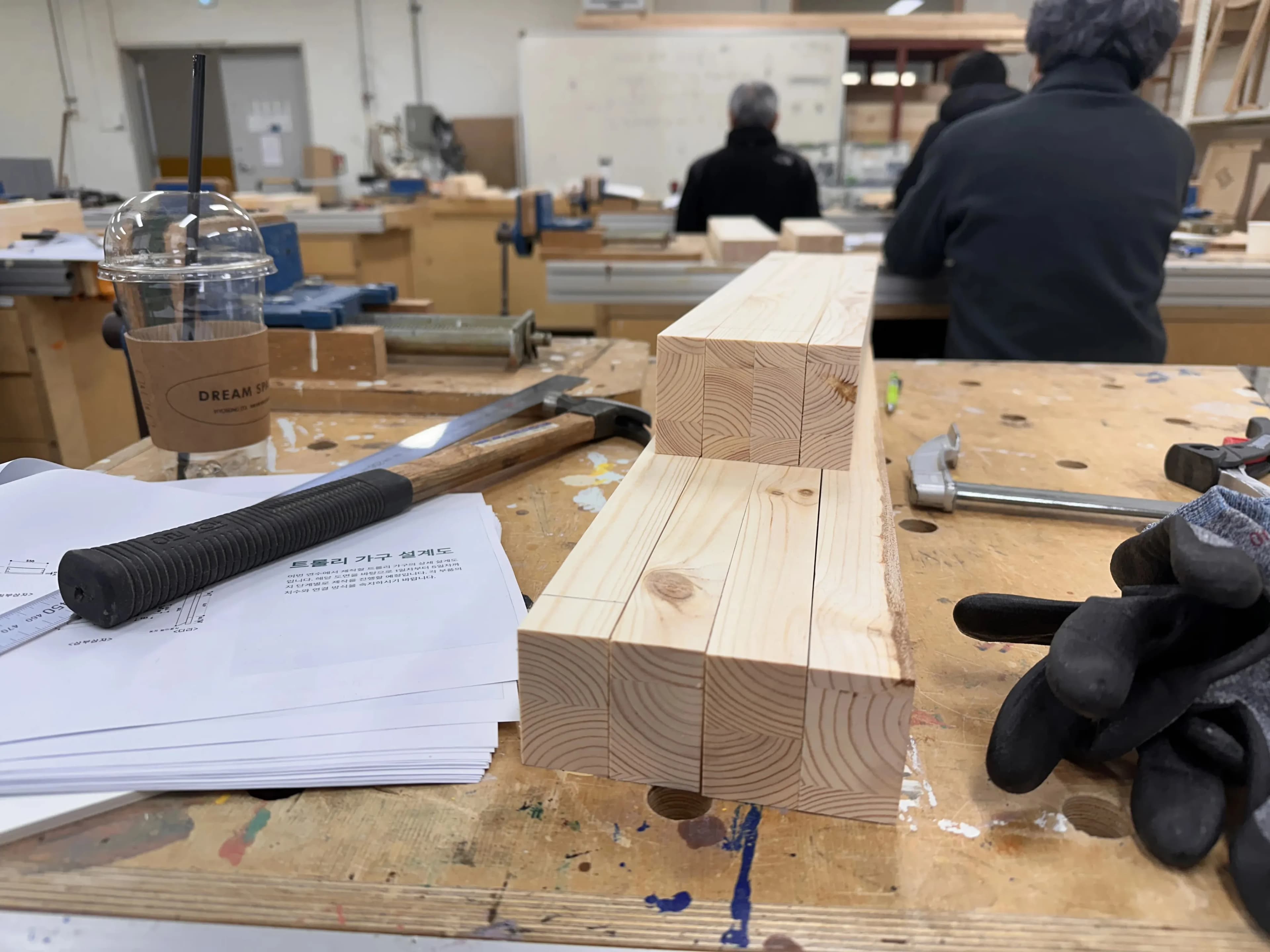
The wood we received was edge-glued board.
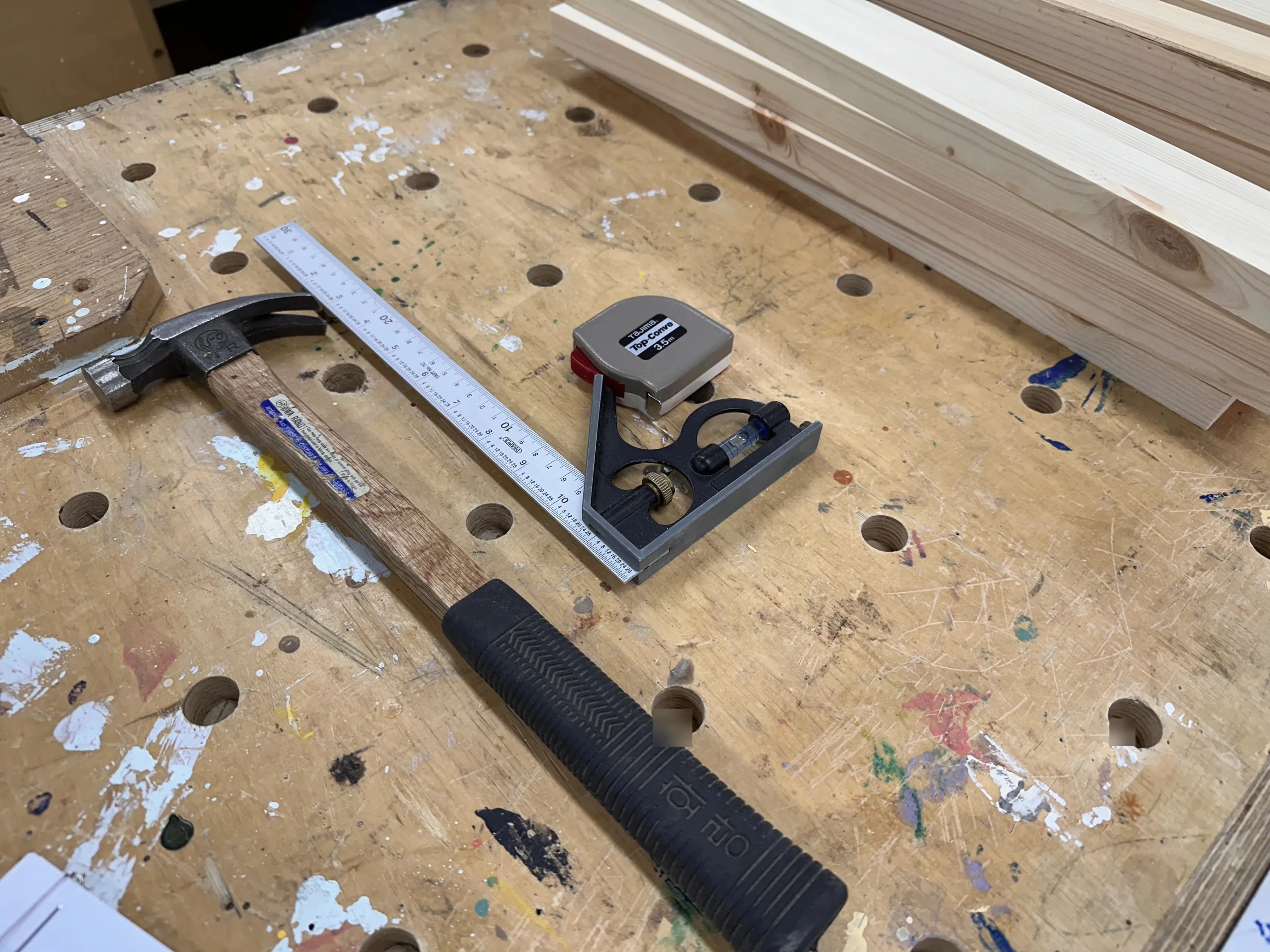
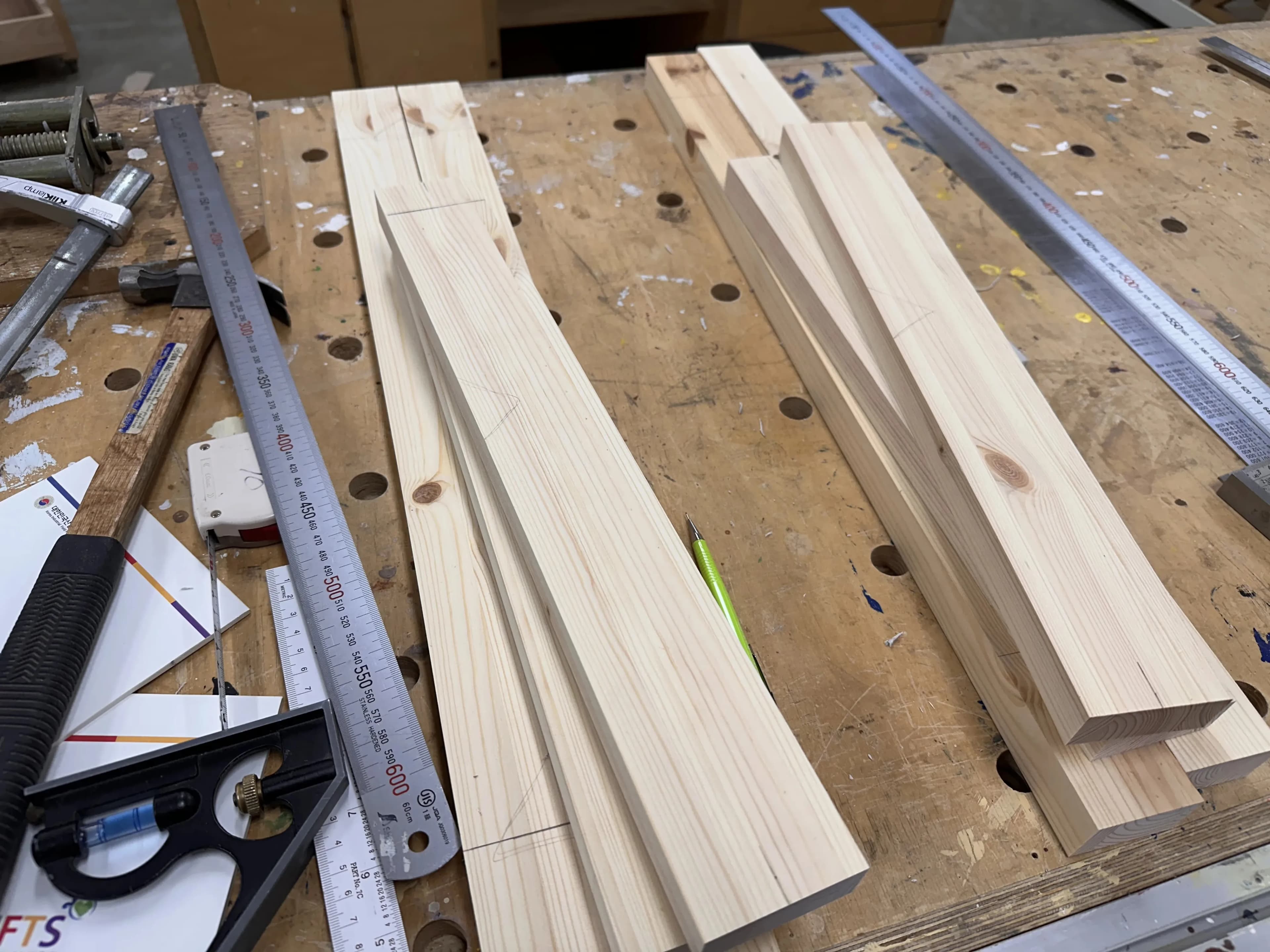
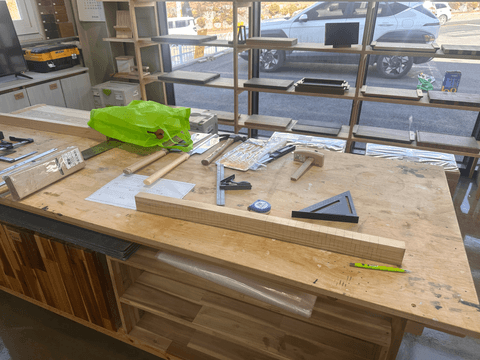
Then it was a cycle of measuring the materials with a tape measure, marking, and cutting.
Through this training I learned for the first time just how accurate a tape measure can be.
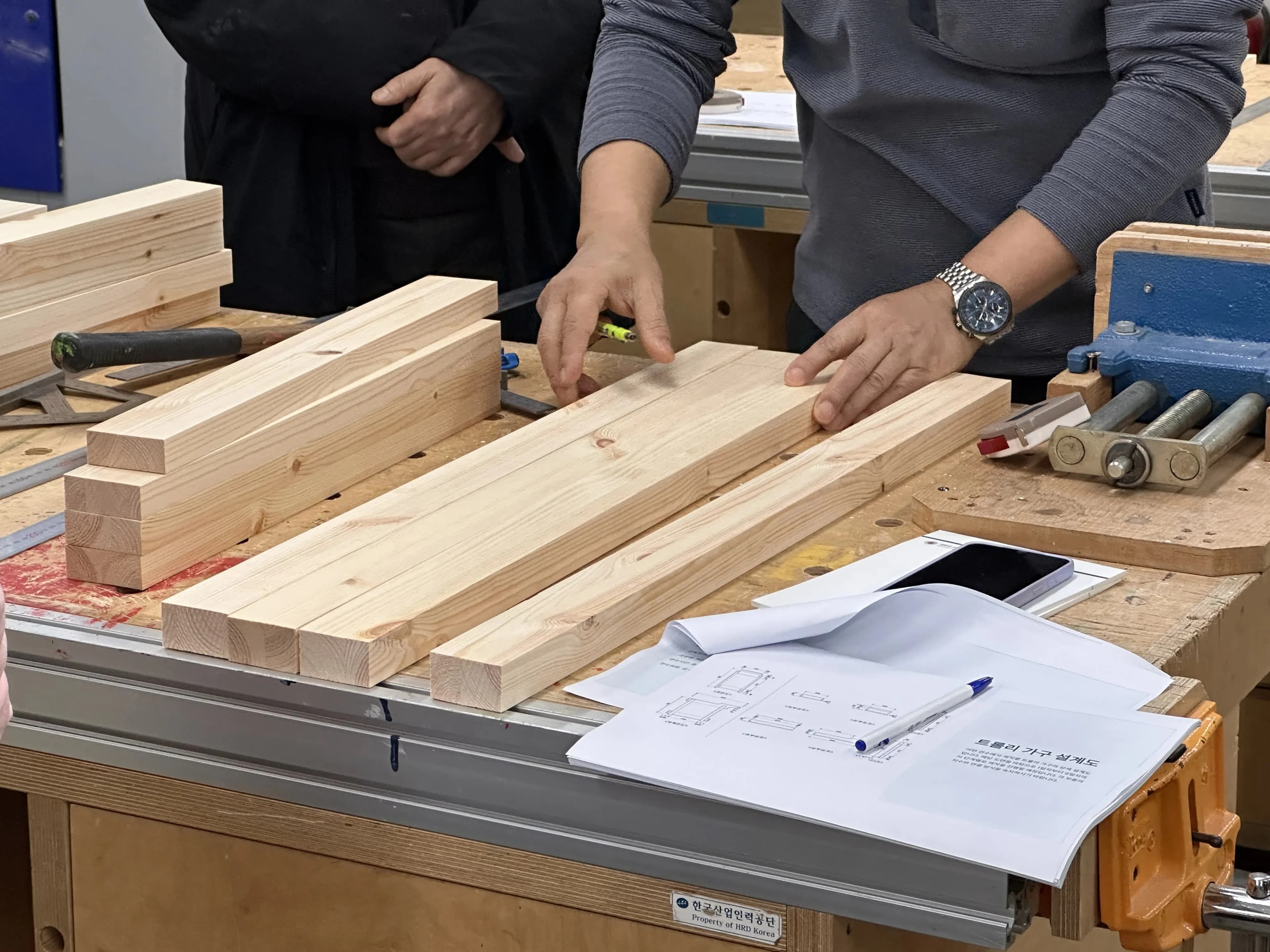
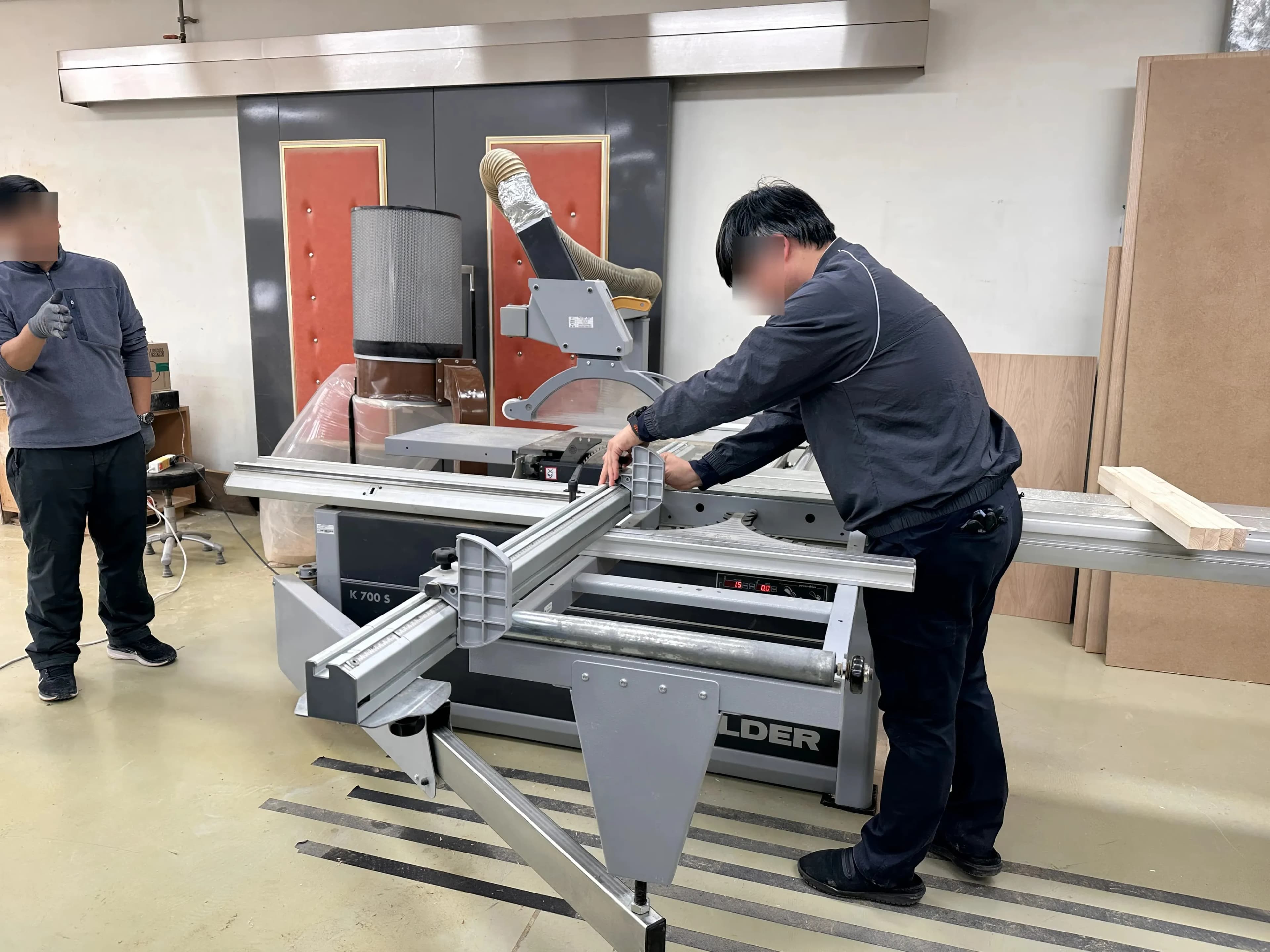
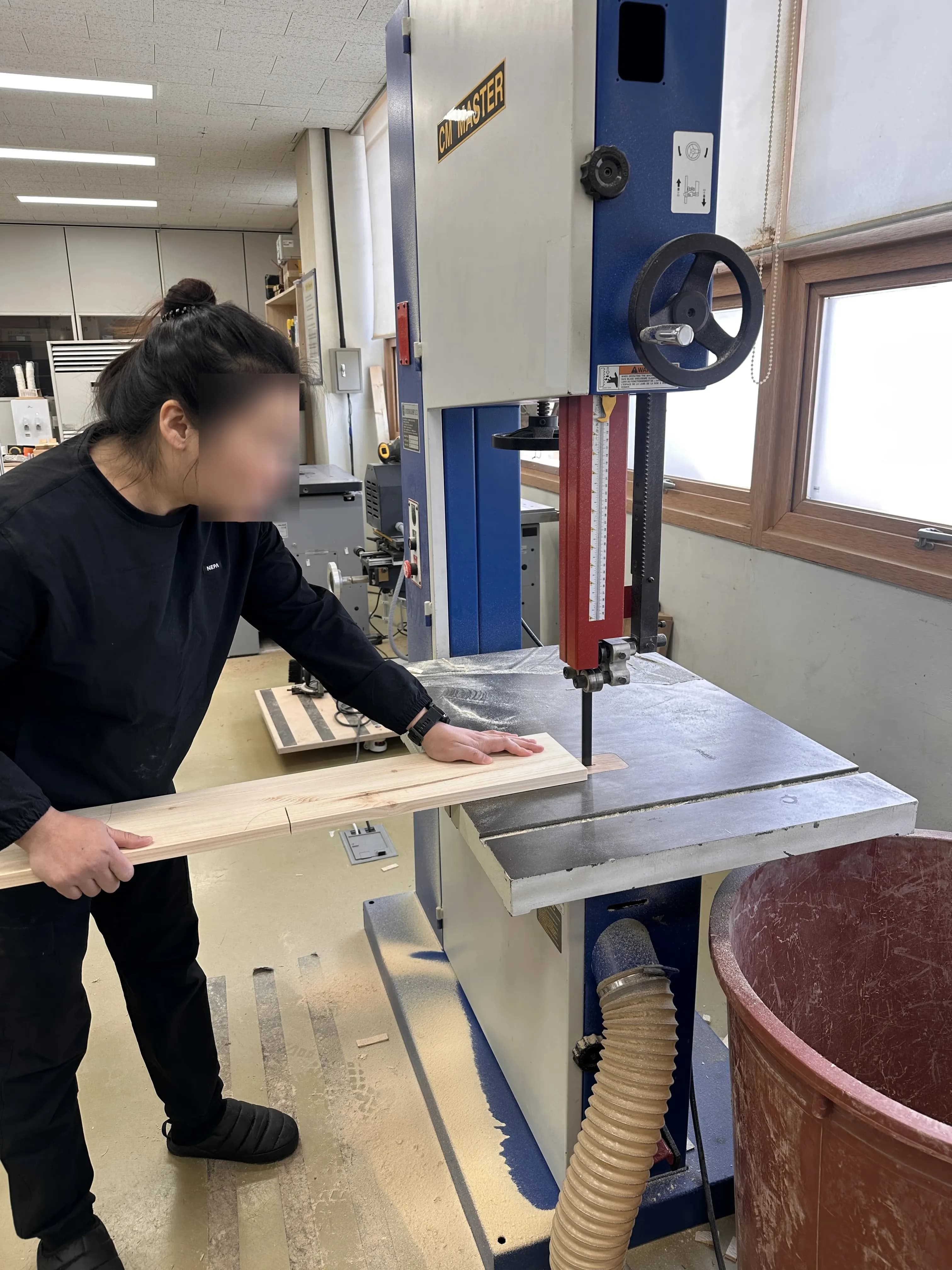
We used various machines under the master’s watchful eye.
He said that when technology teachers use these machines, they must never wear gloves, neckties, or hoodies.
If something accidentally gets caught in the machine, it’ll just be cut right off...
Hearing that, I was scared of the table saw at first, since I’d never seen one before, but I quickly got used to it.
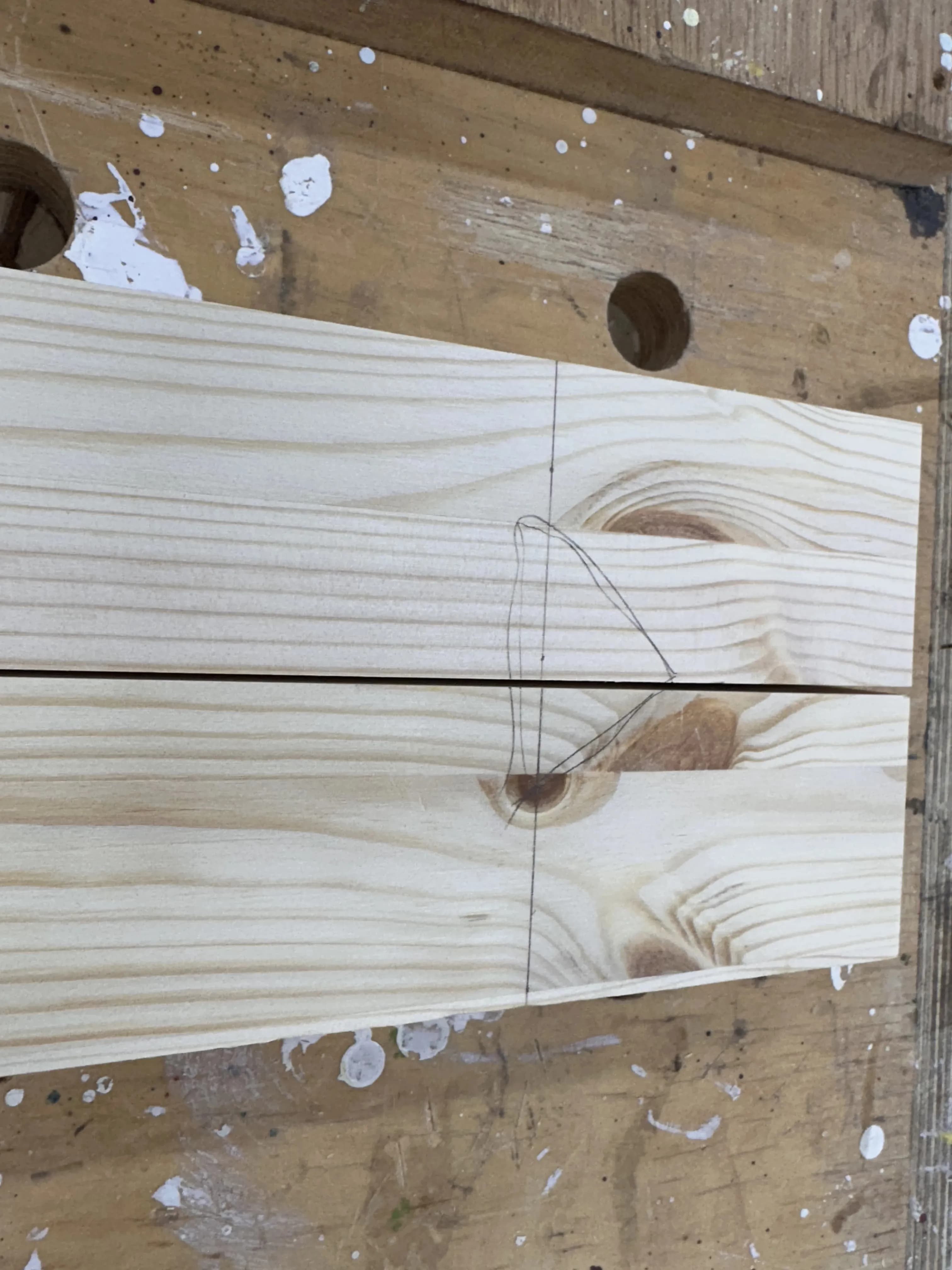
The furniture made by woodworking Olympians had these triangle marks drawn on them.
The master taught us that he uses these triangles to distinguish left/right and top/bottom.
The teachers who had learned woodworking before knew that these mechanical pencil marks are hard to erase, so they drew them really small.
Since it was my first time, I drew the triangles big and bold.
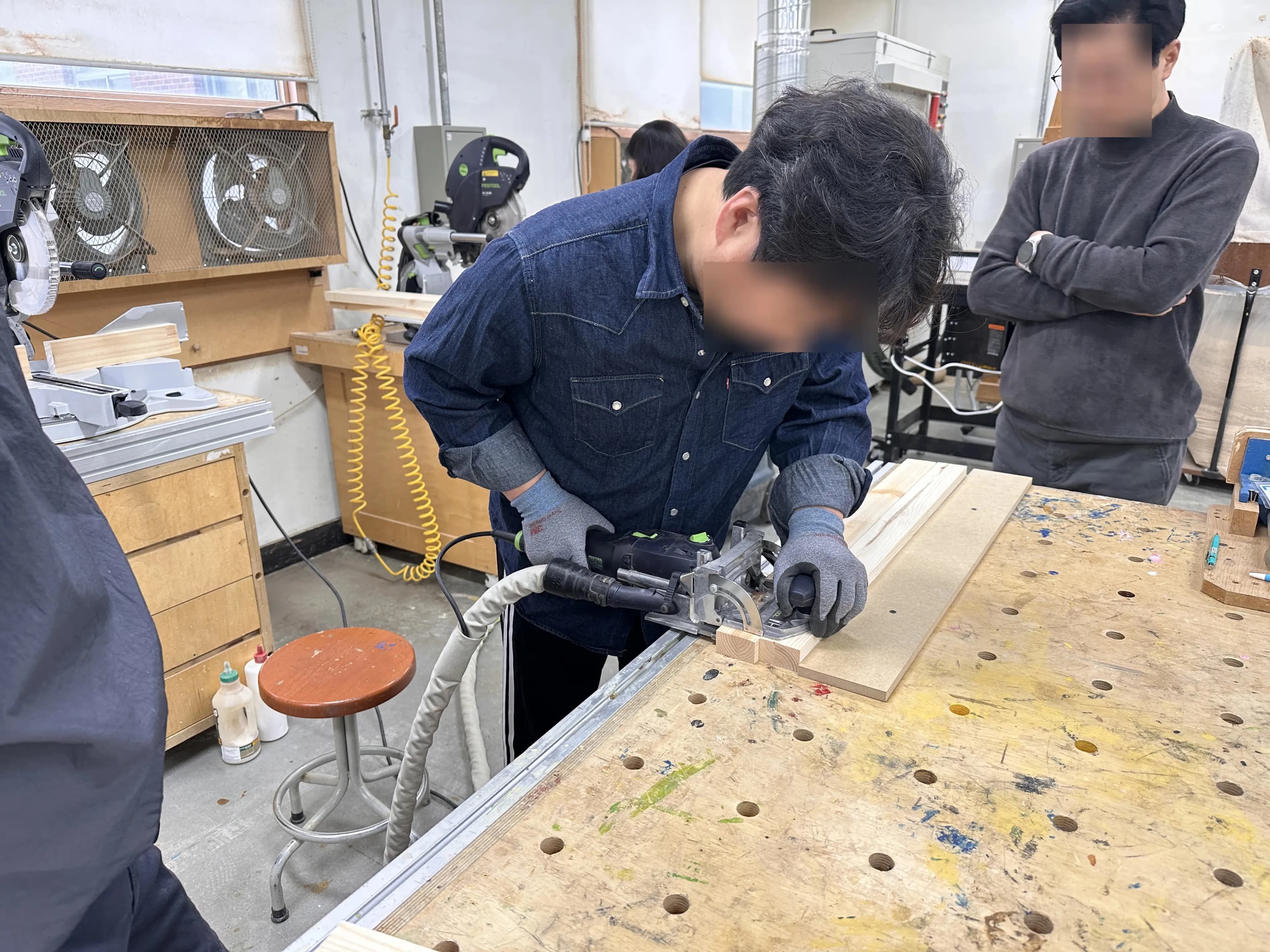
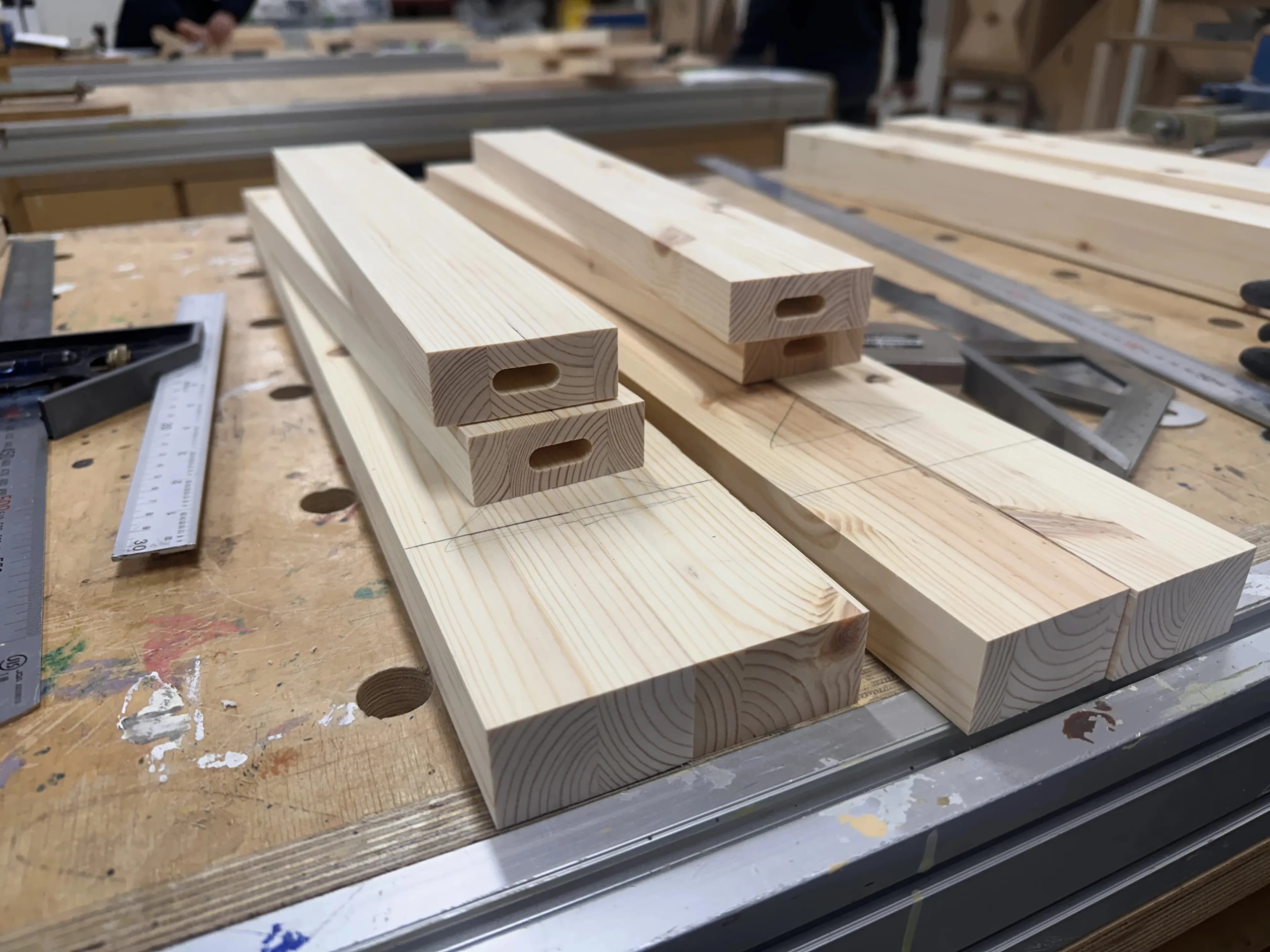
I also saw a domino pin for the first time.
They said the patent hasn’t expired yet, so you can only use products from the designated company.
And they told us that the strength of a domino pin is inherently different from that of a round dowel.
Near the end of the first day’s class, he suggested we have a group dinner that evening to break the ice a bit.
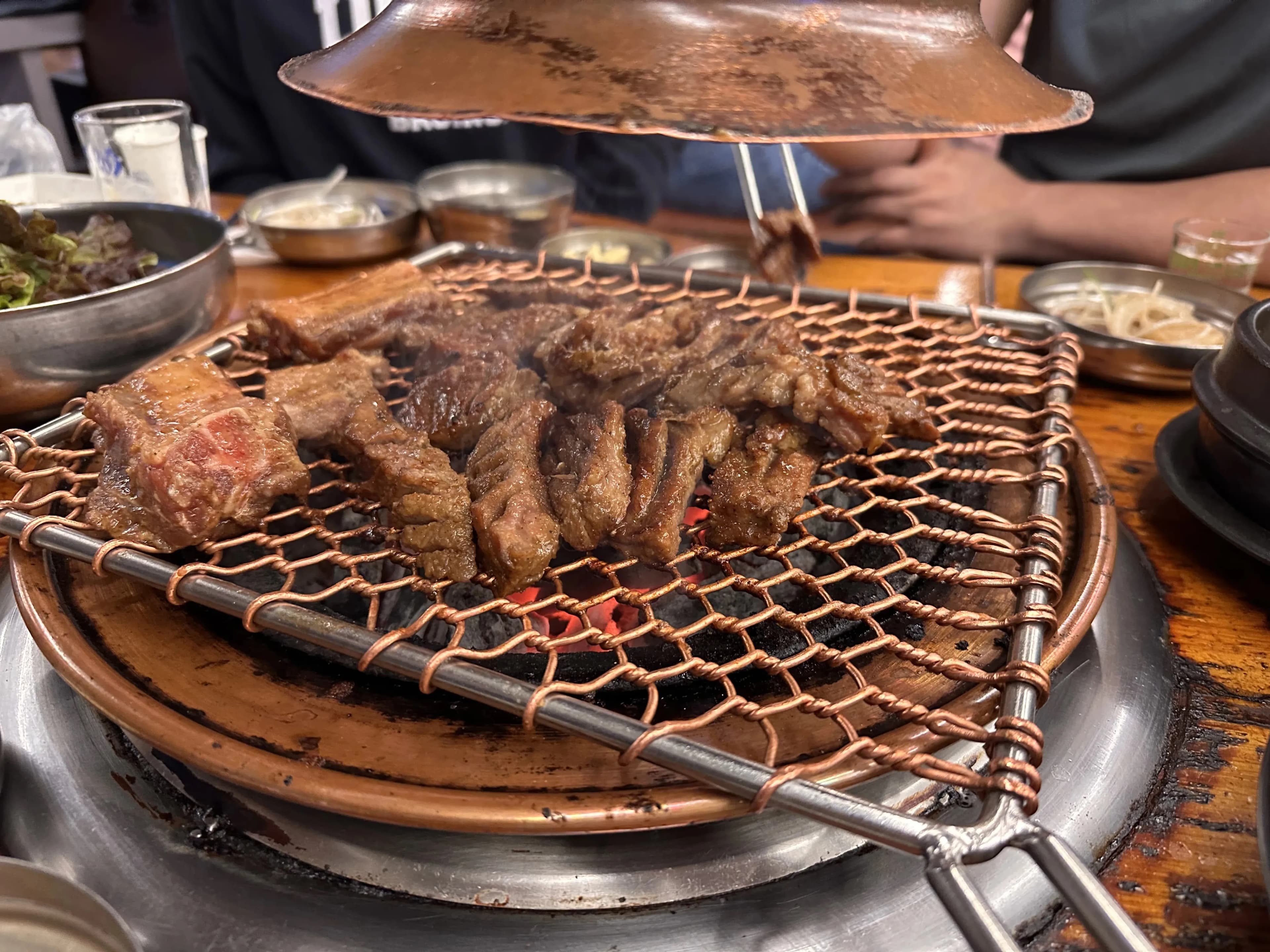
So we all went out to a barbecue place for a team dinner.
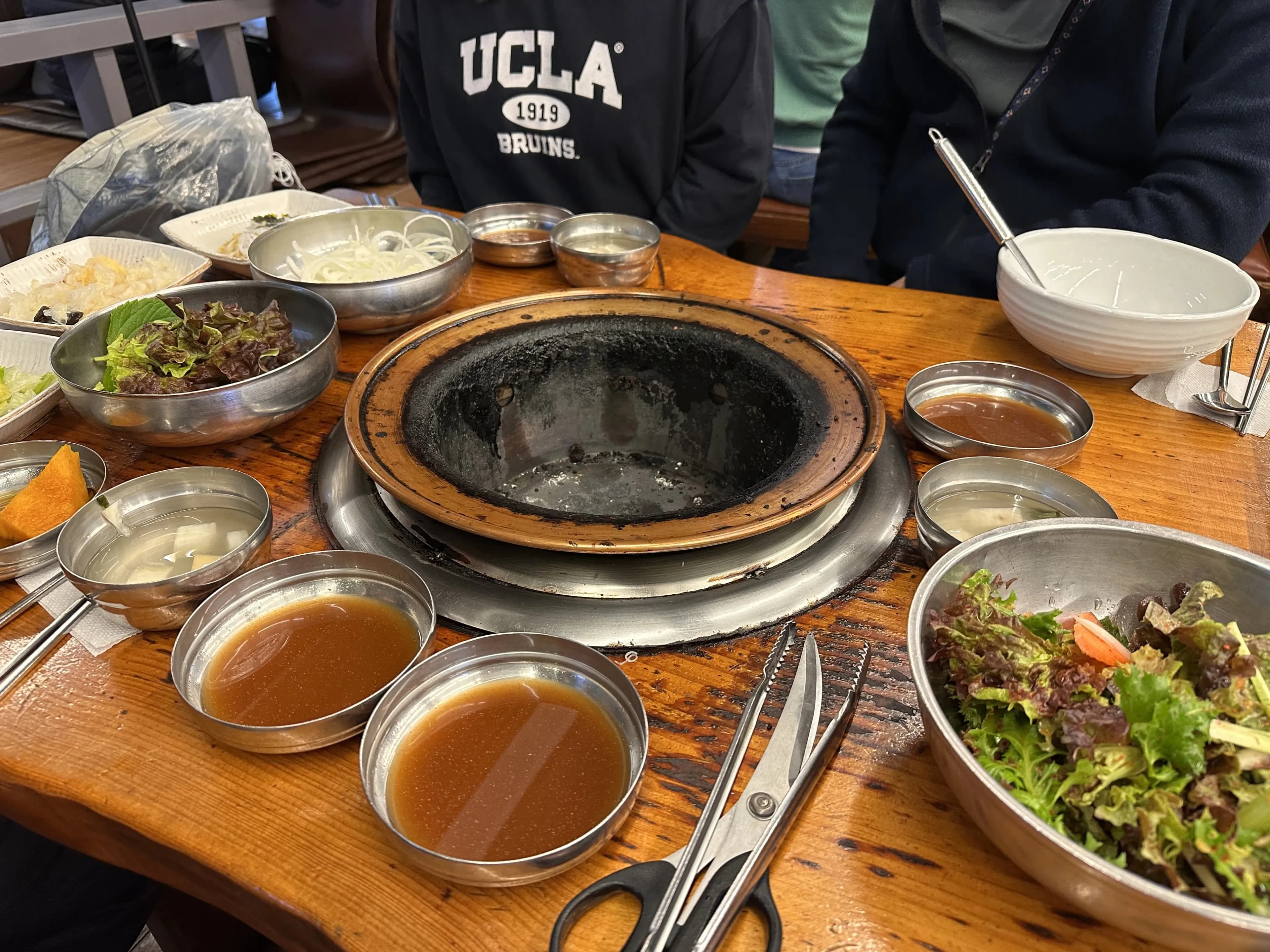
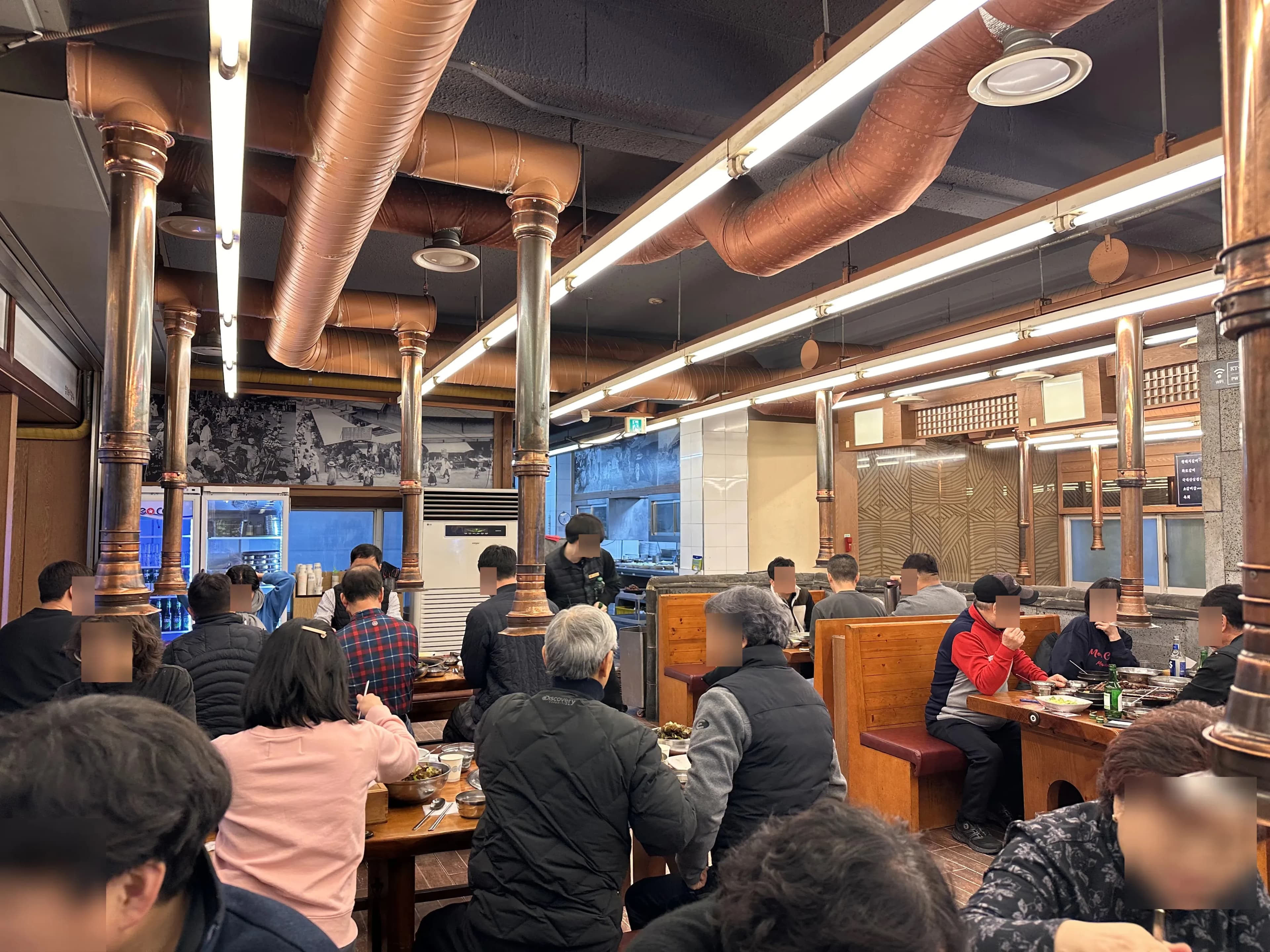
The marinated ribs were tender and delicious.
Later we found out that the master had paid for the meal.
Master... thank you very much for the food.
2) Day 2
After the dinner, it felt more natural to greet the other teachers the next morning.
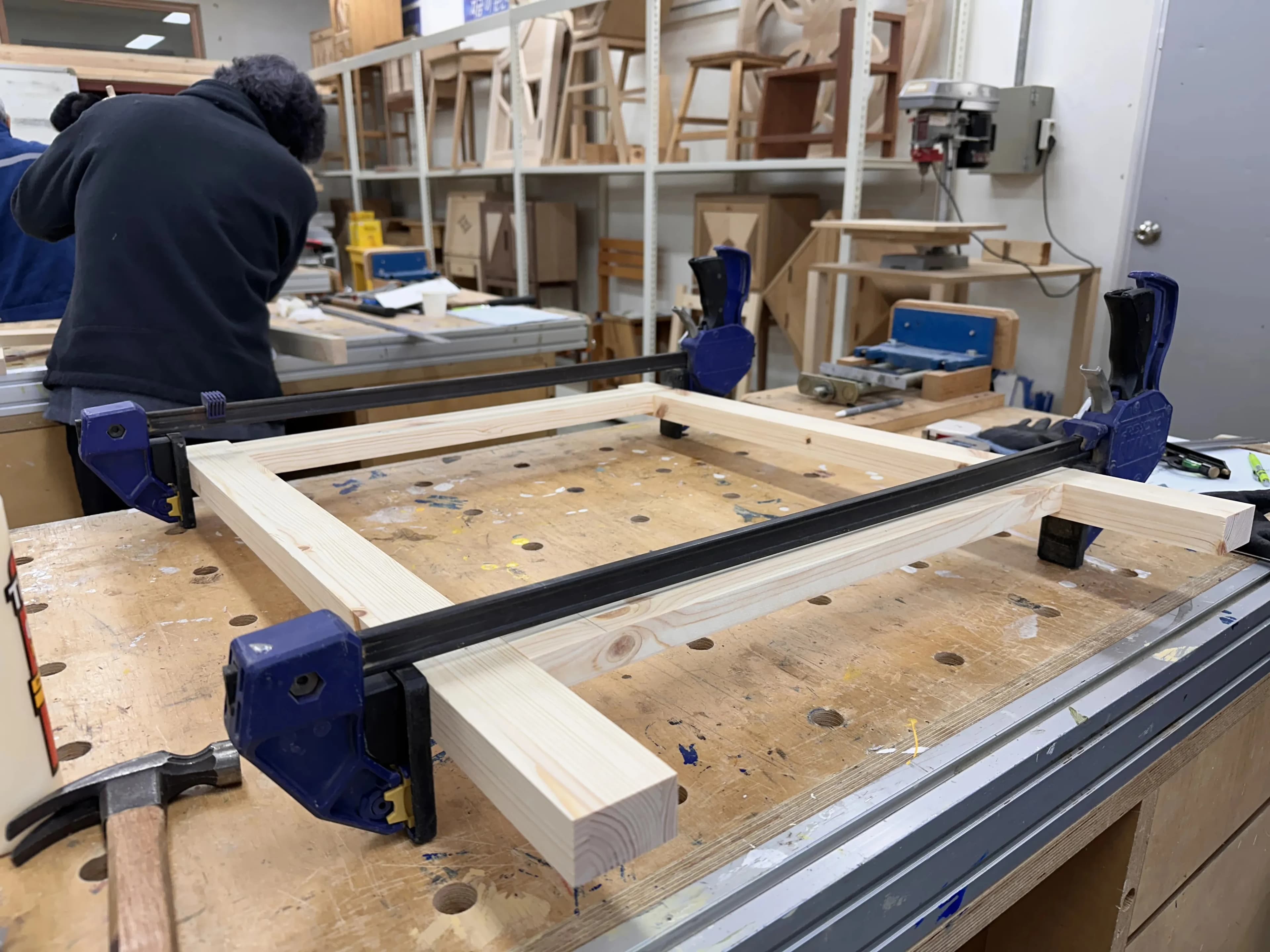
On the second day, we glued up the pieces we had cut the day before and made the boxes that would be attached to the trolley.
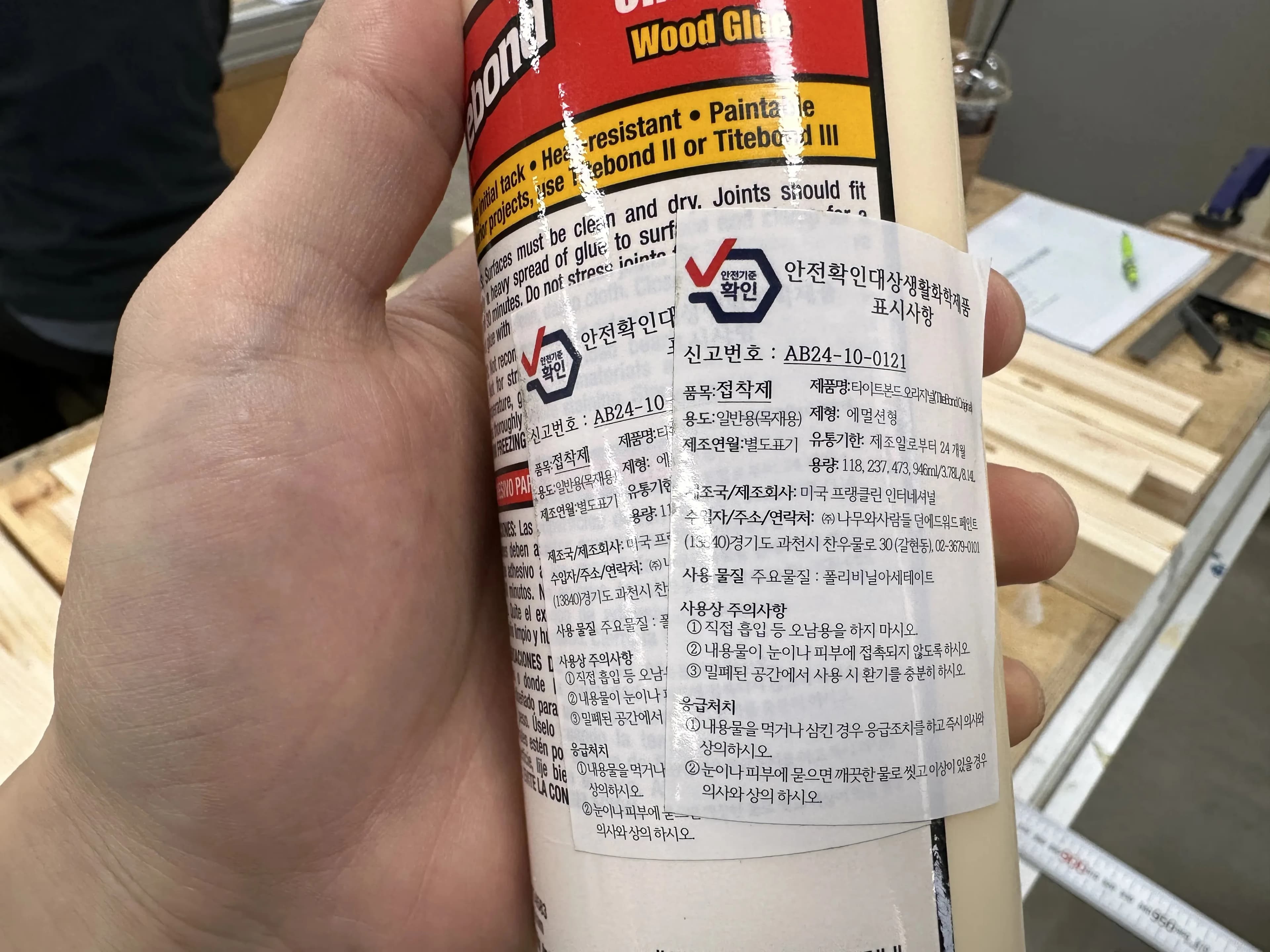
It was my first time actually using Titebond, which I’d only ever seen in woodworking videos on YouTube.
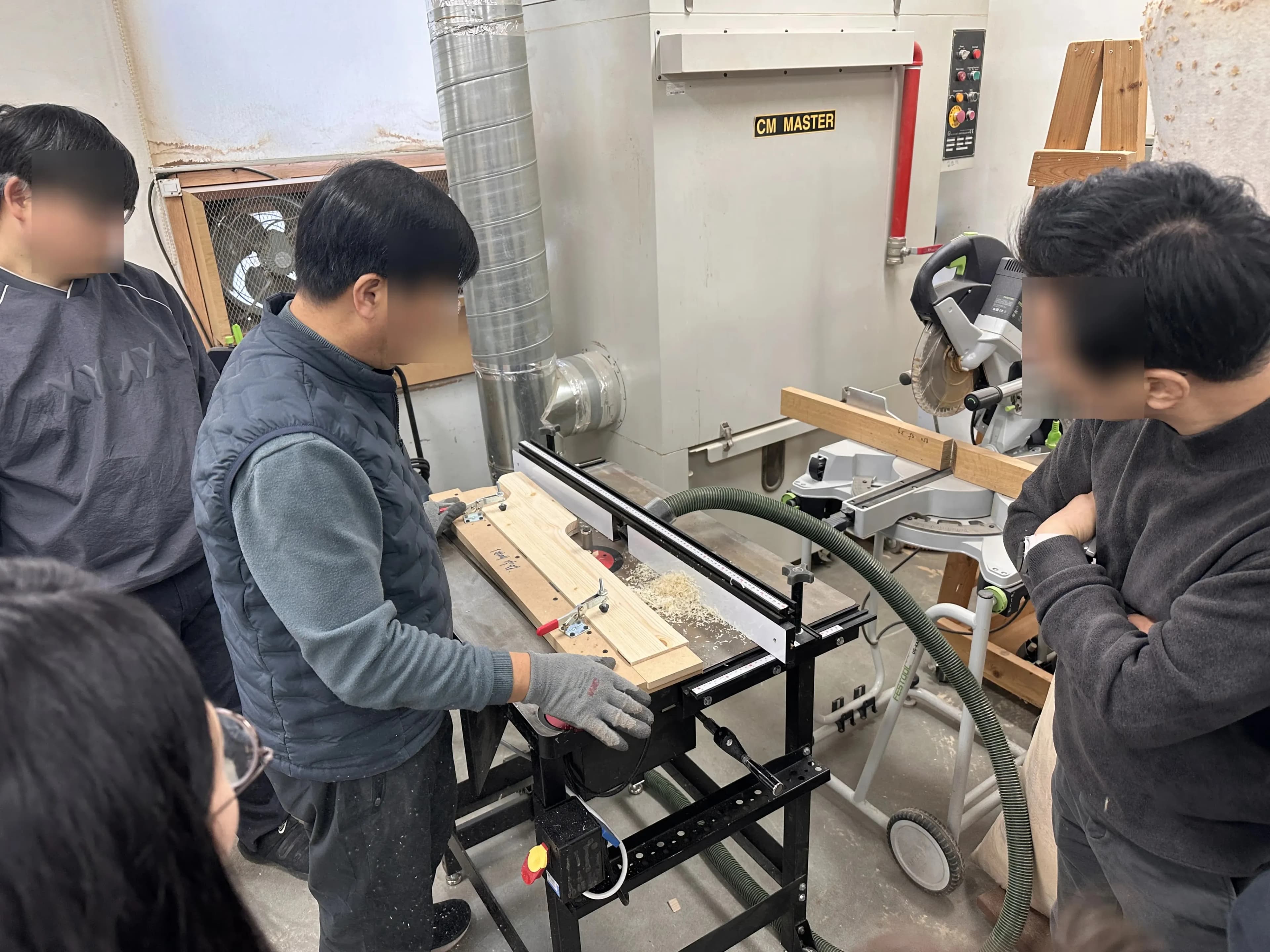
For cutting curves, we used a trimming bit.
If you trim too large an area with the trimming bit, the wood can burn or pieces can fly off, so we used a jigsaw to cut as close as possible to the line first.
Then you just run the trimmer along it.
The master warned us that trimming bits are more dangerous than other tools.
Next it was time to make the upper and lower boxes.
We learned three methods for box joints: biscuit miter joints, dovetail (jumokjang), and through dovetails (sagaejang).
Originally, the plan was to use a miter joint for the bottom and dovetails for the top.
We decided to challenge ourselves and make everything with dovetails.
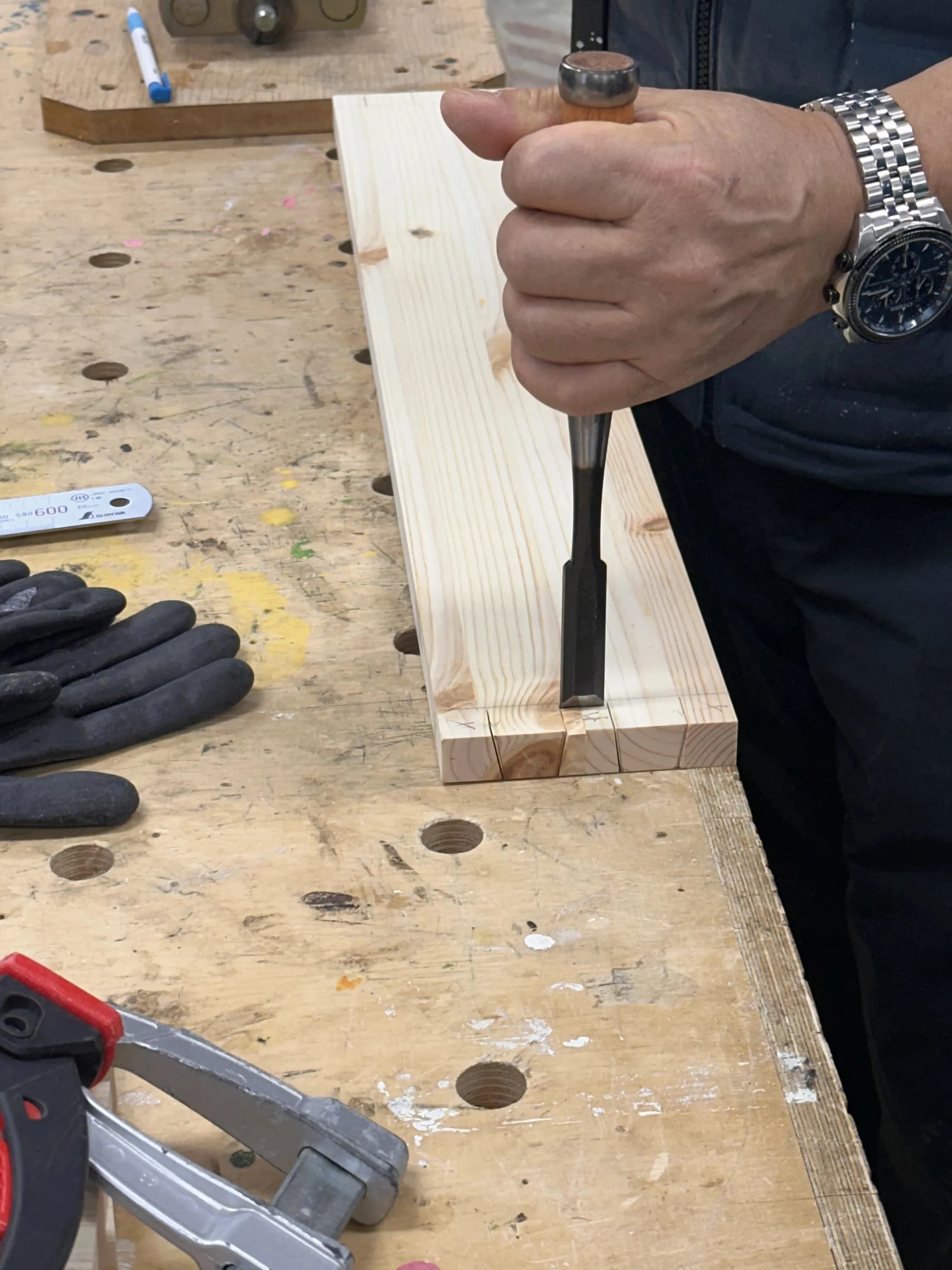
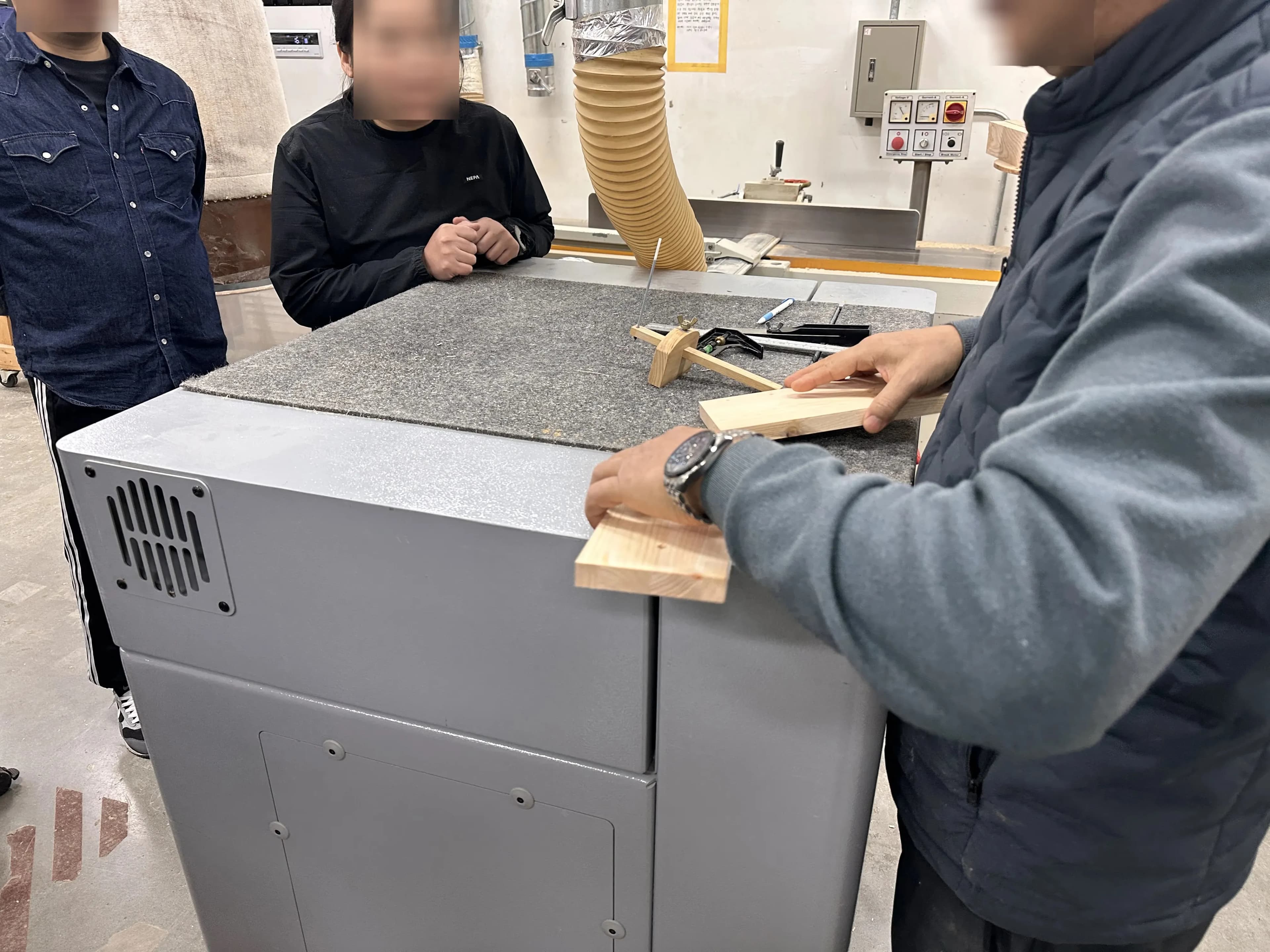
Looking at the shape of the dovetails, at first I just drew everything out with a ruler.
But it turned out that with a sliding bevel gauge and a tape measure, you can mark it in no time...
The difference that learning makes really is huge.
3) Day 3
I don’t even know how the third day passed by.
Since we decided to make both the top and bottom boxes with dovetails, that meant six dovetail joints in total.
I went in early at 8 a.m., and after sawing and filing all day, it was already past 5 p.m.
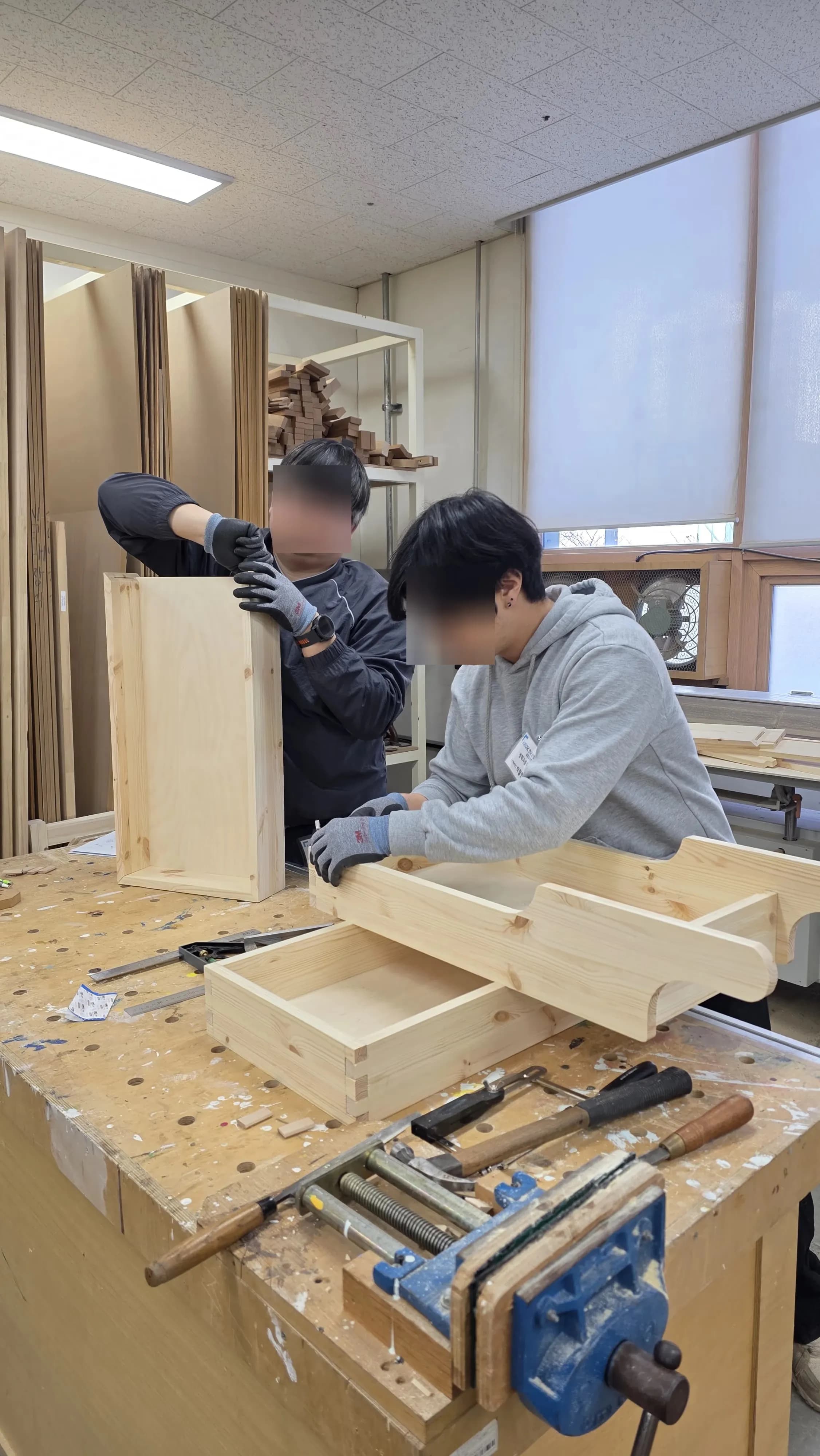
The amazing thing is that during all that time, I didn’t look at my phone even once.
It had been a long time since I’d felt this kind of immersion, not since leathercraft and coding.
It was the day I decided I really needed to learn woodworking.
After a dry fit and some painting, we wrapped up the day.
4) Day 4
On the fourth day, we finished all the painting and moved on to the final assembly.
They said if we painted on the fifth day, it wouldn’t dry in time and we’d have trouble loading it into the car after the workshop.
So everything had to be finished by day four.
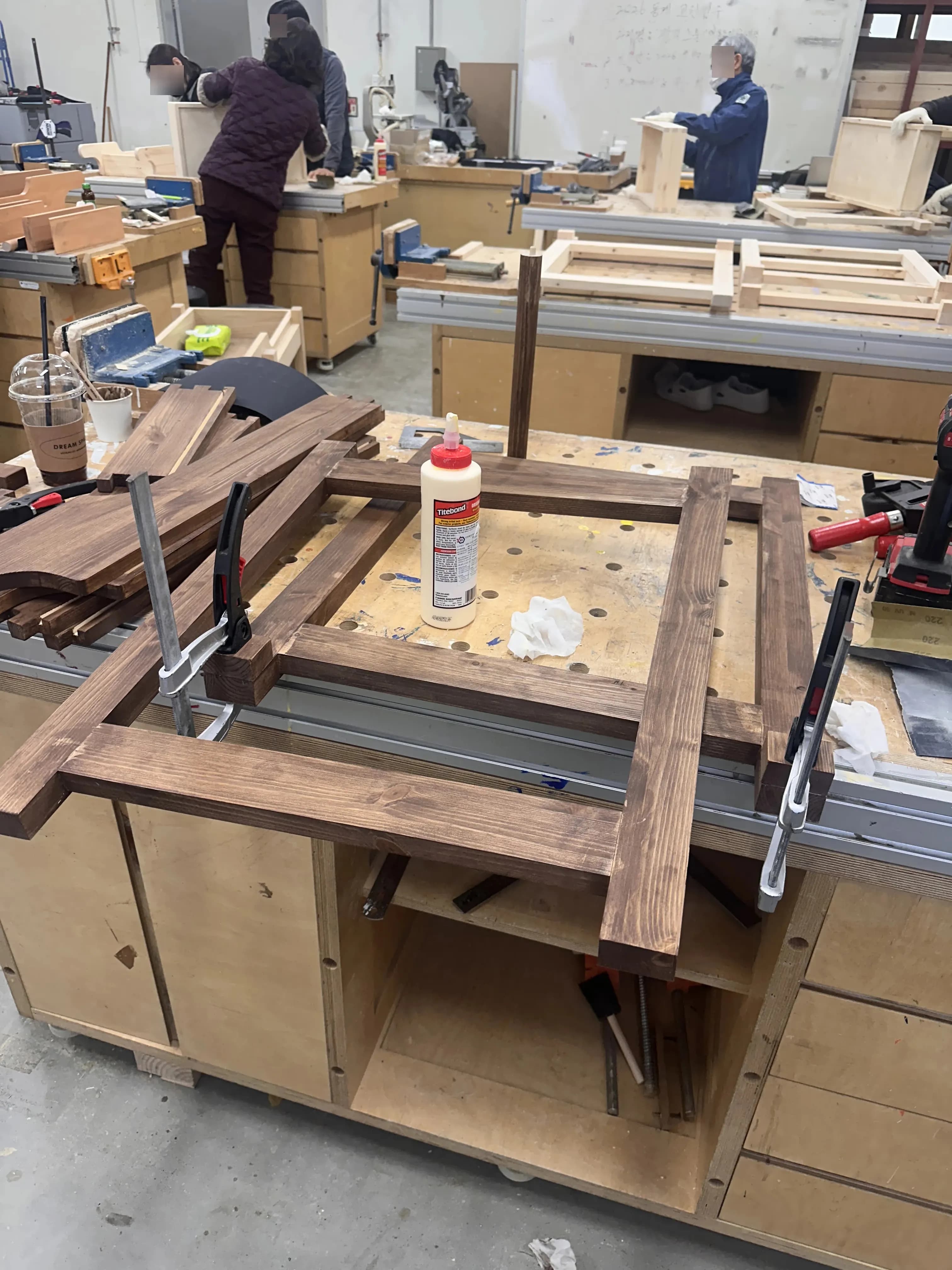
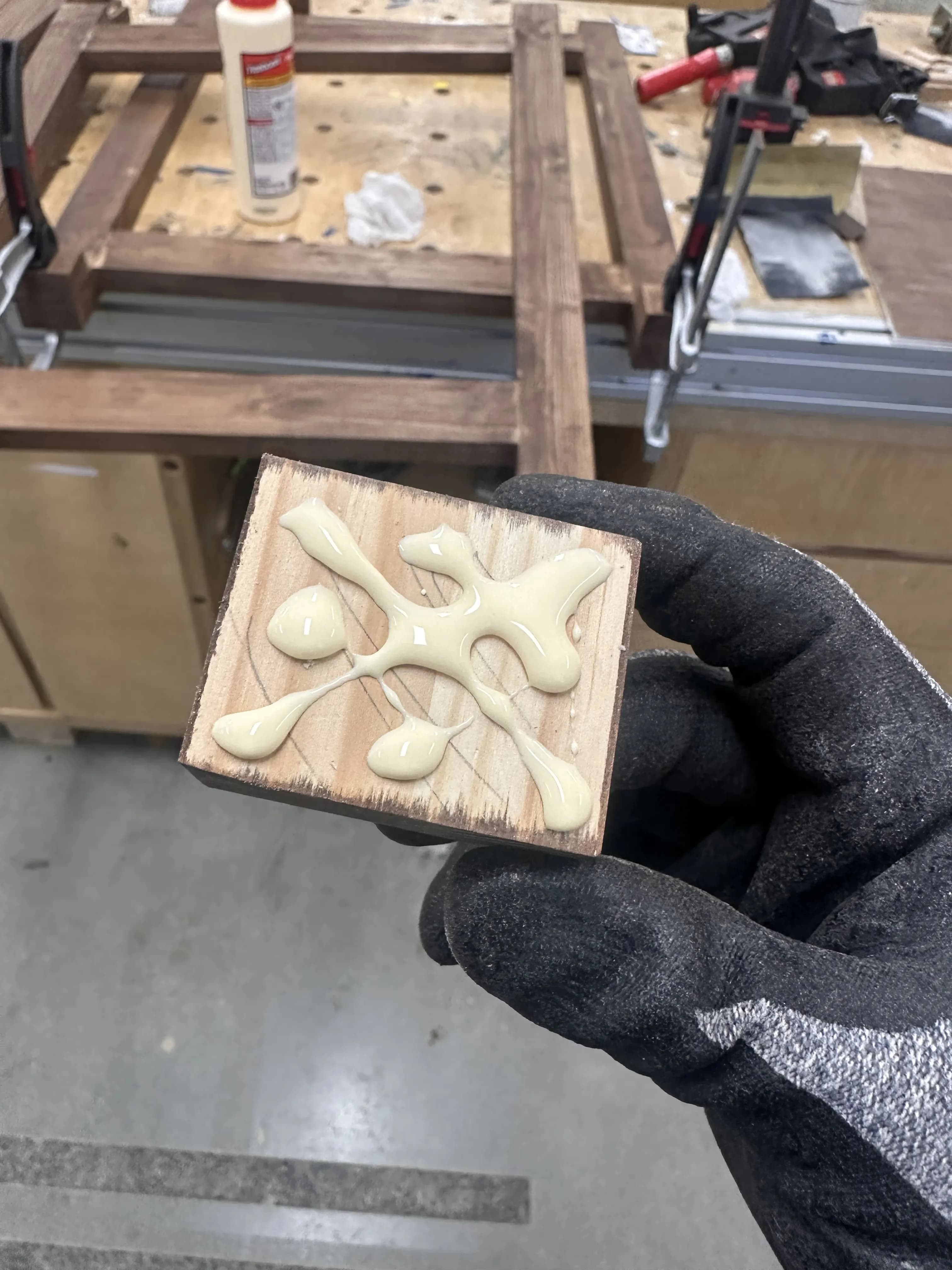
Everyone else fixed their boxes together with screws.
The technology teachers next to me said they were going to join and connect everything with domino pins.
I also decided to hide all my joints with domino pins.
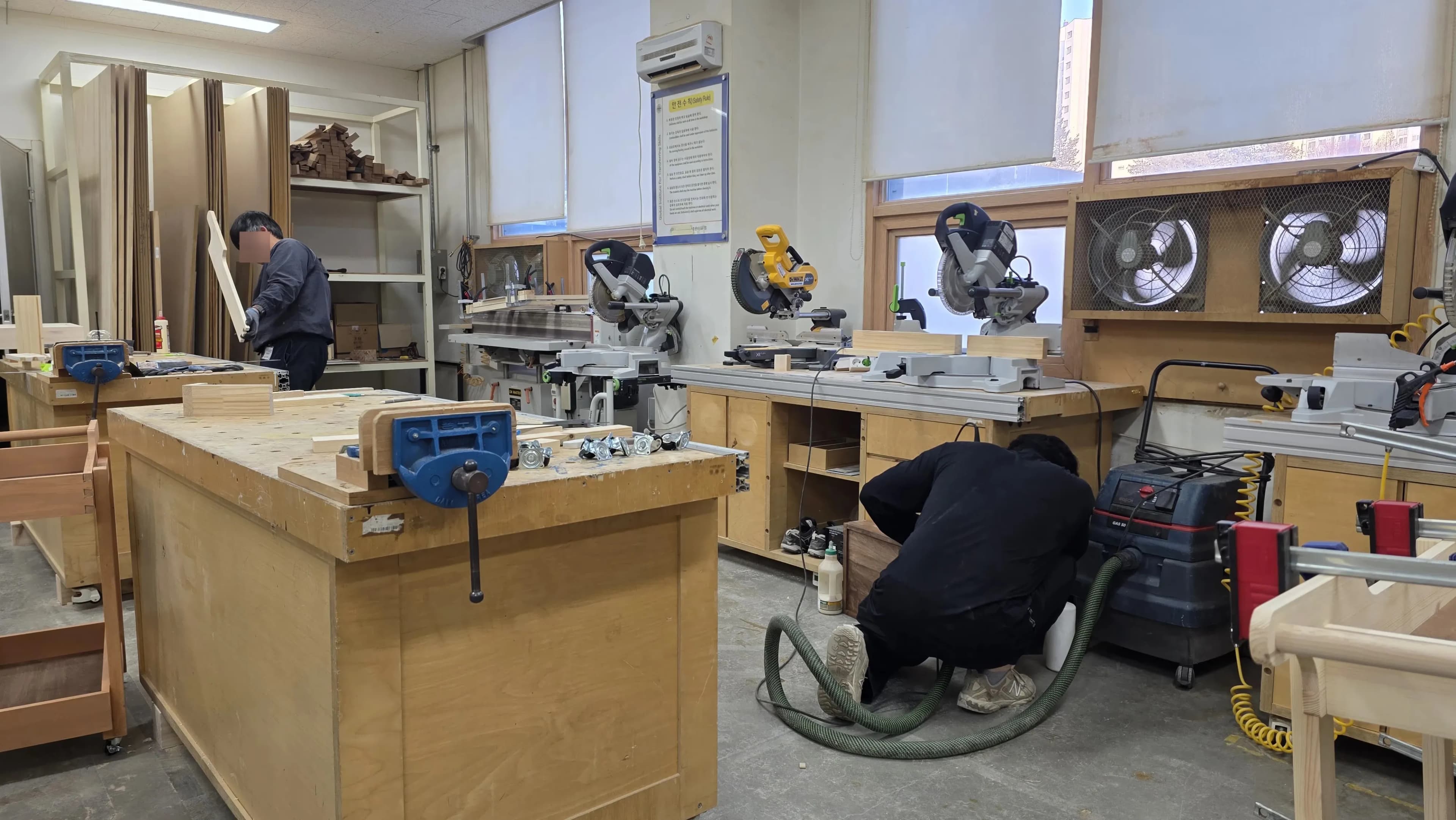
By the time we finished for the day, it was 5:30 p.m.
That day too, we worked hard nonstop without much of a break.
5) Day 5
On the fifth day, we did the final finishing touches.
We cleaned up, took a group photo, and filled out a survey.
We shared our thoughts and chatted over coffee, and two hours flew by just like that.
7. Overall impressions
There were so many things I was learning for the first time.
As I learned about skilled trades, I realized how much of a bookworm I had been, thinking academics were everything when I was young.
I felt that I’d now be able to present students with a wider variety of career paths.
And I really loved the solid wood trolley we got to take home at the end.
It’s sturdier than any wooden trolley I’ve ever bought in my life.
If it doesn’t inconvenience anyone, I definitely want to participate again next year.
댓글을 불러오는 중...