I recently visited the Hwaseong Dinosaur Egg Fossil Site as part of a field trip organized by the Gyeonggi Province Middle School Earth Science Education Association.
Since it was my first time attending such a trip, and it seemed like a good topic for writing, I decided to share my experience in this review.
1. Field Trip Supplies
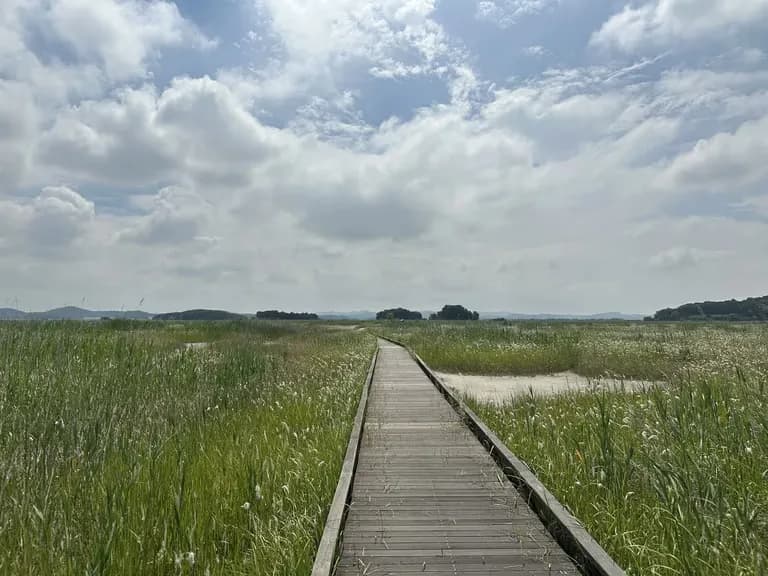
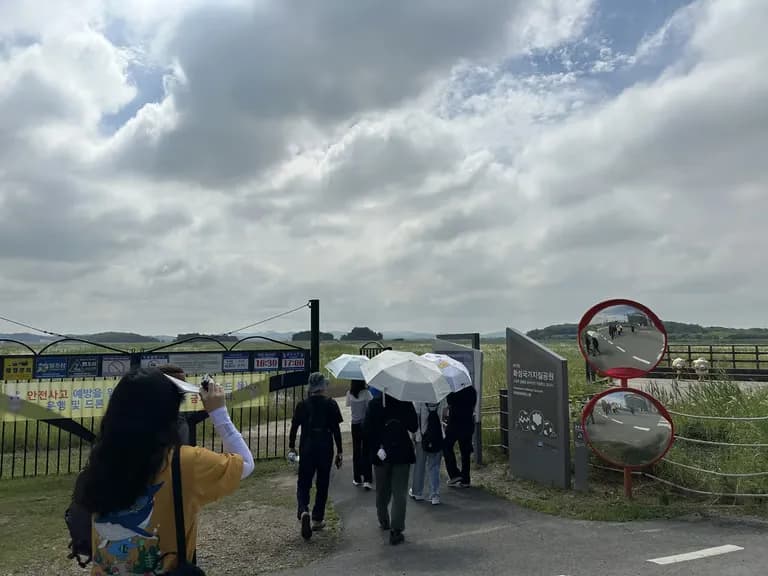
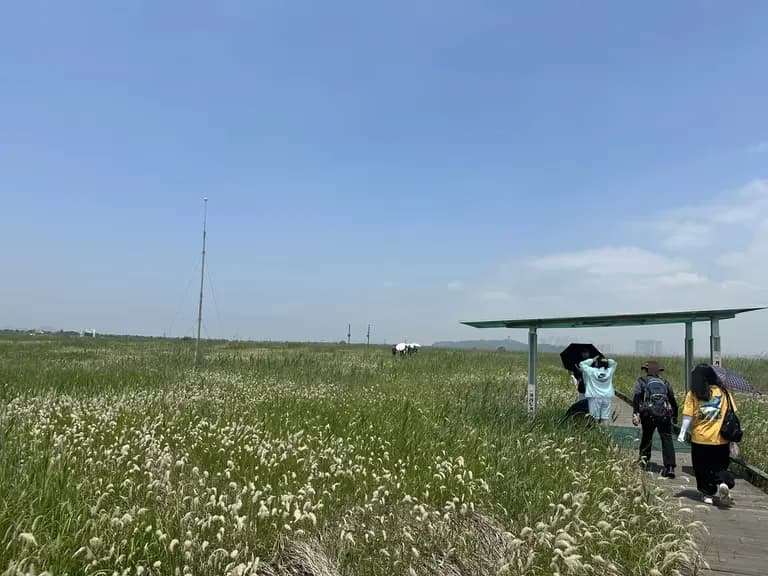
The photo below was taken on the way to the field site.
The sun was really intense that day.

Having not been on a field trip in a while, I went out unprepared and came back tanned.
I only worried about cloudy weather, with no preparation for clear skies.
So, here’s a list of essential supplies.
Small backpack, wide-brimmed hat, water, parasol (or umbrella), sunscreen, sneakers, tracksuit (comfortable clothing)
That day I learned the lesson to always carry an umbrella in the car.
2. Observing Fossils
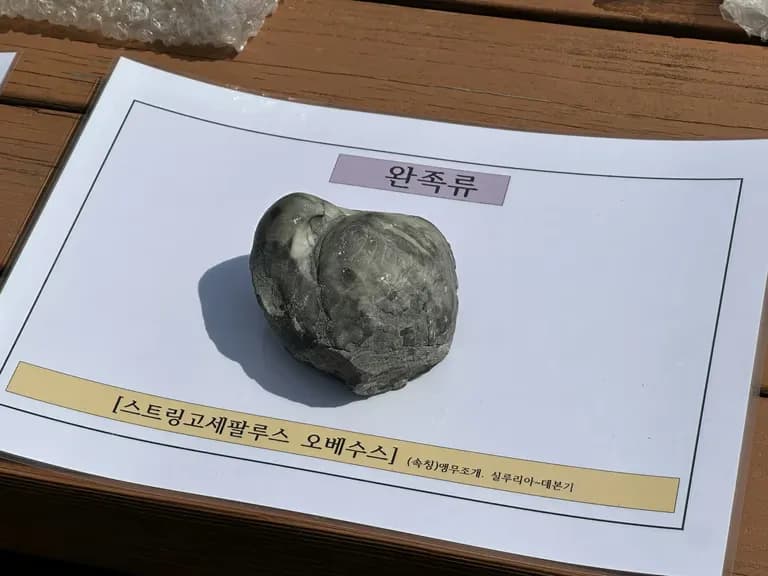
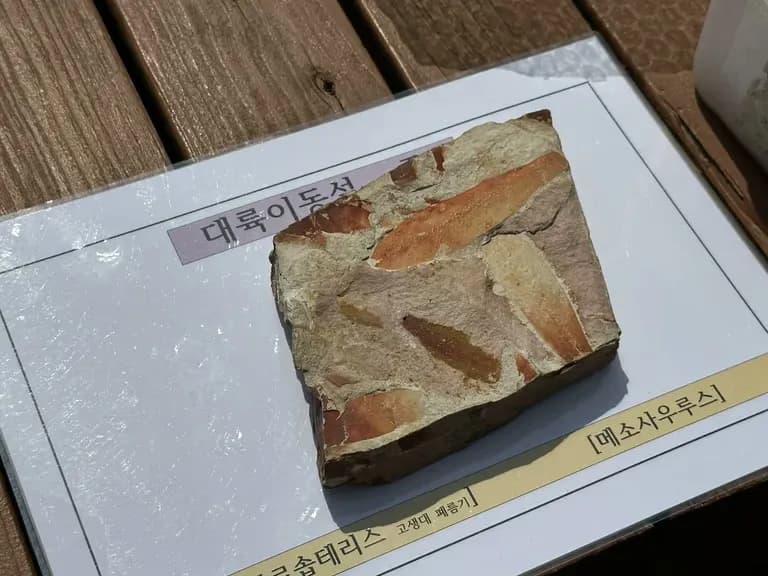
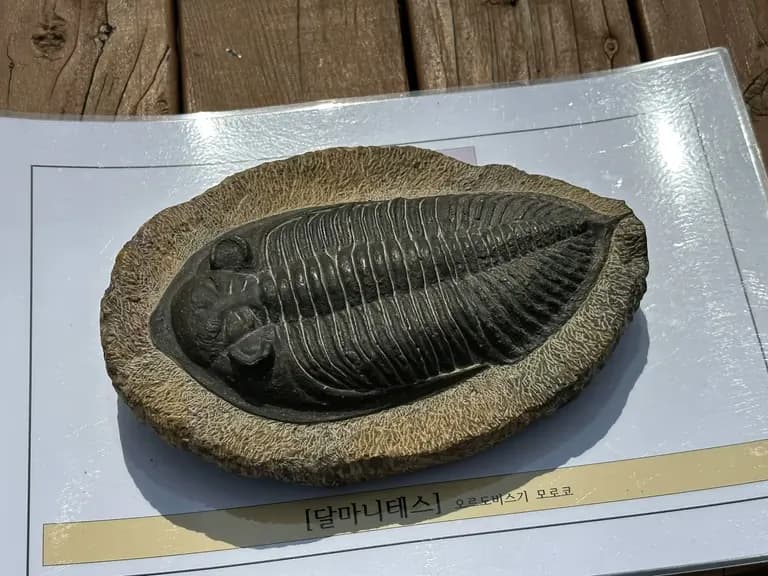
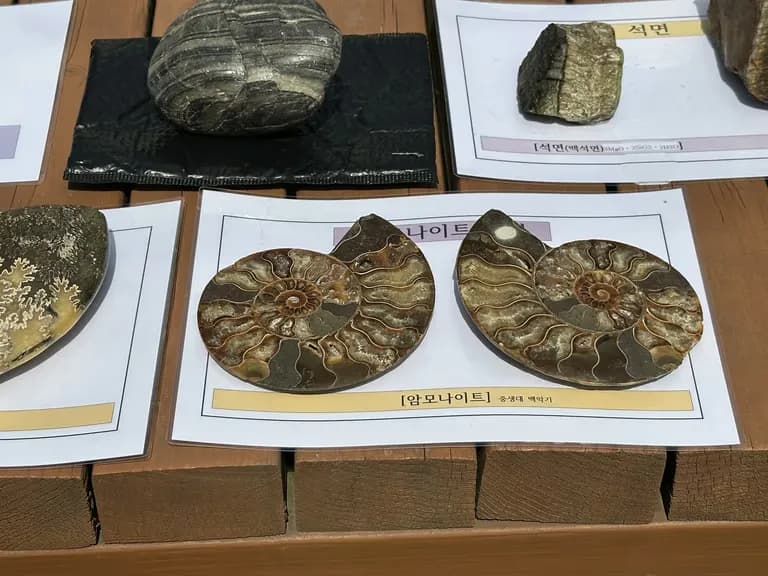
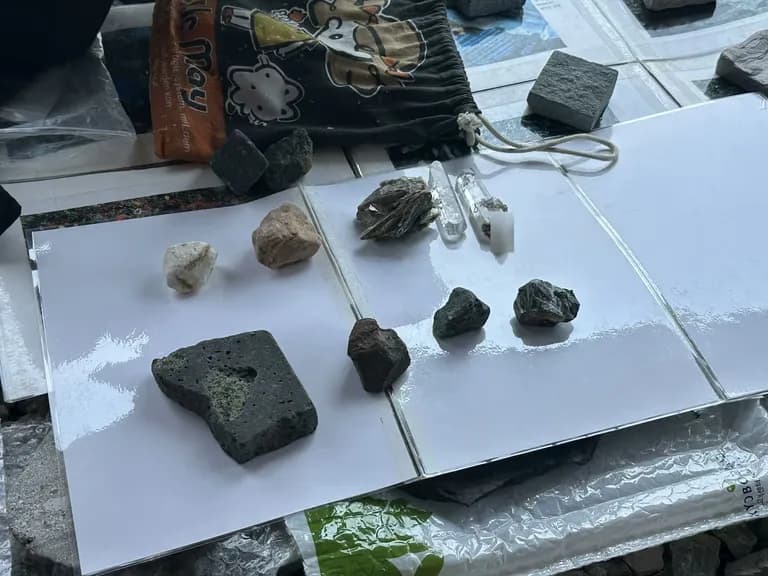
During the first session at the Dinosaur Egg Fossil Site, we observed fossils brought by the Earth Science instructor.
He mentioned he had purchased them personally over the years.

I’ve often seen brachiopods during lessons, but this was the largest I'd seen.
The size and detail of the Glossopteris and trilobites were impressive.


The instructor explained the process of mineral growth inside ammonites.
Ammonites have a tube that allowed internal fluids to flow in and out, through which silica minerals entered.

I ended up learning a lot.
There was a cat wandering around during our session, so I took a picture.
We couldn’t ignore the cat, of course.

3. Field Trip
1. Dinosaur Egg Fossil Site
Hwaseong Geological Park Dinosaur Egg Fossil Site
Gojong-ri, Songsan-myeon, Hwaseong-si, Gyeonggi-do, South Korea
Our first stop was the Dinosaur Egg Fossil Site.
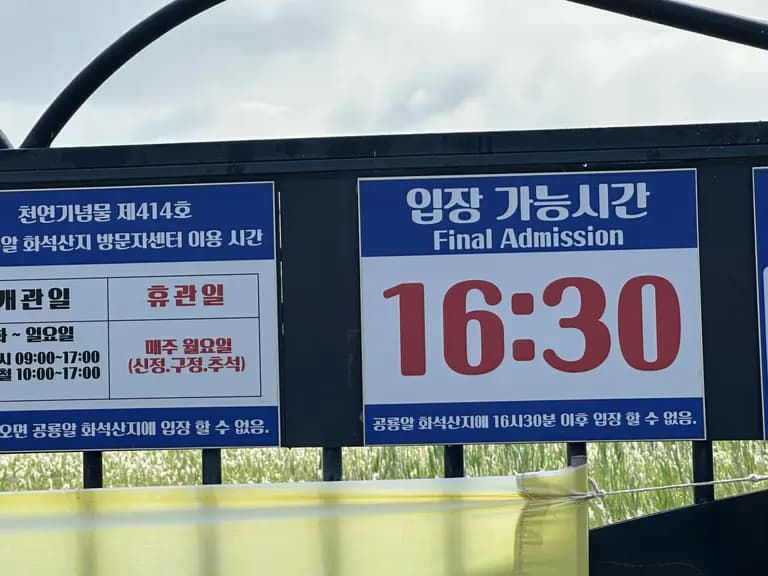
This place is a designated natural monument, so entry isn't allowed freely.
It's open from Tuesday to Sunday, 09:00 to 16:30.


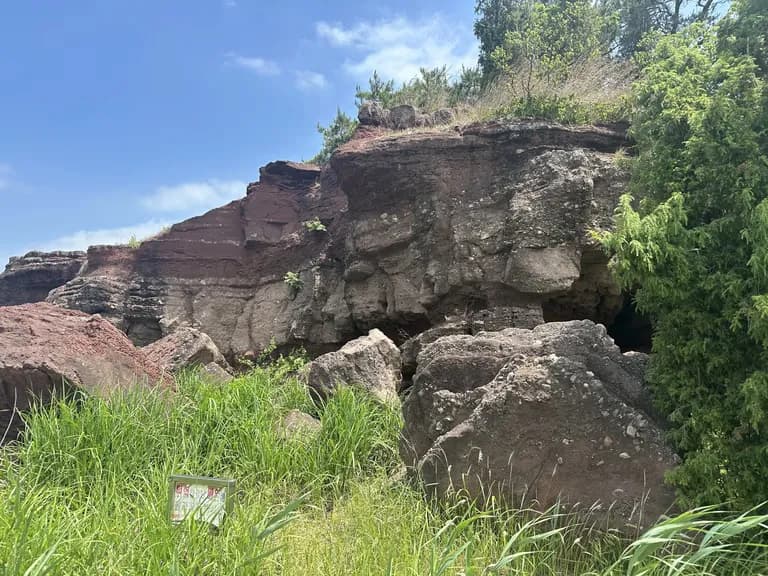
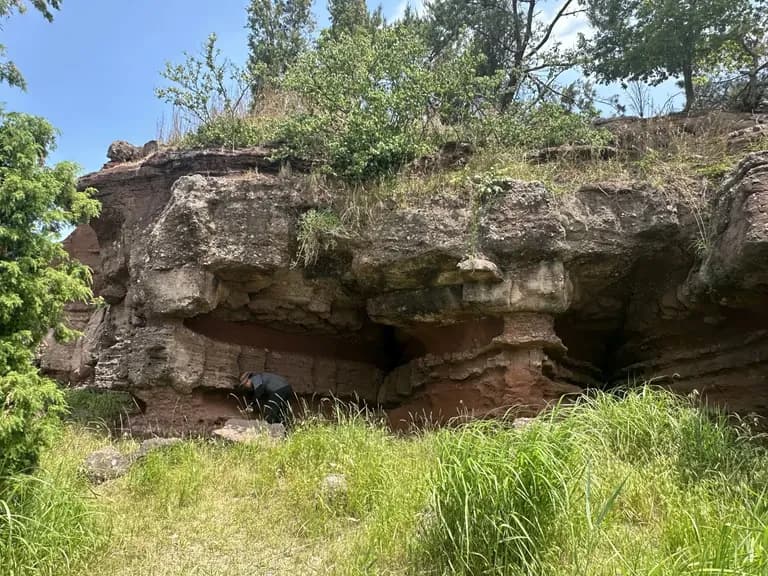
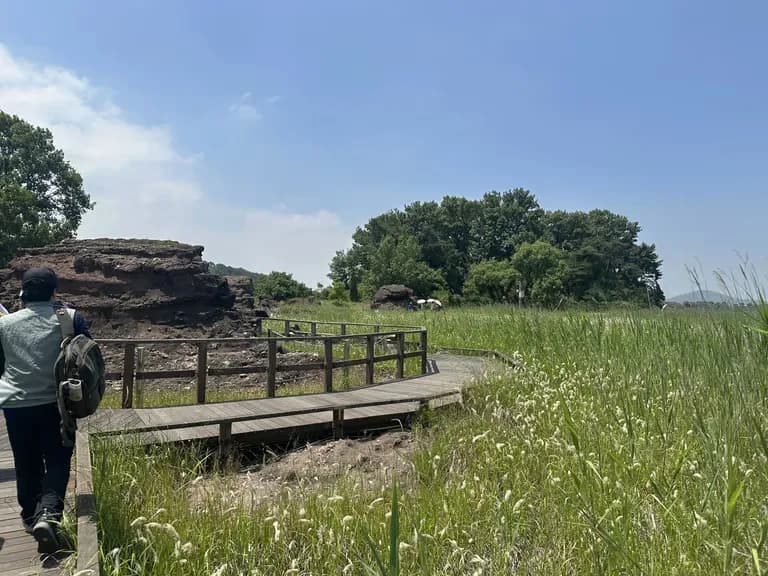
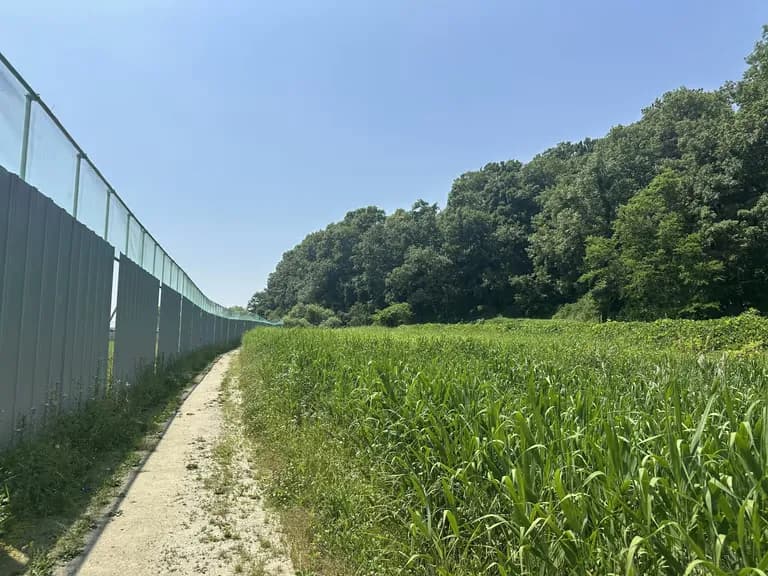
Following the instructor further inside and stepping off the deck, you can see a view like the one below.
This area was originally a mudflat but was revealed as land through reclamation.
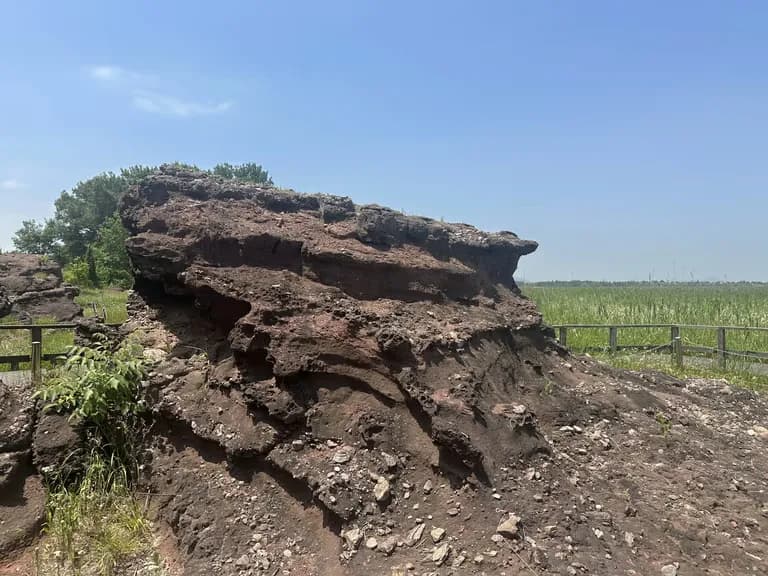
This is why it looks like a sea cave.

The cave-like area used to be accessible, but it collapsed due to erosion.
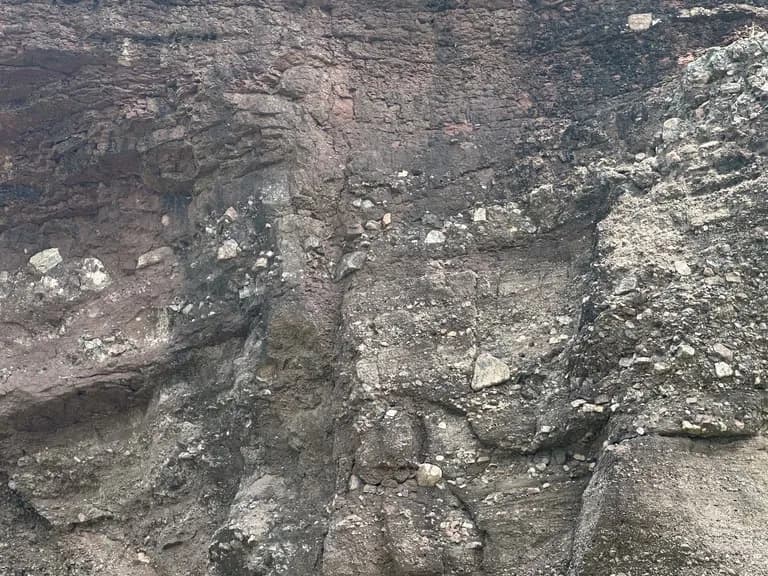
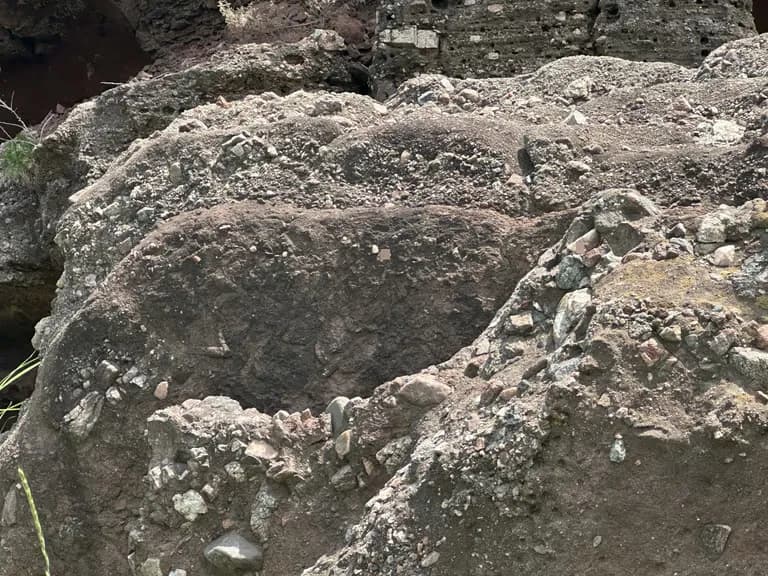
You can see layers of strata on the side of the rock.


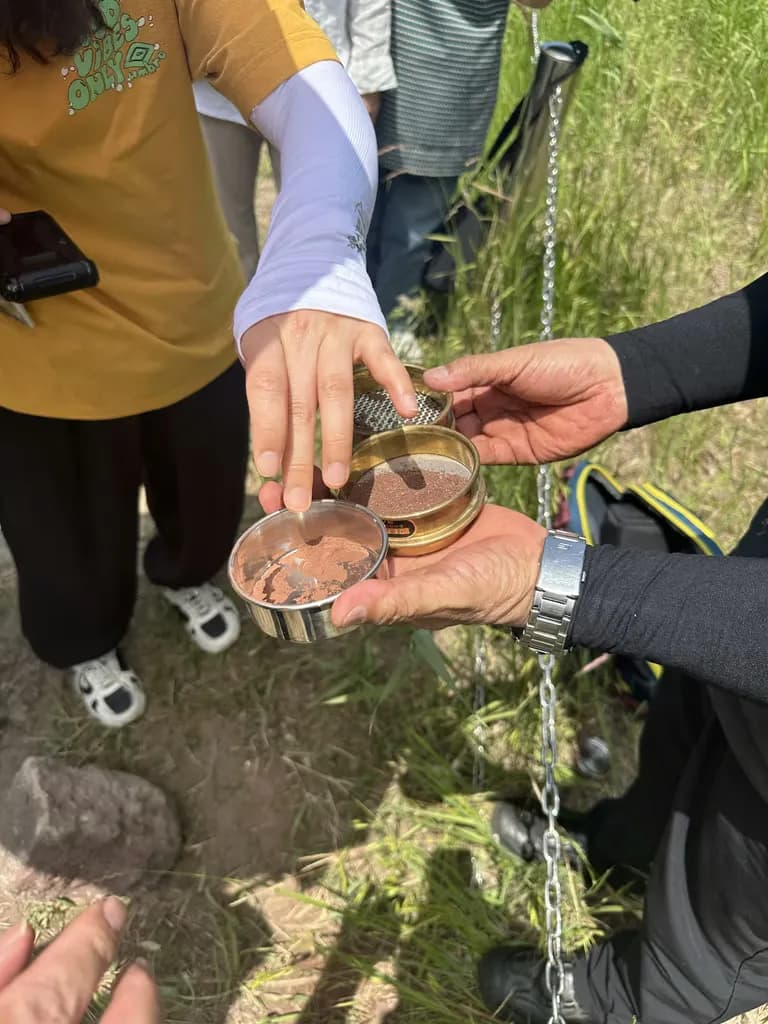
The instructor scooped a handful of powder from the side of the rock to show us the difference between gravel, sand, and clay.
After sieving it twice, we felt it with our hands.
It was great to learn about particle size by sight and touch.


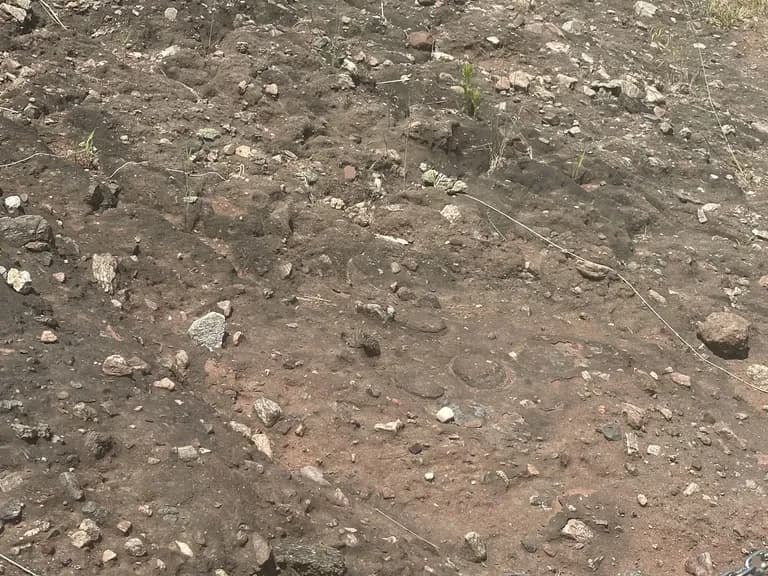
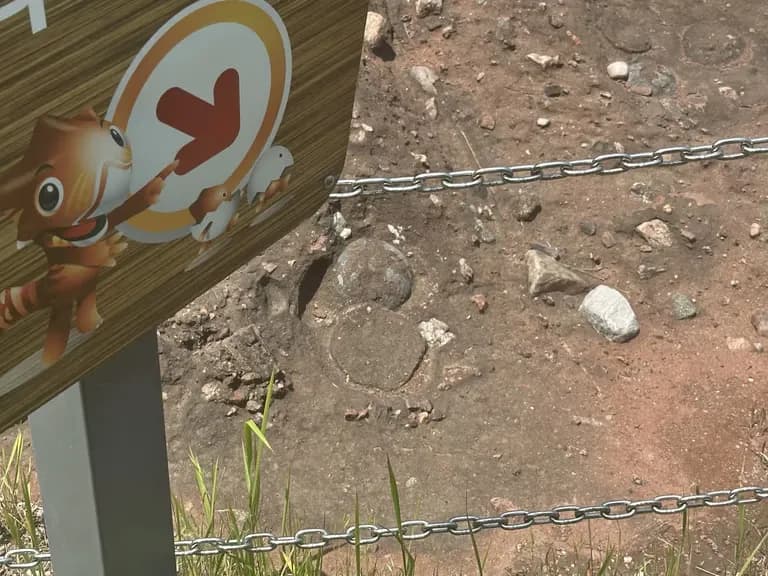
We then moved to the dinosaur egg fossil area.
Time erosion and weathering have faded the appearance of the fossils.

Occasionally, there are round pebbles, but they're actually dinosaur eggs.
If you don't look closely, they're hard to identify.


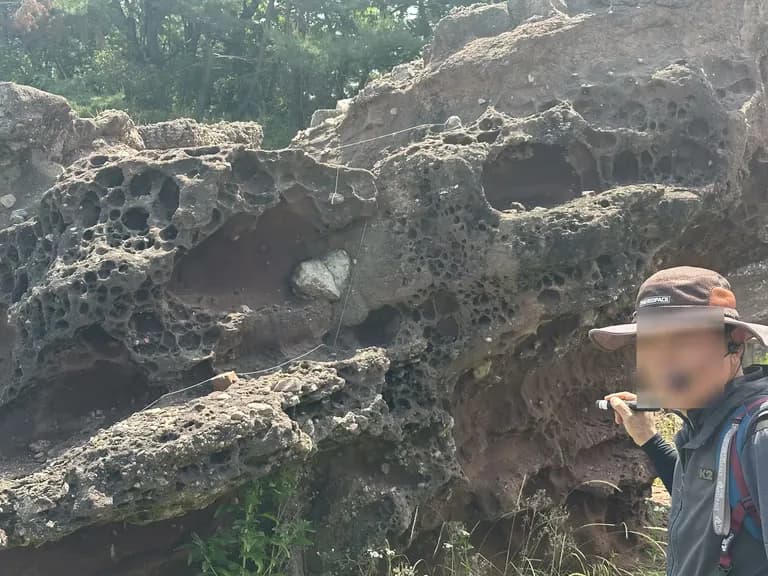
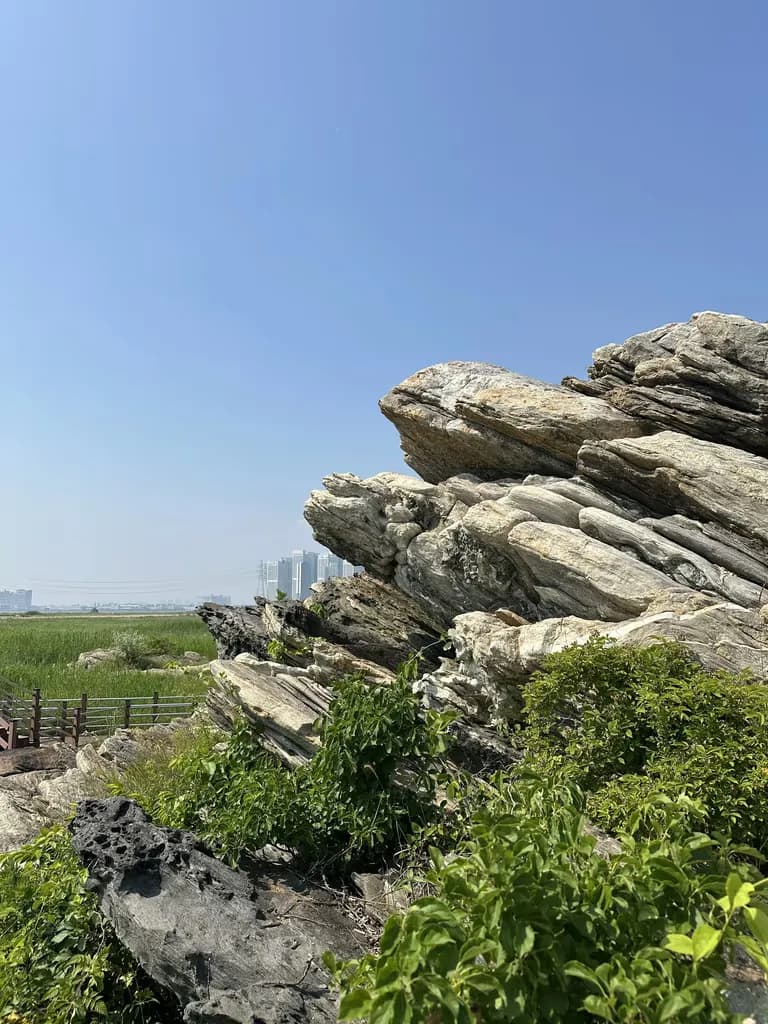
Observing the bedrock, you can see pitted holes.
This is not tafoni but is caused by salt weathering.
The interaction between seawater and minerals over time selectively eroded the structure.

After observing this sedimentary landscape and the dinosaur egg fossil site, we moved for lunch.

2. Hwaseong National Geopark
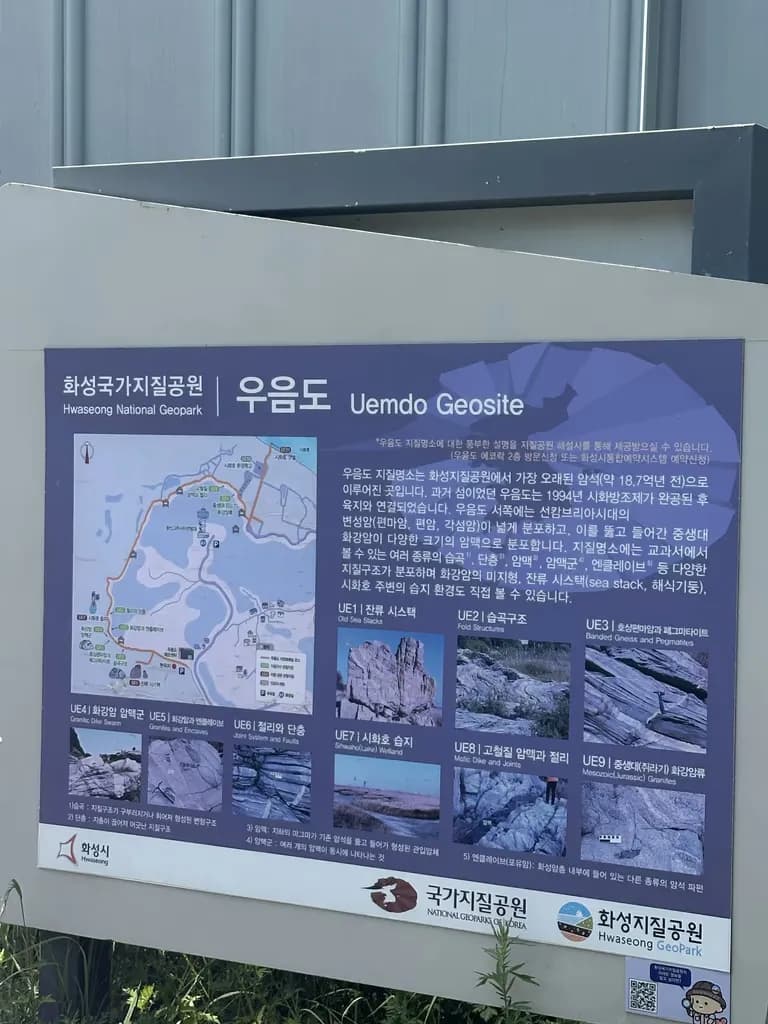
Ueumdo Eco Rock
Gojong-ri 1262, Songsan-myeon, Hwaseong-si, Gyeonggi-do, South Korea
After lunch, we moved to Hwaseong National Geopark.
It's just a short distance from the dinosaur egg fossil site.
You can see migmatite here, formed 1.87 billion years ago.

We were told the left side is blocked due to planned apartment construction.
Fortunately, the location of the mixed rock will be preserved despite the construction.
Next time, accessibility might be even better.

While students observed the site first, the teachers discussed how to teach geology.
We shared the rocks, minerals, and methods brought by the instructor.
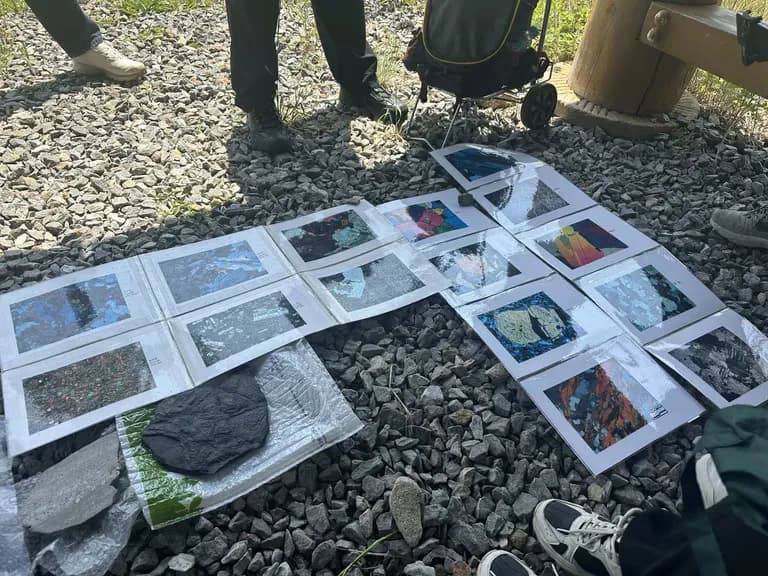
A memorable point was showing rock thin sections to students during class.

Rock thin sections and polarizing microscopes are covered in Earth Science II, so I hadn’t shown them to second-year students. From an educational perspective, observing them would be beneficial, even if not tested.
I felt the instructor genuinely loves Earth Science.

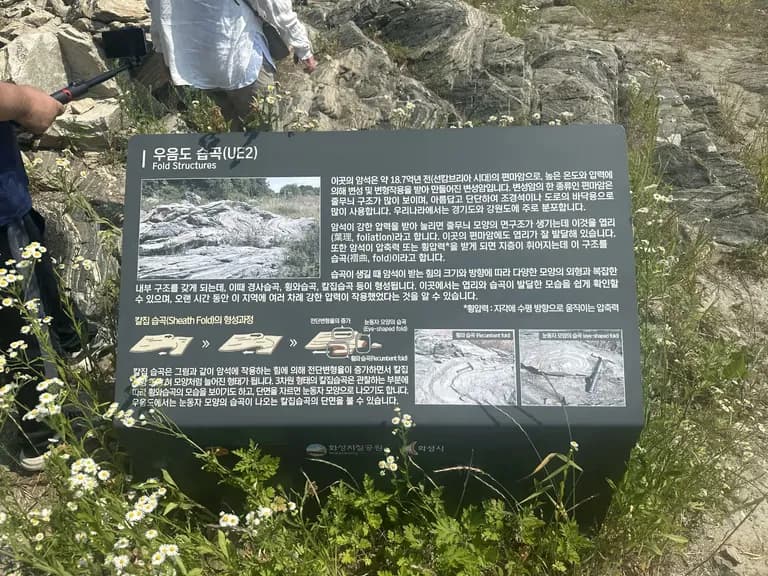
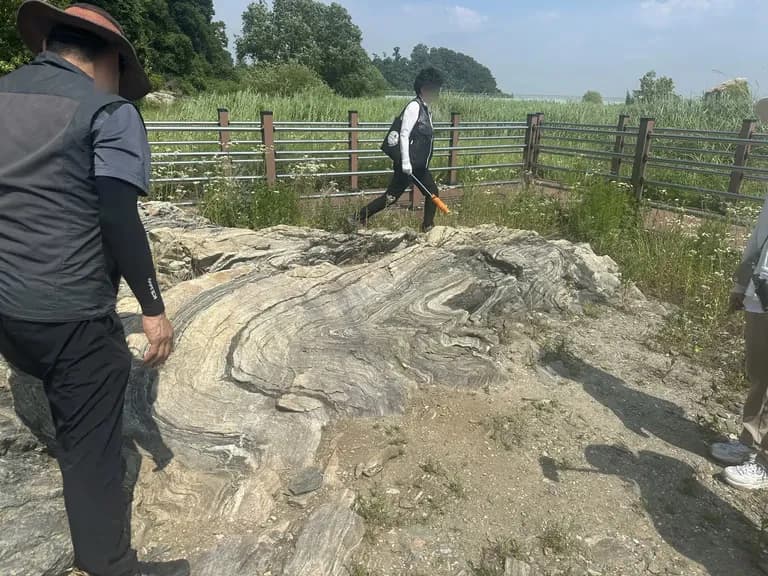
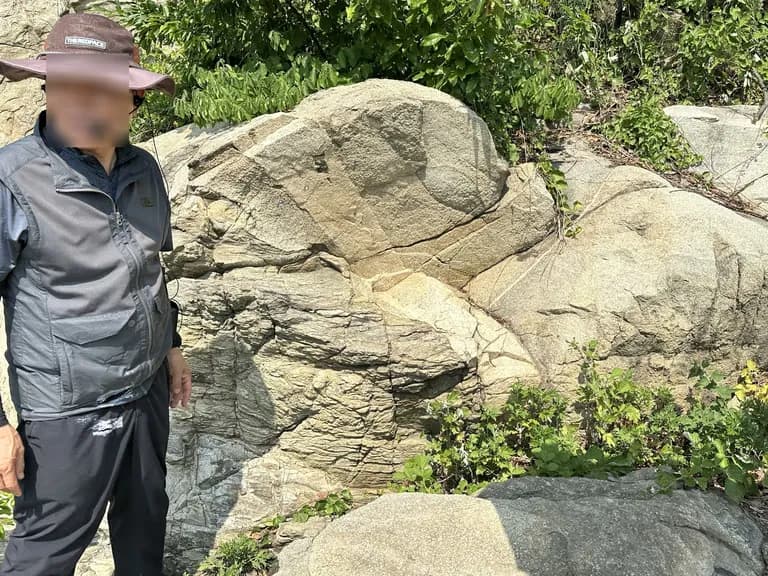
After a brief conversation, we observed folds.
I had often seen folds in gneiss, but it had been a while since I saw an outcrop with such folds.


I was surprised to learn that a normal fault can occur during the fold formation process.
Can you see the normal fault in the picture below?

During the process of compressive force, some materials gather in the center, while others are pushed out.
This explains how normal faults can occur even under compressive stress.
It was a moment when the misconception that compressive stress only creates reverse faults was dispelled.
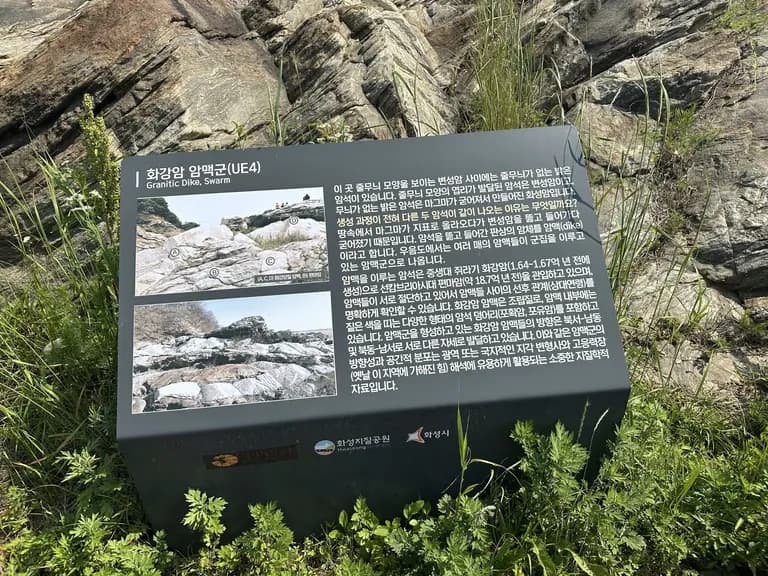
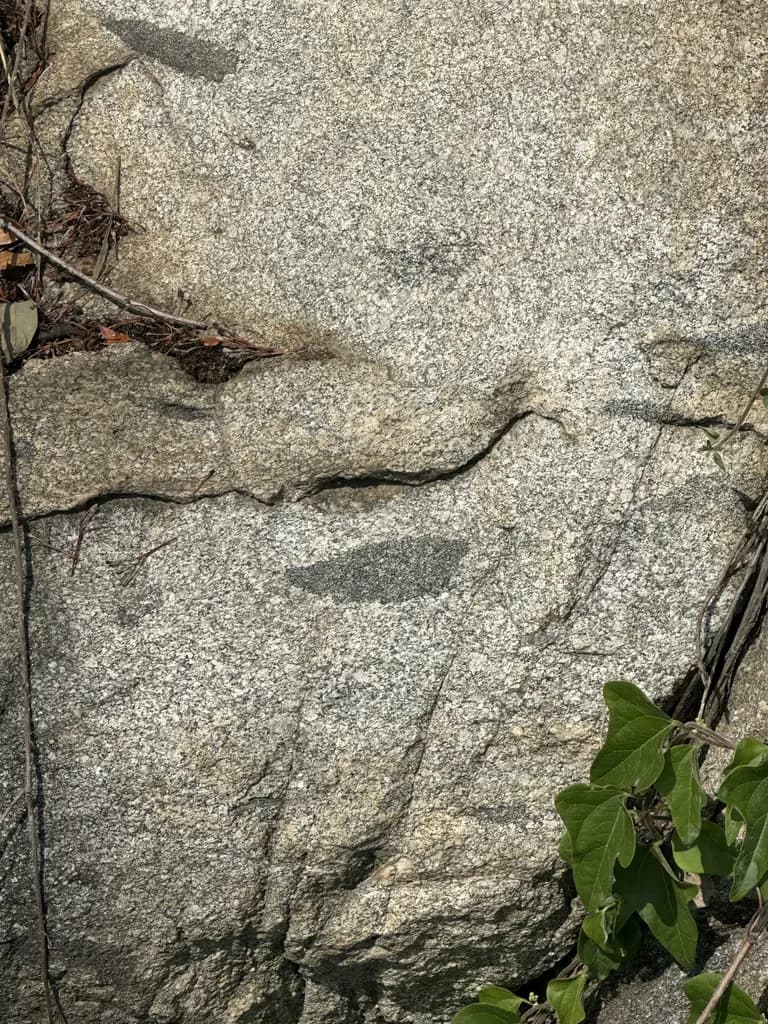
We also observed the intrusion rocks.

Interestingly, this area experienced multiple intrusive events rather than just one.
This resulted in poikilitic rocks having both light and dark appearances.

Students roamed this area, exploring the sequence of intrusions.

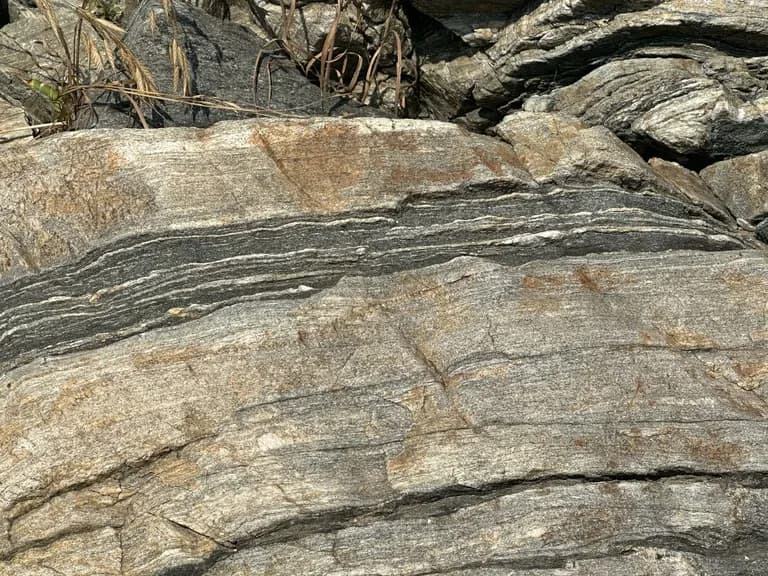
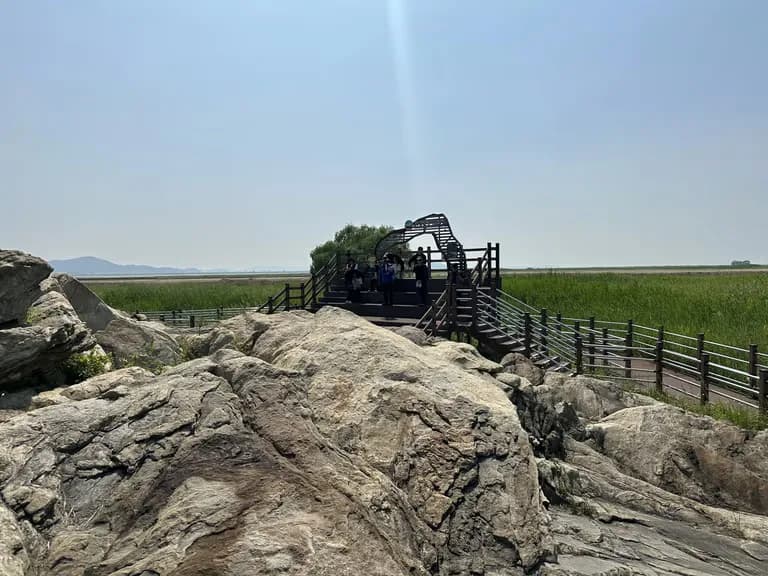
Finally, we observed the migmatite in the center of the park.
This is the largest outcrop exposed in the park.

The foliation of the metamorphic rock has different compositions, affecting its resistance to weathering.
Viewed from the side, you can easily see which parts have undergone more weathering.

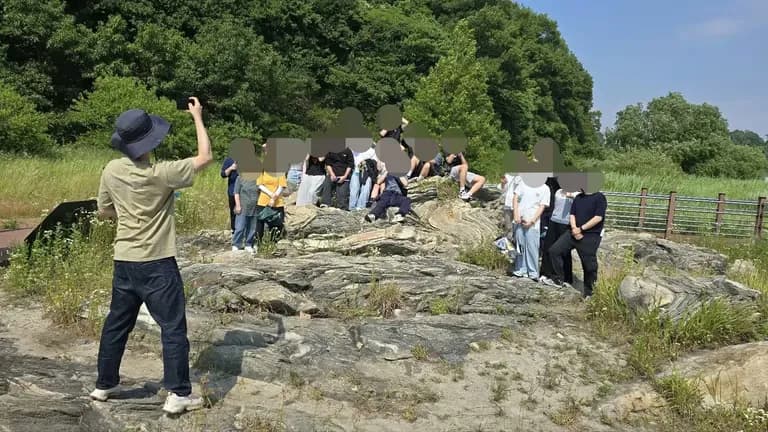
After this final observation, we took a group photo and headed home.
4. Review
I had wanted to participate in the field trips organized by the association, but unexpected urgent matters had always prevented me.
After attending once, I found there was much to learn and it was fun, making me look forward to the next field trip.

댓글을 불러오는 중...