A photo of the sky looking beautiful was posted in the club's KakaoTalk chat.

Everyone has probably seen a sky like this before.
Back when I was a freshman in college, a senior pointed out the clouds blocking the sky during sunset, calling it the 'Tyndall phenomenon.'
So what exactly is the Tyndall phenomenon, and why does it reveal the path of light?
1. Tyndall Phenomenon
The definition of the Tyndall phenomenon is as follows:
When particles about the wavelength of light or larger are dispersed, and light is shone upon them, the light scatters due to the floating particles, making the light path visible from the side. This phenomenon allows us to determine the location or size of particles that cannot be observed with a normal microscope.
[Naver Encyclopedia] Tyndall Phenomenon (Doosan Encyclopedia)
In simpler terms, the particles in the light's path, like dust or water droplets, make the path of the light visible.
This phenomenon is often observed in liquids, becoming more visible with a higher number of small solid particles.
In the image below, the left beaker contains water, and the right beaker contains a liquid with small particles. When light is shone, nothing appears in the left beaker, but the path of light is clearly visible in the right beaker.

Even though the particles are too small to be seen with the naked eye, shining light causes the particles to scatter the light strongly, revealing the light's path.
A scientist named Tyndall first discovered this phenomenon and named it the Tyndall phenomenon.


Though invisible to the eye, the atmosphere is filled with small particles like water droplets and dust. The more these particles are present, the stronger the Tyndall effect appears.
In simpler terms, on days with high levels of fine dust, the Tyndall effect is easier to observe. It’s why sunsets look more magnificent when the air is humid or yellow dust is visible.
2. Tyndall Phenomenon Is All Around
It is impossible to see the path of light with the naked eye.
This is because light travels in straight lines.
Phenomena like lighthouses or car headlights appearing to emit light are all examples of the Tyndall phenomenon.

The light scatters due to small particles in its path, allowing it to enter our eyes.
Or when sunlight enters a dark room, making dust and the path of light visible, this can also be attributed to this phenomenon.
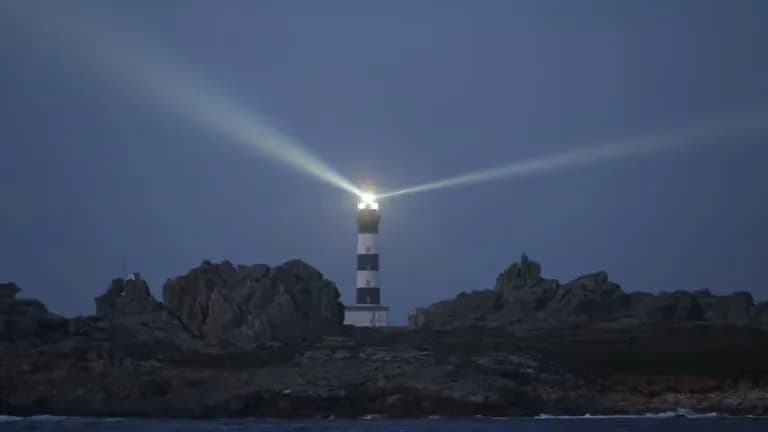
While it may seem like trivial knowledge, understanding the scientific knowledge behind these phenomena changes the way you see the world.
By observing the Tyndall effect or the degree of mountain haze, you can roughly predict the weather or estimate the humidity.
By learning this scientific knowledge in daily life, I hope your life becomes richer.
댓글을 불러오는 중...